Datong
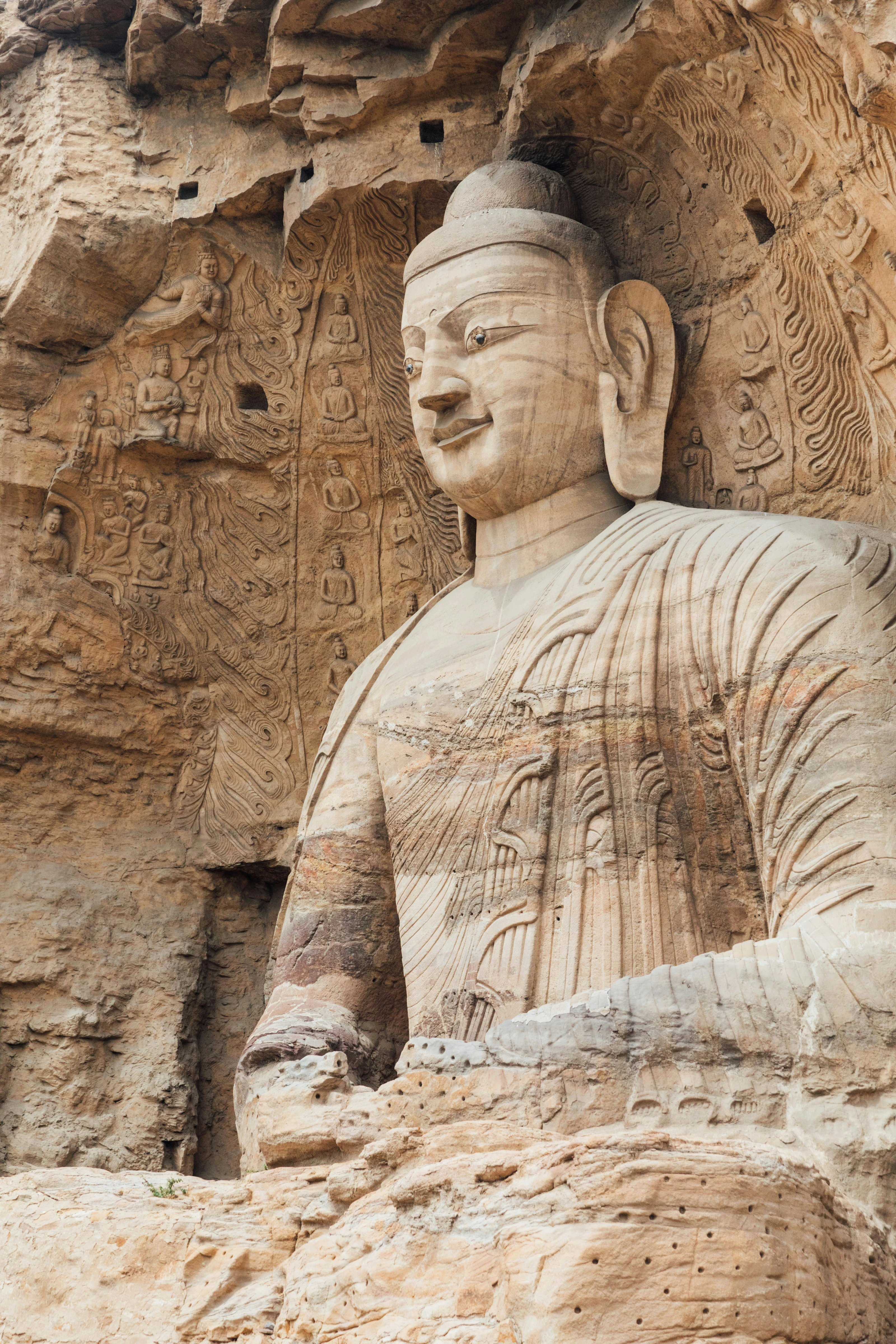
The colossal Buddha at Yungang contemplates sandstone cliffs, while curved blades in neighbourhood noodle shops send ribbons of wheat slicing into boiling cauldrons.
Resting across the upper Sanggan River basin, Datong is sheltered by Great Wall ramparts and the Yin Mountains to the north, and anchored by Yanmen Pass to the south. Once Pingcheng, imperial capital of the Northern Wei, and later western metropolis of the Liao and Jin dynasties, agricultural sedentary traditions and nomadic horseback cultures converged continuously across this high tableland. Timber halls at Huayan and Shanhua temples exhibit massive bracketing systems and reduced-column spans, while cliff faces at Yungang merge Gandharan Buddhist sculpture with early Chinese stonecraft; brisk morning knife-shaved noodles and bubbling charcoal hotpots reflect northern fortitude.
What to see
The Yungang Grottoes feature tens of thousands of carved Buddhist statues across sandstone cliffs, highlighted by the colossal Tan Yao caves with ceilings adorned by flying celestials; the Main Hall at Huayan Temple spans nine bays with monumental glazed ridge ornaments and Liao-era wooden sutra cabinets; Shanhua Temple preserves Tang-Liao structural carpentry and reduced-column framing; Datong Ancient City Wall offers panoramic promenades above wide moats.
What to eat
Datong daoxiaomian knife-shaved noodles feature chefs balancing firm wheat dough in one hand and shaving willow-leaf strips directly into boiling water with curved blades, topped with braised pork gravy, chilli oil, and aged Shanxi vinegar; traditional brass hotpots burn fruitwood charcoal in central chimneys, simmering hand-sliced mutton, yellow daylilies, and frozen tofu; Guangling spiced dried bean curd is chewy and savoury; fried millet cakes offer sweet red bean fillings in crispy crusts.
Getting here & around
Datong South Railway Station connects the Datong-Xi'an and Zhangjiakou-Datong high-speed lines, reaching Beijing in two hours and Taiyuan in two hours; Datong Yungang International Airport serves major trunk routes; dedicated tourist buses reach Yungang Grottoes, the ancient city center, and the Hanging Temple.
Liao-Jin Timber Halls and Column Reduction
Stepping into the Main Hall of Huayan Temple, stone pavers sit beneath broad timber spans of hefty pine beams. Rebuilt during the Jin dynasty following Liao architectural traditions, the hall spans nine bays across its facade and five bays in depth, its single-eave hip roof rising with gentle, sweeping profiles above heavy dougong bracket clusters. Inside, master carpenters applied column reduction techniques (jianzhufa), eliminating twelve interior pillars to create an expansive, unobstructed congregational arena around the central altar. Liao and Jin builders translated nomadic memories of spacious felt tents into monumental timber mortise-and-tenon engineering, relying on unadorned joinery to shelter Buddhist altars across nine hundred years of northern blizzards.
Flying Blades and Boiling Cauldrons
At seven in the morning, steam billows from street cauldrons outside Datong noodle counters. Holding a dense block of chilled, kneaded wheat dough firmly in the left hand, the noodle master draws an arc-shaped steel blade swiftly across the top edge. Ribbons of dough, thick along the spine and razor-thin along both flanks, sail through midair straight into roiling water, cooking tender in moments. The noodles offer firm chew, ladled over with savoury braised pork cubes, fried bean curd, and two generous spoonfuls of aged Shanxi sorghum vinegar. This aerodynamic cutting method creates a cross-section engineered to absorb rich stew and sharp acid, providing dense carbohydrate sustenance against dry continental cold.
Charcoal Brass Cauldrons of the Northern Border
Throughout northern Shanxi's long, freezing winters, the traditional copper hotpot serves as an indispensable hearth for domestic and neighbourhood gatherings. Hammered from red copper, the pot features a tall central chimney with bottom dampers regulating airflow to burning fruitwood charcoal inside. Scalding stock fills the surrounding circular moat, kept at a constant boil by conductive metal. Dense layers of savoy cabbage, fried meatballs, and dried wild mushrooms line the lower basin, beneath rows of marbled mutton. Embers pop softly inside the chimney while steam scented with mutton broth fills the dining room; here, fire sits not beneath floorboards, but at the very center of the table, warming generations through winter nights.