Fuyang
The raw fiber is tender spring bamboo; felled on the hills, it must soak in mountain pools for a month before the flesh will soften.
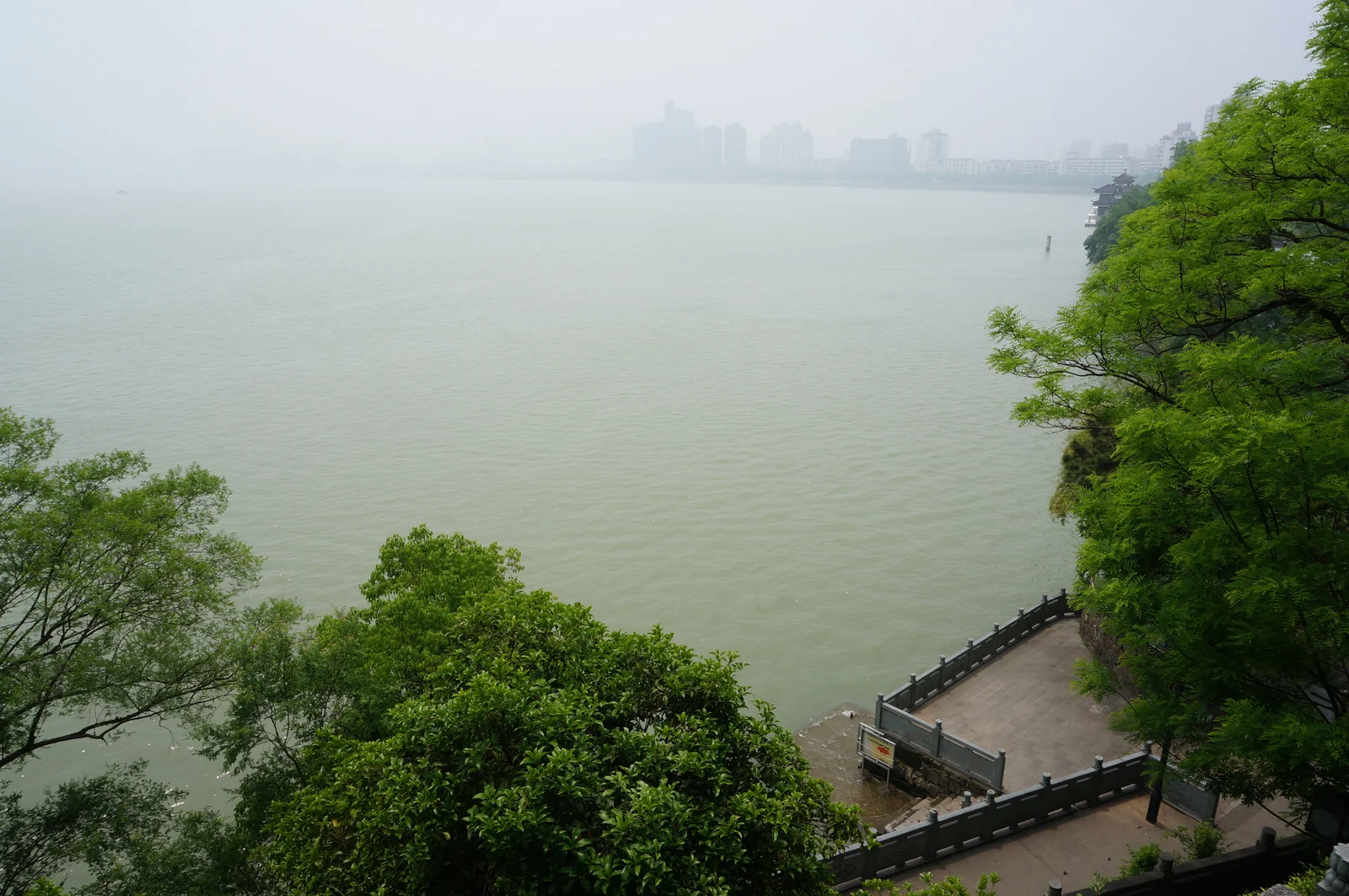
Where the Fuchun River widens through Fuyang, forested ridges soften into mist, prompting Yuan master Huang Gongwang to build his recluse studio and paint the immortal handscroll Dwelling in the Fuchun Mountains. Dense groves of moso and bitter bamboo coat the surrounding hills; excavated Song-dynasty vats at the Sizhou Papermaking Site prove an unbroken papermaking lineage stretching back over a thousand years. Traditional Fuyang bamboo paper relies on tender young shoots cut before their fibrous sheaths harden, refined through seventy-two manual steps of liming, steaming, natural bleaching in mountain sun, and fine-screen dipping. The resulting sheets are light as cicada wings and smooth as raw silk, drinking sumi ink without bleeding. Along the river, Longmen Ancient Town traces pebble-paved labyrinthine alleys home to the descendants of Three Kingdoms warlord Sun Quan.
What to see
The Sizhou Song Dynasty Papermaking Site reveals an archaeological complex of flumes, lime-soaking vats, and stamping mortars; family workshops in Dayuan and Dongqiao still dip fine bamboo screens by hand to create traditional Yuanshu paper. Huang Gongwang's Hermitage sits hidden inside the bamboo groves of Miaoshan Ravine, quiet with stone-banked streams. Longmen Ancient Town nestles below Mount Longmen, its maze of river-pebble alleys sheltering ancestral halls and clan courtyards of the Sun family.
What to eat
Dining in Fuyang celebrates the river harvest of the Fuchun and the mountain bamboo of the Tianmu foothills. Fresh catches like steamed river whitefish, flash-scallion river perch, and braised wild river eels feature delicate, sweet flesh. Spring brings crisp braised tender shoots and aged duck soup simmered with dried mountain bamboo, yielding golden broth. Longmen wheat gluten puffs fry to a crisp golden orb before being stuffed with minced pork and shiitake, braising into savory, juicy parcels.
Getting here & around
Fuyang Railway Station and Fuyang West Station connect via high-speed lines to Hangzhou East and West in fifteen minutes. Line 6 of the Hangzhou Metro reaches urban Fuyang directly. Taxis easily link Huang Gongwang's hermitage, while reaching Longmen Ancient Town or the papermaking workshops in Dayuan is most flexible by rental car.
Choose a neighbourhood
Each area offers a different side of the city. Pick one to explore at your own pace.
Dayuan Sizhou & Bamboo Paper Ateliers
A living museum of medieval Chinese papermaking technology. Archaeological excavations at Sizhou uncover extensive Song-dynasty soaking tanks, stone watermills, and dipping vats. In nearby Dayuan village, multi-generational papermakers still wash tender bamboo fibers in cold mountain brooks, rocking woven bamboo screens in stone troughs to form traditional Yuanshu calligraphy sheets.
Visiting the Song-dynasty papermaking archaeological excavation and watching master papermakers dip screens.
Miaoshan Ravine & Huang Gongwang Hermitage
The birthplace of Dwelling in the Fuchun Mountains. Tucked into a narrow valley along the north bank of the Fuchun River, camphor trees shade bamboo stands around the historic Xiaodongtian studio. Stone trails trace murmuring brooks between mist-clad slopes that mirror the handscroll's tranquil brushwork.
Exploring the landscape that inspired China's most celebrated literati landscape scroll.
Longmen Ancient Town & Pebble Maze
The largest ancestral settlement of Sun Quan's descendants in south China. Backed by Mount Longmen with Yanxi Brook meandering through the center, dozens of Ming and Qing ancestral shrines and hall complexes connect via labyrinthine pebble alleys worn glossy smooth by centuries of domestic life.
Walking labyrinthine pebble alleys and admiring the clan architecture of the ancient Sun lineage.
Tender bamboo transformed in the stone vat
Papermaking harnesses the enduring flexibility of plants. Around Fuyang, hills are cloaked in moso and bitter bamboo. Between early May and mid-June, villagers ascend ridges to harvest young shoots that have unfolded their first tender side twigs but have not yet hardened their core culms. Split and stripped of green bark, bundles are submerged in slaked lime pits for months, where alkaline water and summer sunshine digest the tough lignins.
The softened bamboo fiber is steamed in masonry kilns for eight days and nights, washed clean in mountain brooks, and pounded into pure white fleece by water-driven stone trip-hammers. In the papermaking workshop, master artisans stand over water troughs filled with milky pulp, enriched with mucilage pressed from wild kiwi vines to suspend fibers evenly. Dipping a screen woven of whisper-thin bamboo filaments, the artisan scoops and rocks the vat water with subtle flicks of the wrists. Clear water drains instantly through micro-slits, leaving behind an interlocking sheet of pure vegetal fiber that dries into smooth paper resilient enough to outlast a millennium.
Dry brushwork along the Fuchun River
In 1347, eighty-two-year-old master Huang Gongwang settled with an attendant in the Miaoshan ravine of Fuyang. He spent days drifting by boat along the Fuchun River, carrying a leather pouch filled with brushes to sketch striking folds of terrain. Unlike northern precipices, the river topography here unfolds in rolling alluvial mounds, braided sand spits, and groves of scattered deciduous timber veiled in mountain mist.
Working across several years on sheets of tough local hemp and bamboo paper, Huang outlined mountain profiles in pale grey ink before building up texture with dry, textured brushstrokes known as hemp-fiber cun. Short ink dabs indicate moss and distant groves. The subtle grain of handmade Fuyang paper offered just enough tactile drag to anchor the painter's weathered, contemplative brush, immortalizing the serene harmony of southern waters.