Haikou
Nanyang arcade verandas shelter walkers from tropical downpours, grandpa tea houses linger through humid afternoons, and ocean breezes rustle volcanic plains.
Haikou anchors the northern coast of Hainan Island where the Nandu River flows into the Qiongzhou Strait, serving as the historical gateway across the water to the mainland. Following its opening as a treaty port, returning overseas merchants introduced Nanyang colonial vernacular architecture, building miles of continuous covered arcade streetscapes along Deshengsha, Bo'ai, and Zhongshan roads. The continuous second-story verandas shield pedestrians from tropical typhoons and scorching sun, while the city's legendary 'grandpa teahouses' slow time over endless pots of black tea and warm pastries.
What to see
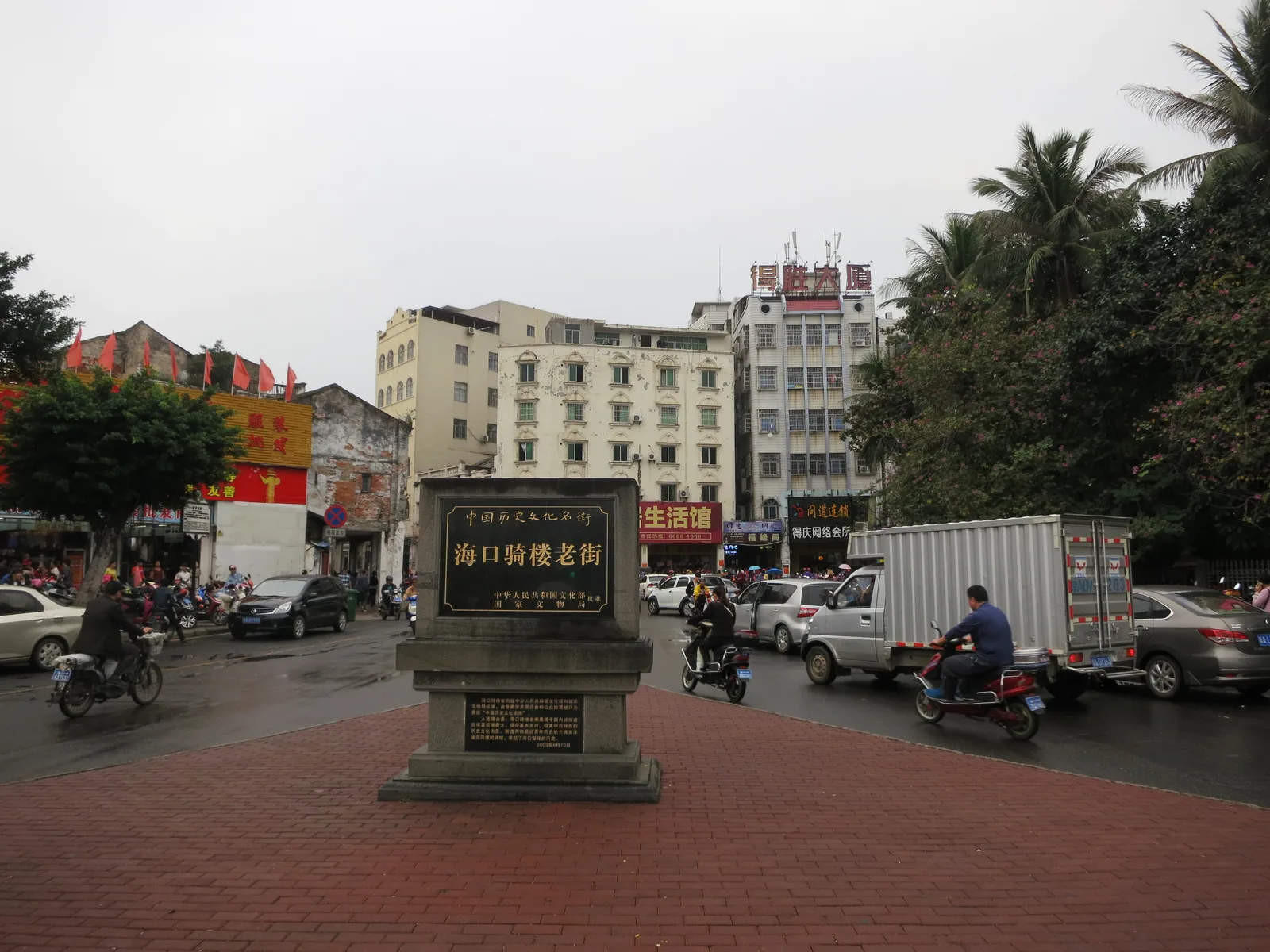
Qilou Old Street preserves miles of historic Nanyang arcaded shopfronts decorated with Baroque plaster bas-reliefs; Wugong Temple honors five exiled Song-dynasty ministers and poets including Su Shi among tropical gardens; Leiqiong Global Geopark preserves dormant volcanic craters and lava-stone hamlets; Dongzhaigang Mangrove Reserve protects expansive marine mangrove forests; the Wormhole Library offers fluid coastal architecture overlooking the Qiongzhou Strait.
What to eat
Hainan rice noodles toss thin rice noodles with crispy peanuts, beef jerky shreds, fried dried squid, and thick savory seafood gravy; Wenchang chicken is poach-steamed tender and served with calamansi lime and sand ginger dip; Grandpa tea assortments feature pineapple buns, roast pork pastries, and steamed pork ribs; Zaopocu hotpot simmers seafood in naturally fermented sweet-and-sour rice wine lees broth; Qingbuliang dessert combines chilled coconut milk with red beans, barley, and tropical fruit.
Getting here & around
Hainan Island Ring High-Speed Railway connects Haikou Station and Haikou East, reaching Sanya in under two hours. Haikou Meilan International Airport offers domestic and international flights, directly integrated with Meilan High-Speed Railway Station. Passenger ferries run continuously across the strait to Xuwen. Urban buses and bike-sharing provide easy transit through the historic core.
Choose a neighbourhood
Each area offers a different side of the city. Pick one to explore at your own pace.
Qilou Old Street & Deshengsha Commercial Area
The commercial birthplace of modern Haikou, where Nanyang arcade streetscapes stretch across kilometers with ornate Baroque stucco.
Walking beneath covered veranda arcades visiting vintage herbal dispensaries and enjoying Hainan coffee with fresh pineapple buns.
Haikou Volcanic Geopark & Ancient Lava Villages
A Quaternary volcanic landscape centered around dormant craters, surrounded by ancient hamlets constructed from porous black basalt.
Descending down into the deep dormant volcanic crater and touring Meishe village's basalt masonry towers and walls.
Haikou Bay, Century Bridge & Wormhole Library
A modern waterfront promenade offering sweeping views across the Qiongzhou Strait and Century Bridge.
Watching vibrant ocean sunsets over Haikou Bay from coastal walkways and relaxing with literature inside the Wormhole Library.
Nanyang Arcaded Streetscapes and Weather-Protected Corridors
Wandering through Zhongshan and Bo'ai roads, a sweeping panorama of maritime commerce unfolds. At the turn of the twentieth century, thousands of Hainan migrants ventured across the South China Sea to Malaya, Singapore, and the Dutch East Indies. Returning home with capital and architectural drawings, they financed continuous arcade streetscapes. Ground floors are set back two meters, with second-story living quarters cantilevering overhead to form a weather-protected pedestrian arcade. These sheltered passages shield shoppers from tropical cloudbursts and blinding sun. Above the lintels, Baroque plaster scrolls blend with Classical Ionic capitals and traditional Chinese bird carvings.
Grandpa Teahouses and Leisurely Island Afternoons
In Haikou, entering a lively 'Grandpa Teahouse' provides direct entry into the soul of island culture. Originally casual gathering places for retired island elders, these teahouses have evolved into an indispensable daily ritual for all generations. Set within converted industrial warehouses, open-air courtyards, or historic arcades, hundreds of plastic chairs gather around low tables. Waiters pour dark black tea brewed from local large-leaf bushes, sweetened with condensed milk. Glass food counters display hundreds of fresh pastries: steamed pork ribs with fermented black beans, braised chicken feet, and hot pineapple buns. Here, afternoons pass unhurriedly over sweet tea.
Volcanic Basalt Architecture and Coastal Mangrove Sanctuaries
Driving southwest from downtown Haikou, geological foundations shift. Here lies the core of the Leiqiong Geopark, preserving volcanic vents from the late Quaternary era. Ascending the trail up Ma'an Ridge crater reveals a circular volcanic depression plunging ninety meters deep, carpeted in wild bananas and tropical vines. Surrounding heritage villages quarry porous black basalt: homes, boundary walls, wells, and livestock pens are assembled exclusively from volcanic stone blocks that insulate interiors. To the northeast, Dongzhaigang protects vast marine mangrove forests whose aerial roots anchor into coastal shallows against storm surges.