Jianyang
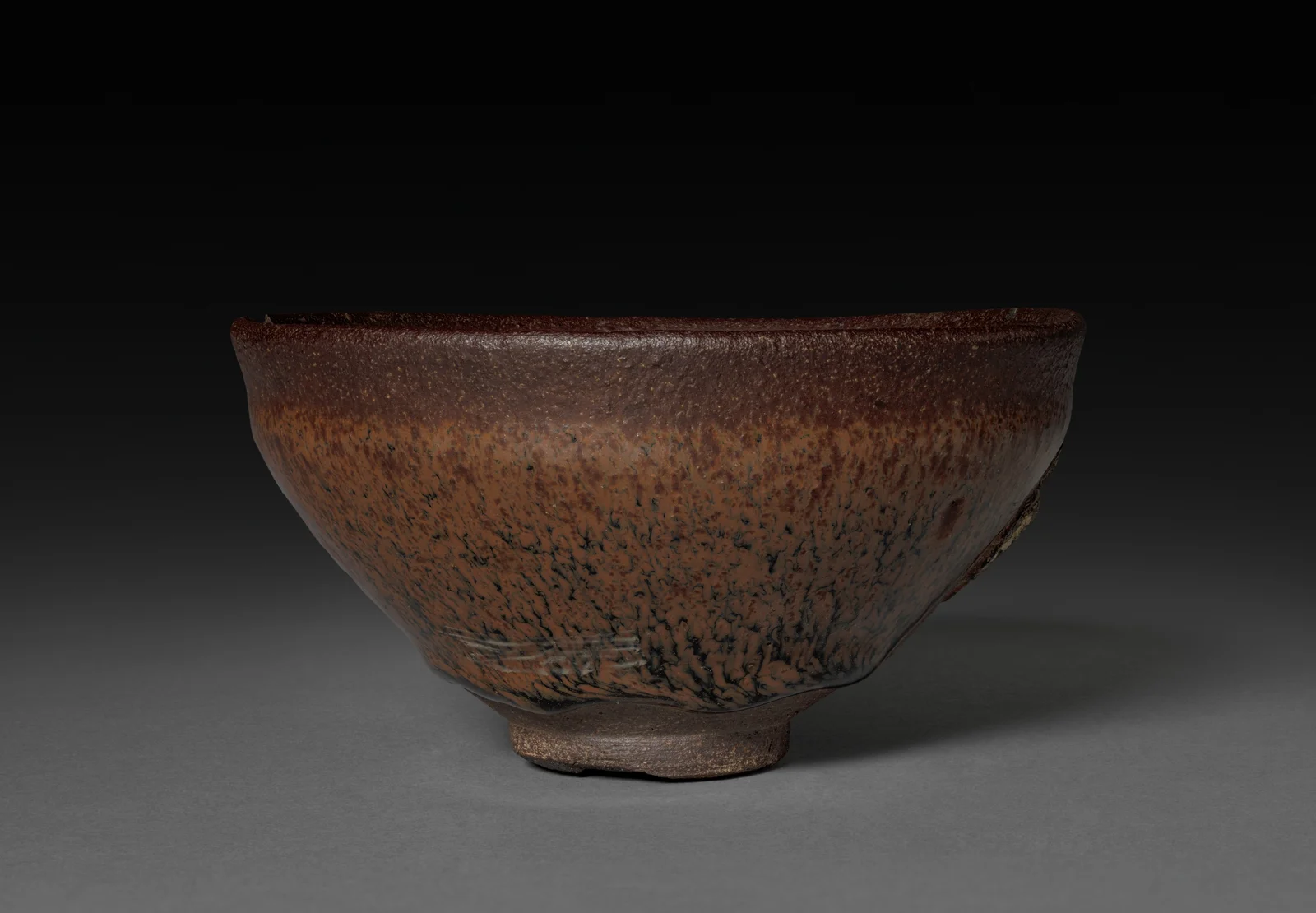
Hare's fur streaks and oil spot iridescence emerge from black iron glaze, fired in dragon kilns to serve the Song dynasty tea whisking ritual.
Settled along the Jianxi River at the southern foothills of Mount Wuyi, Jianyang was the agricultural heart and craft hub of northern Fujian. When whisked tea competitions reached their zenith during the Song dynasty, massive dragon kilns climbing the hillside of Shuiji turned out black-glazed stoneware. High-iron clays and natural ash glazes reacted in high-temperature reduction fires, producing hare's fur crystals and oil-spot textures designed to showcase pale tea foam. Paired with Song-dynasty woodblock printing in Masha and Shufang, Jianyang fused scholarly philosophy with exceptional ceramic mastery.
What to see
The Shuiji Jian Kiln Archaeological Site preserves a hundred-meter Song dragon kiln bed and sagger debris slopes; Kaoting Academy commands views over Kaoting Lake with carved stone commemorative gates; Masha Old Town retains historic Song woodblock publishing sites; Jianyang Museum displays excavated original Song hare's fur tea bowls.
What to eat
Jianyang bianrou dumplings pound lean pork leg with wooden mallets into bouncy meat paste, floating inside clear broth garnished with scallions; Masha dried tofu is curdled with mineral brine and dried over wood embers; Chongluo charcoal hotpot simmers local farm chicken with fresh winter bamboo shoots and handmade mushroom balls.
Getting here & around
Take high-speed rail directly to Jianyang Station or Nanping City Station, then reach downtown Jianyang in fifteen to twenty minutes by express bus or taxi. The Shuiji Jian Kiln heritage site lies thirty kilometers northeast, accessible via regular regional bus or chartered vehicle.
Choose a neighbourhood
Each area offers a different side of the city. Pick one to explore at your own pace.
Shuiji Jian Kiln Archaeological Park
The birthplace of Song tea bowls, where hillsides around Chizhong and Houjing villages are blanketed with dragon kiln ruins and dark ceramic shards.
Examining Song kiln brickwork up close and tracing the stratified layers of discarded kiln saggers and glaze test rings.
Kaoting Academy & Jianxi Waterfront
Where philosopher Zhu Xi lived and taught in his final years, framed by stone gates, lotus ponds, and ancient camphor canopies.
Strolling through tranquil scholarly courtyards overlooking Kaoting Lake and the surrounding green ridges.
Masha Historic Town & Song Publishing Sites
A prominent national woodblock publishing capital during the Song and Yuan dynasties, retaining heritage stone piers and printer alleys.
Locating historical carvers' workshops and trying hands-on rubbings from wooden text blocks.
Hundred-Meter Dragon Kilns and Black Hare's Fur Glaze
Ascending the hillside orchards of Houjing village in Shuiji, an excavated dragon kiln bed stretches over one hundred and thirty meters up the slope. The unique quality of Jian ware stems from Shuiji's local red soil, which carries more than eight percent natural iron oxide. Artisans coated wheel-thrown vessels in mineral slips mixed with plant ash before sealing them inside refractory clay saggers. Fired continuously with pine cordwood up to thirteen hundred degrees Celsius under tight reduction conditions, the molten iron crystalizes on the surface during cooling, flowing downward into thin metallic streaks that resemble wild hare fur, making every bowl an unrepeatable work of nature.
Song Whisked Tea Foams in Dark Iron Bowls
During the Northern Song dynasty, tea competitions became the preeminent aesthetic ritual of the imperial court and literati circles. Rare steamed tea cakes were powdered and whipped rapidly with bamboo whisks, producing a fine, dense layer of milky white foam. While pale celadon vessels washed out the contrast, Jianyang's thick-walled black stoneware bowls provided the ideal canvas. The heavy clay walls retained warmth to sustain delicate tea foam, while the pitch-black glaze framed the white surface like moonbeams against midnight. The longer the froth clung to the bowl's rim without collapsing, the higher the contestant was ranked.
Masha Song Woodblocks and Kaoting Neo-Confucian Hall
At Masha along the upper Jianxi River, hundreds of independent publishing guilds operated during the Song dynasty, producing editions known as Jianben. Master carvers incised mirror-image characters into dense pearwood and jujube boards. Inked with pine soot and pressed onto absorbent local bamboo paper, these blocks printed thousands of philosophical texts, poetry compendiums, and medical treatises. When Zhu Xi established Kaoting Academy downstream, students studied texts printed from nearby Masha blocks. River barges loaded with wooden crates carried these volumes out to coastal seaports.