Jinan
Thousand Buddha Mountain casts reflections into Daming Lake, while elders fill thermos flasks with fresh spring water surging from Baotu Spring.
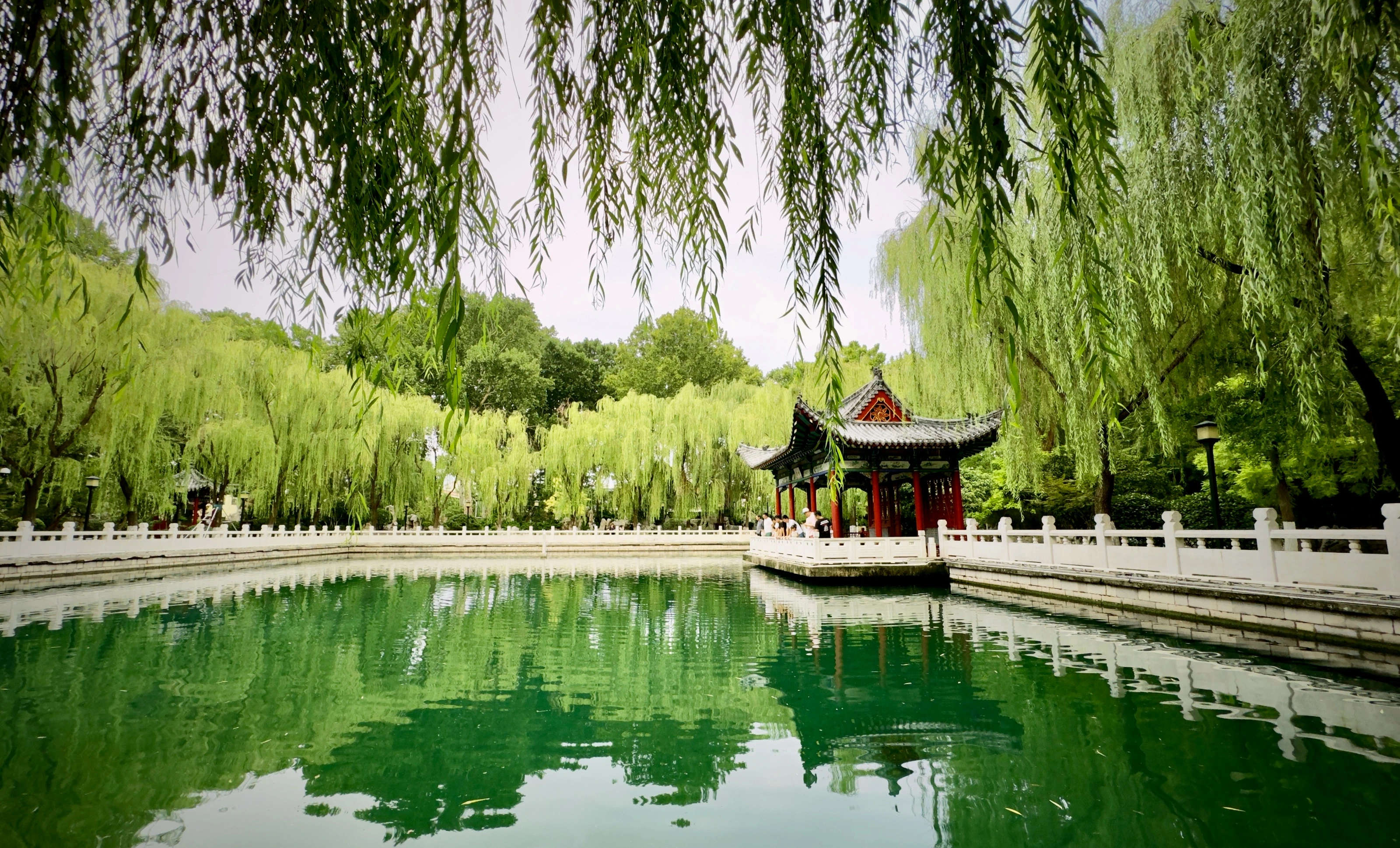
Filtered through deep limestone strata sloping northward from Mount Tai, subterranean waters encounter impermeable volcanic rock beneath Jinan, bursting upward through bedrock fissures into dozens of artesian spring clusters. As an ancient provincial capital along the lower Yellow River, the historic core is defined by flowing water: clear springs run past doorways and weeping willows brush grey-brick courtyards. Residents gather at dawn to catch cool water pouring from Black Tiger Spring to brew jasmine tea, Daming Lake ripples with summer lotuses, and the Xiaoqing River carries spring overflows eastward to the Bohai Sea, creating a waterside haven across the northern plains.
What to see
Baotu Spring surges continuously from three deep limestone vents into a crystal pool, flanked by the Song dynasty memorial pavilion of poet Li Qingzhao; Daming Lake is fed entirely by urban springs, its willow-lined banks overlooked by the towering Chaoran Pavilion illuminated at twilight; Thousand Buddha Mountain features rock-cut Buddhist carvings with sweeping views across the plain; Qushuiting Street preserves historic flagstone lanes where spring channels run alongside doorsteps.
What to eat
As a cradle of classic Lu cuisine, Jinan emphasizes refined broths and high-heat wok frying. Sweet-and-sour carp caught from the Yellow River is scored deeply, deep-fried into an arched posture, and glazed with glossy sweet-vinegar sauce; nine-turn braised pork intestine balances sweet, sour, bitter, spicy, and savoury notes; morning tianmo serves a savory millet porridge with baby spinach, sweet potato vermicelli, peanuts, and tofu ribbons, paired with freshly fried crullers.
Getting here & around
Jinan Railway Station adjoins the historic city center, while Jinan West and East stations serve Beijing-Shanghai high-speed trains, reaching Beijing in ninety minutes and Qingdao in two hours; Jinan Yaoqiang International Airport operates extensive national routes; underground metro lines and passenger canal boats link the primary spring parks directly.
Baotu Springs and Waterside Tea Tables
Walking beside Baotu Spring at dawn, three columns of clear groundwater surge unceasingly from joints in the submerged limestone bedrock, creating rolling white wheels of foam across the pool. Filtered through tens of kilometres of subterranean limestone strata, the water remains at a steady eighteen degrees Celsius year-round, exceptionally soft and free of mineral cloudiness. At the century-old Wanghe Pavilion teahouse by the pool, tea patrons carry bamboo-wrapped thermos flasks filled with living spring water, bringing it to a boil over small burners before pouring it into porcelain gaiwan cups filled with jasmine blossoms and green tea. The bubbling hot water releases a sweet floral bouquet, clean and lingering on the palate. Using living spring water to awaken tea leaves has anchored the city's contemplative daily tempo for generations.
Xiaoqing River Networks and Daming Lake Storage
The hydrology of historic Jinan exemplifies ancient urban engineering. Water discharged from seventy-two named artesian springs does not pool idly; instead, it flows through flagstone gutters along Qushuiting Street northward by natural gravity into Daming Lake. The lake serves as an expansive natural balancing reservoir that never dries up in droughts nor overflows its banks in downpours. When summer rains raise the water table, excess lake volume discharges automatically through northern sluice weirs into the Xiaoqing River, flowing east toward Laizhou Bay in the Bohai Sea. This gravity-fed drainage system historically protected the walled city from Yellow River silt backups, turning subterranean pressure into surface fertility across the plains.
Tianmo Porridge and Morning Crullers
At half past six in the morning, steam rises from cauldrons along neighbourhood lanes. The breakfast dish known locally as tianmo is not sweet at all, but rather a comforting, savoury five-spice porridge. Cooks grind yellow millet with Sichuan peppercorns and star anise into a thin batter, simmering it over a gentle flame before scattering in fresh baby spinach, strands of sweet potato vermicelli, fried tofu strips, and crushed peanuts, finished with a dash of fragrant scallion oil and ground white pepper. Each spoonful offers silky grain warmth balanced by tender greens and a subtle peppery finish. Diners tear off pieces of piping-hot, golden crullers to dunk directly into the porridge, combining grain sweetness with crispy dough to nourish cold northern mornings.