Kunming
Gulls wheel among weeping willows at Green Lake, while a glossy sheen of rendered poultry fat traps scalding chicken broth beneath porcelain surfaces.
Nestled along the shores of Dianchi Lake in the heart of the Yunnan-Guizhou Plateau, Kunming is cradled by mountains where southwest monsoons and high-altitude sunshine preserve perpetual spring. The Panlong River flows through red-earth terrain into expansive waters, welcoming thousands of black-headed gulls migrating from Siberia each winter. At the Zhuanxin Farmers Market, rows of wild foraged mushrooms and seasonal blossoms arrive daily from alpine slopes; fragrant sips of raw Pu'er tea pair with steaming bowls of crossing-the-bridge rice noodles, exemplifying culinary warmth in high plateau life.
What to see
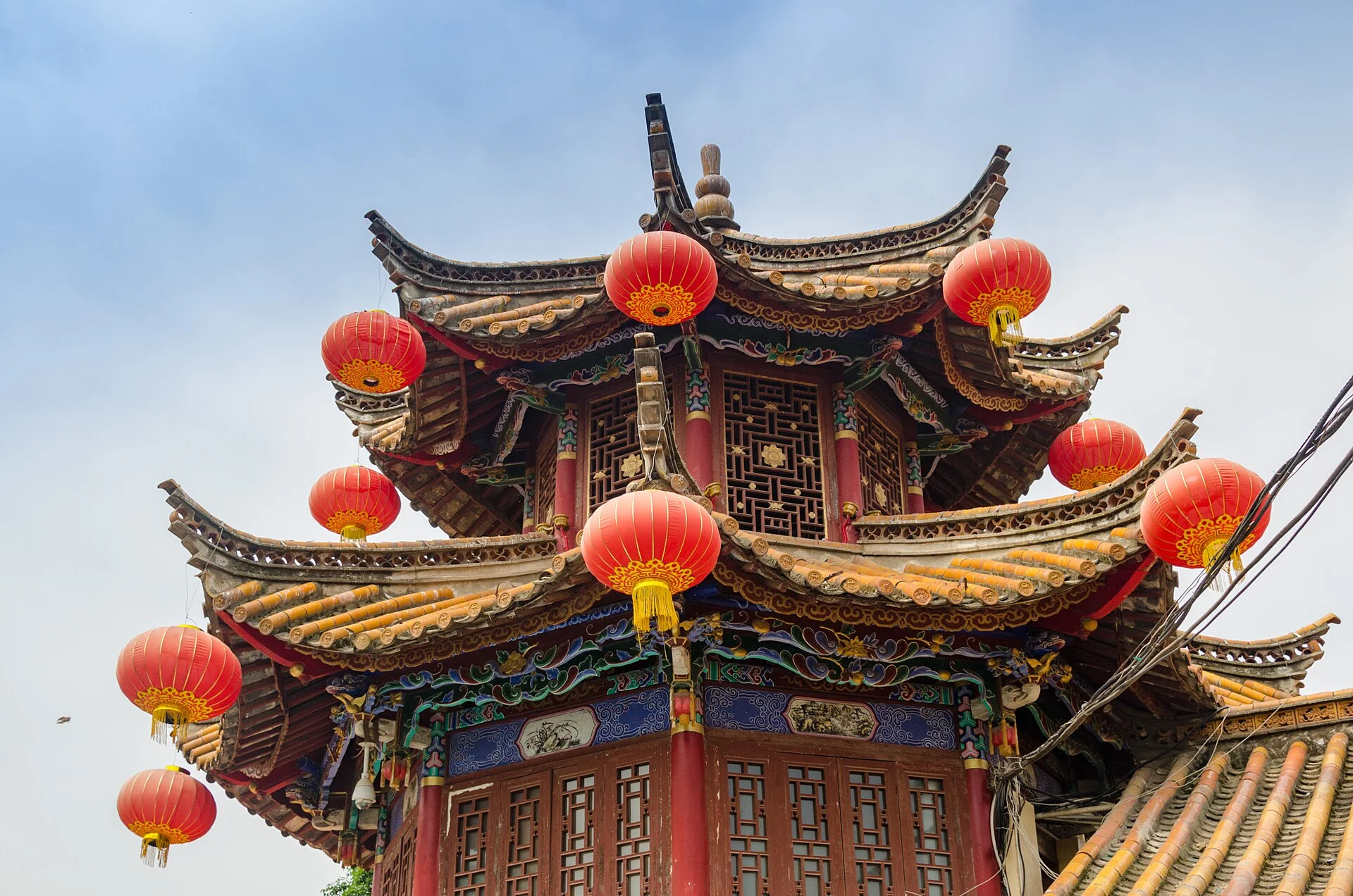
Green Lake Park is ringed by weeping willows and stone pavilions where flocks of wintering gulls gather over tranquil water; Haigeng Dam borders Dianchi Lake, looking across to the Sleeping Beauty silhouette of the Western Hills; the Golden Horse and Jade Rooster Arches highlight Ming dynasty timber framing in the central square; the Yunnan Military Academy preserves ochre European verandas and parade grounds from early revolutionary history.
What to eat
Crossing-the-bridge rice noodles feature deep porcelain bowls of rich chicken and pork marrow stock sealed under golden poultry fat, used to flash-cook paper-thin pork, quail eggs, and fresh pea shoots before adding fermented rice noodles; wild alpine mushrooms like jianshouqing, ganba, and porcini are braised in clay pots over high heat during rainy summers; posu buns feature flaky layered dough; copper-pot noodles simmer with sour pickles and minced pork over open fire.
Getting here & around
Kunming South Railway Station serves the Shanghai-Kunming and Nanning-Kunming high-speed railways, reaching Guiyang in two hours and Chengdu in four hours, while connecting the China-Laos Railway to Vientiane; Kunming Changshui International Airport links regional and Southeast Asian routes; underground subway lines serve primary stations and lakefront promenades.
Zhuanxin Market and Wild Mushroom Lore
Walking into Zhuanxin Farmers Market in the early morning, the fragrant aromas of the Yunnan-Guizhou Plateau fill the air. Stalls spanning several hundred metres display mountain produce trucked overnight from mountain valleys: during the rainy season, baskets of wild mushrooms, including termite mushrooms, jianshouqing, and copper-topped boletes, sit neatly arranged while cooks and merchants discuss exact pan temperatures and sliced garlic proportions. In winter, crisp sweet bamboo shoots, sweet strawberries, Bai rushan cheese curds, and Xuanwei dry-cured hams hang side-by-side. Rather than a tourist display, this market represents the city's active domestic hearth, where fermented bean pastes, hill greens, and roasted snacks ground community living in the soil.
A Scalding Bowl of Crossing-the-Bridge Broth
When crossing-the-bridge rice noodles are placed on the table, the oversized blue-and-white porcelain bowl appears completely tranquil, releasing neither steam nor bubbles. This still surface is sealed by a thick layer of golden chicken and goose fat floating atop bone broth simmered from old hens, duck, and pork marrow. The broth underneath remains near boiling point. Diners must follow strict etiquette: sliding translucent ribbons of raw pork tenderloin, cured ham, and river fish into the liquid first, stirring gently until the meat turns white; adding quail eggs, ginger shoots, and green pea greens next; and finally ladling in slippery, fermented rice noodles. The fat layer acts as a thermal insulator, ensuring that every sip remains scalding and pristine.
Dianchi Sluice Gates and Panlong River Drainage
Located in a low basin beside Dianchi Lake, historical Kunming faced recurrent flash floods along the Panlong River. In the thirteenth century, governor Sayyid Ajjal Shams al-Din Omar constructed Songhua Dam and erected twelve stone sluice gates along the river, directing mountain floodwaters into suburban farm canals while opening Haikou Channel to drain lake surplus northward toward the Jinsha River. In contemporary times, the Caohai wetland nature reserves and Haigeng coastal dikes establish an interconnected ecological buffer, adjusting gate openings to handle seasonal rainfall surpluses and low-water filtration. These historical hydrologic networks continue to tame monsoon surges while maintaining living water throughout the urban basin.