Lijiang
Spring water surges from Black Dragon Pool, dividing into three channels through the town; following the sound of running water keeps you from losing your way.
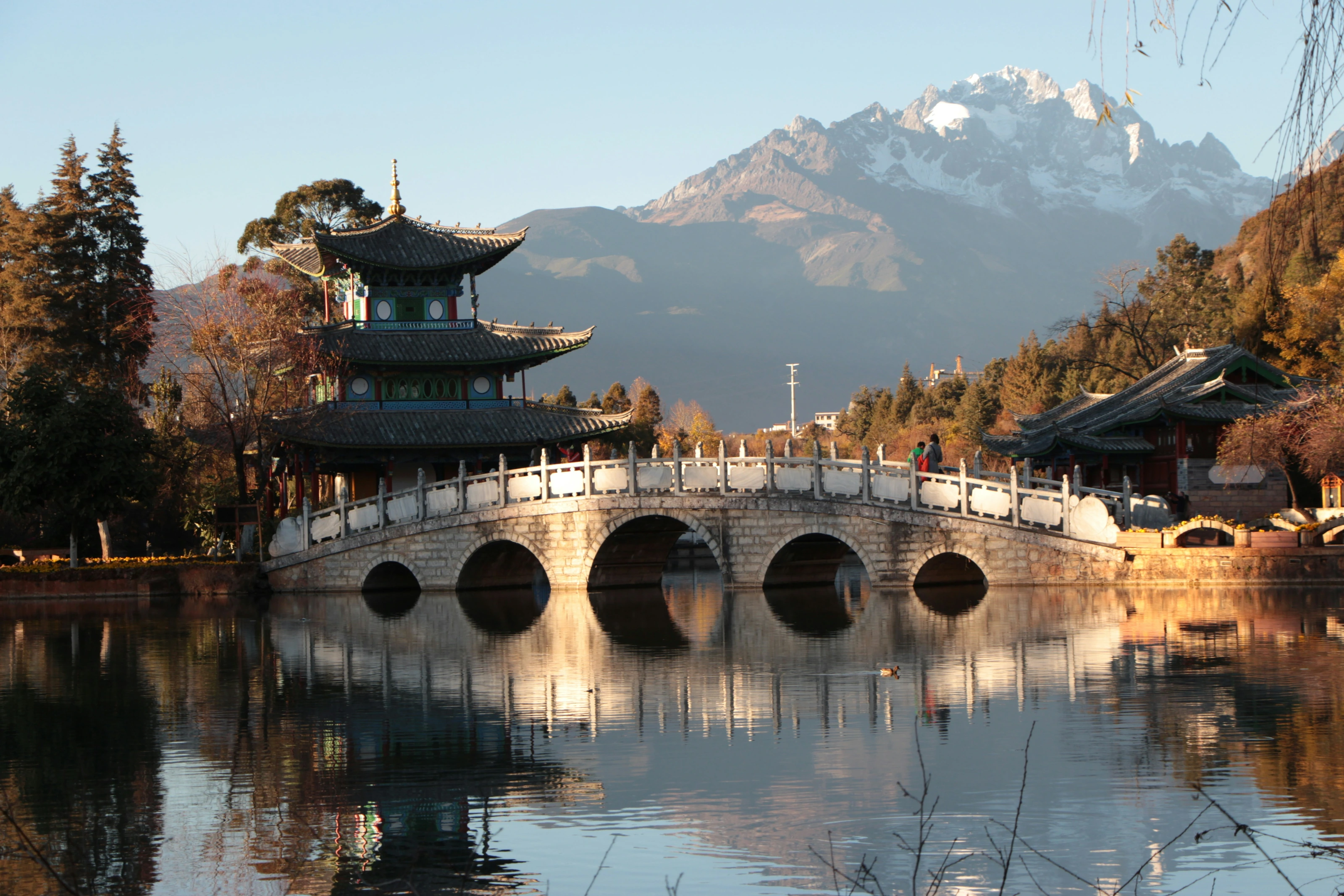
Lijiang sits in a high alluvial basin at 2,400 metres at the foot of Jade Dragon Snow Mountain. Meltwater from the mountain surges into Black Dragon Pool, dividing at the northern gate into three primary channels that weave past willows and grey-brick shopfronts, keeping the polished sandstone lanes gleaming clean. From the tiled roofs and sweeping timber brackets of Dayan Old Town to the quiet earthen compounds of Baisha and the peaceful canals of Shuhe, Lijiang anchors mountain water and Naxi vernacular traditions.
What to see
Dayan Old Town features an open grid unconstrained by defensive city walls, centered on Sifang Square and the Mu Family Mansion; Baisha Village preserves rural adobe farmhouses and Ming dynasty religious murals; Shuhe Old Town centers on the ancient stone Qinglong Bridge; northern vistas frame the snowfields of Jade Dragon Snow Mountain.
What to eat
Naxi culinary traditions rely on winter curing and earthenware braising: copper pots simmer salt-cured pork ribs with wild mountain yam into a fragrant, velvety broth; crisp water snowdrop flower stems are flash-fried with garlic; chickpea jelly is seared golden on griddles; breakfast brings flaky fried Naxi baba flatbreads with rich butter tea.
Getting here & around
Lijiang Sanyi Airport connects major cities, and Lijiang Railway Station offers frequent high-speed trains to Kunming, Dali, and Shangri-La. The historic town core is strictly pedestrian; stone-slab lanes require comfortable walking shoes, while local buses and taxis serve Baisha and mountain trailheads.
Choose a neighbourhood
Each area offers a different side of the city. Pick one to explore at your own pace.
Dayan Old Town & Sifang Square
The core World Heritage quarter, where fast-flowing canal waters parallel cobblestone alleys, anchored by the Mu Family Mansion on the slopes of Lion Hill and buzzing morning produce markets.
Wandering polished flagstone alleys, exploring timber chieftain architecture, and browsing handmade silversmith workshops.
Baisha Village & Mountain Foothills
The ancestral seat of Naxi chieftains directly beneath the southern face of Jade Dragon Snow Mountain, preserving rustic mud-brick courtyards and exquisite syncretic Ming murals.
Gazing directly at the towering snow crags, studying ancient Naxi-Tibetan paintings, and experiencing quiet village craft life.
Shuhe Old Town & Jiuding Dragon Pool
An exceptionally preserved station on the Tea Horse Road historically famous for leather crafters, centered on ancient arched stone bridges and clear spring-fed waterways.
Relaxing in waterside teahouses shaded by weeping willows, learning caravan history, and enjoying calm evenings.
The Three-Tiered Wells
Lijiang's urban hydrology displays centuries of ecological wisdom. Mountain spring water rushing through town passes through specialized three-tier stone wells called Sanyan Jing. Water cascades down three adjoining basins: the uppermost pool stays pristine for dipping drinking water; the middle overflow basin remains clean for rinsing rice and mountain vegetables; the lowest basin is reserved for washing laundry. The effluent drains into subterranean storm channels, ensuring every household has continuous access to living snowmelt while preserving community cleanliness across generations.
Courtyards of Three Bays and a Screen Wall
Naxi master carpenters developed distinctive wooden courtyard compounds adapted to the plateau climate. Known as sanfang yizhaobi, the typical layout consists of a main residential wing facing east, two flanking wings, and a tall whitewashed brick screen wall reflecting morning sun into deep verandahs. Beams are hewn from seasoned chestnut wood and joined by mortise-and-tenon carpentry that yields flexibility during earthquakes. The central skywell is paved with smooth river pebbles arranged into lotus and coin mosaics, allowing rainwater to drain naturally beneath mossy stones.
Cured Ribs in the Copper Pot
Step into an old stone lane and you smell charcoal cauldrons simmering cured pork ribs. Around winter solstice, families select pork ribs, rubbing them thoroughly with coarse salt, wild Sichuan peppercorns, and corn liquor before hanging them beneath north-facing eaves. Cured solely by freezing dry winds and winter sun for months, the meat deepens into dense mahogany. Simmered in hammered copper cauldrons with mountain wild leek roots and celery, the bones yield rich marrow that melts into a clear, savory broth, tender and restorative.