Ningbo
Freighters sound horns as they clear Sanjiangkou heading for the East China Sea, while reflecting ponds at Tianyi Pavilion mirror four centuries of brick and timber library craft.
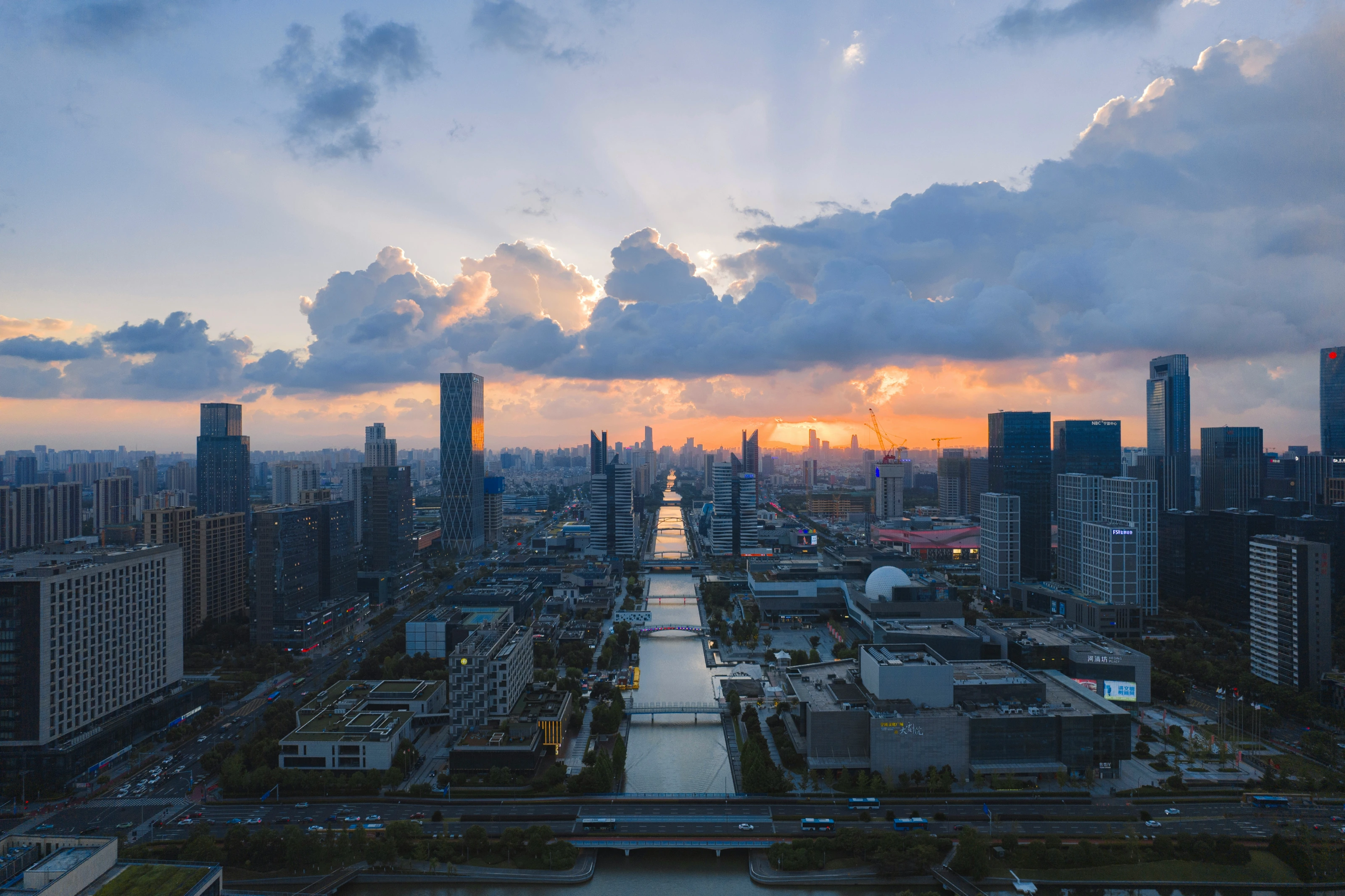
Where the Yuyao and Fenghua rivers converge into the Yong River before meeting the open ocean, Sanjiangkou has witnessed Ningbo's maritime journey as an origin port along the ancient Maritime Silk Road. Here, Ming dynasty scholar-official Fan Qin constructed Tianyi Pavilion, incorporating water-based firebreak principles to build Asia's oldest surviving private library; down flagstone alleys, aromas of water-milled black sesame rice dumplings scented with sweet lard linger outside breakfast shops; Victorian consulates along the Old Bund stand beside fishing fleets, blending grand maritime commerce with scholar devotion to classical texts and subtle confectionery.
What to see
The Tianyi Pavilion Museum preserves Asia's oldest surviving private book repository, featuring the Dongming Thatched Cottage, water reservoir rockeries, and brick carvings of the Bai'e Pavilion; the Old Bund sits where the three rivers meet, lined with Gothic cathedrals and nineteenth-century customs houses; Qing'an Guildhall is a rare temple combining sea goddess Mazu veneration with shipping guild halls, filled with gilded woodcarvings; Dongqian Lake is Zhejiang's largest natural lake, bordered by Southern Song stone statues.
What to eat
Ningbo water-milled tangyuan wraps water-ground glutinous rice paste around molten black sesame, lard, and cane sugar, boiling until afloat and releasing rich sweet lava; yellow croaker braised with pickled potherb mustard yields a milky, intensely savoury broth; raw mud crabs are marinated with sea salt into red-roe delicacies; sugar-braised softshell turtle offers sweet-savoury gelatinous richness; Xikou layered shortbread is crisp and fragrant with dried sea moss.
Getting here & around
Ningbo Railway Station provides high-speed connections along the coastal corridor, reaching Hangzhou in fifty minutes and Shanghai in two hours; Ningbo Lishe International Airport operates domestic and regional flights; subway lines link Tianyi Square, the Old Bund, and the airport directly; river ferries and riverside walks offer unhurried views along Sanjiangkou.
Firebreak Joinery of Tianyi Pavilion
In the mid-sixteenth century, retired official Fan Qin constructed Tianyi Pavilion to preserve over seventy thousand rare volumes. Because fire had destroyed ancient libraries across dynasties, Fan drew upon the I Ching concept that 'heaven generates water' to excavate the Tianyi Pond immediately fronting the timber hall, diverting canal waters into a permanent reservoir for rapid fire suppression. The architectural layout reflects protective foresight: spanning six bays across to symbolize water, with an undivided upper floor and six lower rooms; side gables and rear walls were laid in solid grey-brick firewall masonry to block external flames; bookcases were built of fragrant fir wood, elevated off stone floorings to prevent ground damp. Taihu rockeries reflected in the fire reservoir create a scholar retreat where hydraulic planning secured rare manuscripts intact across four hundred and fifty years.
Water-Milled Black Sesame Tangyuan
On winter mornings, granite mills rotate rhythmically inside neighbourhood pastry shops. The essence of Ningbo dumplings lies in the 'water-milling' process: polished round glutinous rice is soaked in fresh spring water for several days, slowly crushed with water between stone millstones, and drained in cotton bags under heavy stones to yield an elastic dough free of coarse grains. For the filling, plump black sesame seeds are gently toasted in dry iron woks, ground in stone mortars, and kneaded with fresh pork leaf lard and fine sugar. Dropped into rolling boiling water, the dumplings float light and plump before being ladled into porcelain bowls with a dash of osmanthus syrup. Pierced with a spoon, the skin yields smoothly without sticking to the teeth, releasing hot, molten black sesame whose rich lard softens the sweetness into a long, fragrant finish.
Sanjiangkou Tides and Maritime Navigation
Sanjiangkou forms the navigational soul of Ningbo's geography: the slow-moving Yuyao River from the west meets the deep Fenghua River from the south, combining into the Yong River that flows directly to the East China Sea. Ancient navigators harnessed tidal differentials to operate maritime shipping. High tides carried heavy merchant junks upstream to dock at Jiangxia wharves; low tides carried vessels downstream on ebb currents, clearing Xiangshan Bay within half a day to catch seasonal trade winds abroad. To prevent tidal saltwater surges from spoiling agricultural paddies further inland, engineers built stone sluices and the Tashan Weir upstream, impounding freshwater for mountain farming during droughts while venting floodwaters during monsoons. This balancing of tidal saltwater and inland fresh currents anchored the ancient Maritime Silk Road while safeguarding agricultural harvests.