Qingshen
Cliffside Buddhist carvings watch the Min River roll past, gossamer bamboo filaments weave calligraphic masterpieces, and summer bamboo groves shimmer with fireflies.
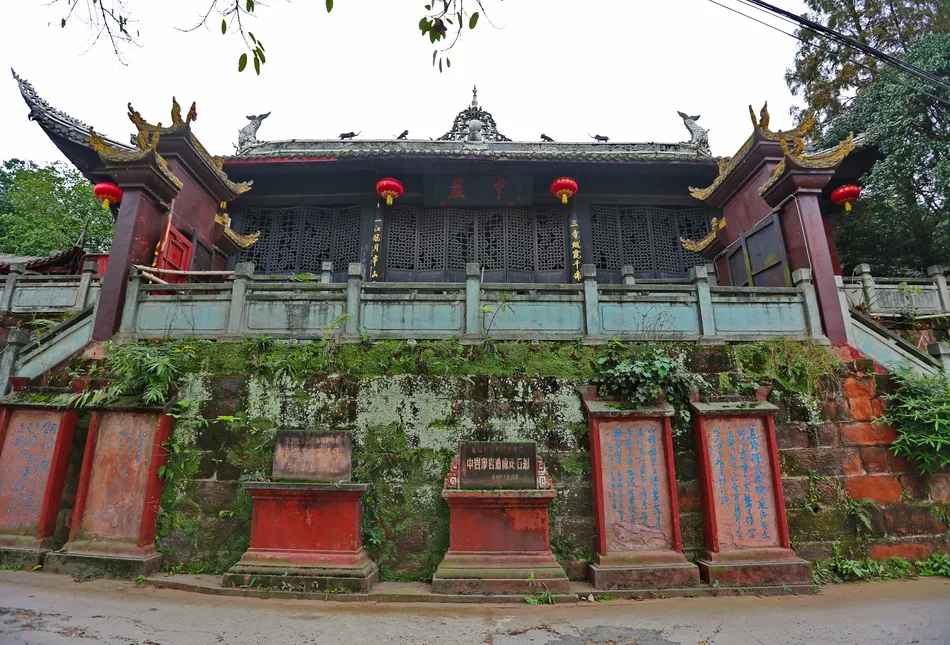
Qingshen borders the eastern bank of the middle Min River in southwestern Sichuan, historically revered as the territory of ancient Shu ancestor Cancong who pioneered sericulture. The river widens into tranquil currents here, watering miles of native sympodial bamboo groves. Local bamboo weavers are renowned for splitting culms into hair-thin translucent filaments, weaving intricate reproductions of classic landscape paintings and calligraphy. Along riverside bluffs stands Zhongyan Temple, where young poet Su Shi studied and courted his wife, while early summer bamboo groves twinkle with millions of luminous fireflies.
What to see
International Bamboo Art City hosts world-class bamboo weaving master studios and galleries exhibiting filigree dragon screens and micro-woven calligraphy; Zhongyan Temple clings to Min River cliffs with over two hundred Tang and Song Buddhist bas-relief carvings and the Fish-Calling Pond; Bai Clan Ancestral Hall preserves traditional Western Sichuan timber stages; Lanchanggou Gorge attracts firefly watchers in early summer; Jiangwan Ancient Wood Park displays petrified river ebony excavated from riverbeds.
What to eat
Dongpo Fish-Calling river fish simmers fresh Min River catch with local fermented bean paste, pickled red chilis, and ginger in a sweet-and-sour glaze; Hanyang roasted peanuts are famed for crunchy richness; bamboo tube rice steams fragrant rice with cured pork inside freshly cut green bamboo stems; Zhongyan Dongpo braised pork melts tenderly without greasiness; pan-fried river prawns toss baby shrimp with wild river chives.
Getting here & around
The Chengdu-Guiyang High-Speed Railway serves Qingshen Station, reaching Chengdu East in forty-five minutes and Leshan Giant Buddha in fifteen minutes. Dedicated shuttles link the station to the International Bamboo Art City. Regional buses travel downriver along scenic highways to Zhongyan Temple and Hanyang Town in twenty minutes.
Choose a neighbourhood
Each area offers a different side of the city. Pick one to explore at your own pace.
International Bamboo Art City & Master Studios
The capital of Chinese bamboo filigree weaving, combining museum galleries, artisan workshops, and bamboo groves.
Touching translucent bamboo threads shaved to 0.1mm thickness and watching master weavers reproduce calligraphy without templates.
Zhongyan Temple Cliff Carvings & Fish-Calling Pond
The historic sanctuary where Su Shi studied in his youth, clinging to Min River cliffs amidst dense greenery and Song inscriptions.
Climbing cliffside paths to examine Tang and Song rock-cut Buddhist carvings and clapping hands over the Fish-Calling Pond to watch fish surface.
Hanyang Old Town, Ancient Ferry & Firefly Valley
A quiet river trading town on the banks of the Min River, connected to wild ravines that light up with fireflies in early summer.
Resting inside wooden riverside teahouses and trekking along bamboo ravines on summer nights to see clouds of bioluminescent fireflies.
Qingshen Gossamer Bamboo Filaments and Calligraphic Weaving
Inside master weaver Chen Yunhua's studio in Qingshen, strands of bamboo resting on worktables appear as delicate as silk floss. Local sympodial bamboo features long nodes, thick walls, and supple cellulose fibers. Artisans select two-year-old culms from shaded mountain slopes, scraping away outer bark before splitting and planing the wood through twenty sequential steps into translucent filaments barely 0.1 millimeters thick and 0.5 millimeters wide. Without dyes or glue, weavers interlock these fine threads using complex warp-and-weft patterns to reproduce classic landscape paintings and Su Shi's calligraphy. Thousands of hours of finger work yield durable hangings that will not fade over centuries.
Su Shi's Romance at Zhongyan Temple and Cliff Carvings
Ascending the red sandstone bluffs along the eastern bank of the Min River, the halls of Zhongyan Temple climb the cliffside. Celebrated in the Song dynasty on par with Mount Emei, the cliffs feature over two hundred Tang and Song Buddhist bas-relief carvings. Flanking the mountain stone stairways, serene Buddhas sit upon lotus pedestals with drapery fluttering in mountain breezes. Along the ravine between the lower and middle shrines lies the emerald pool named 'Fish-Calling Pond.' Tradition holds that when young Su Shi studied here, he and his mentor's daughter Wang Fu both independently wrote down the name 'Fish-Calling Pond,' forming an auspicious romantic bond. Clapping hands over the water still brings carp swimming to the surface.
Tranquil Min River Meanders and Summer Firefly Sanctuaries
Flowing through the rolling hills of southwestern Sichuan, the Min River sheds its torrential Alpine fury at Qingshen, widening into a tranquil emerald ribbon. High humidity and clean river springs nurture expansive bamboo groves along the eastern banks. In early summer, an extraordinary natural spectacle occurs within the secluded valleys of Lanchanggou. Millions of native fireflies emerge from stream beds and damp moss. As twilight falls over the bamboo canopy, tiny golden-green beacons begin blinking among the ferns. In moments, glowing clouds of bioluminescence float across the ravine like constellations drifting through the forest, attesting to the pristine ecological health of the river valley.