Shanghai
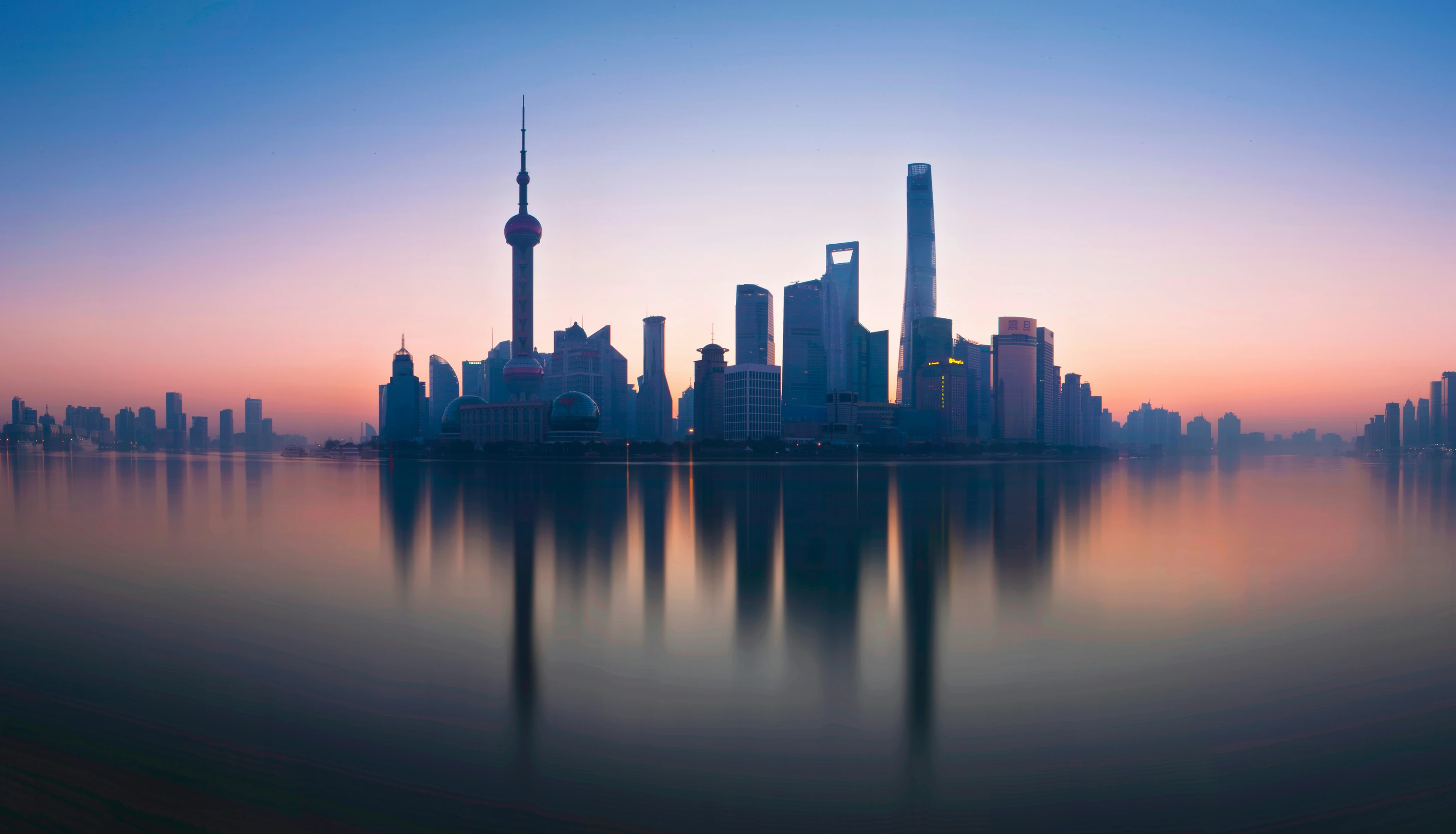
The Huangpu River splits the skyline into two halves, while bamboo poles in lilong lanes carry freshly laundered cotton.
Where the Yangtze River discharges into the East China Sea, the Huangpu River and Suzhou Creek converge across an alluvial delta. Neoclassical granite bank facades along the Bund face the river currents, backed by a century-old matrix of Shikumen lane neighbourhoods. Crowds queue in the morning before searing cast-iron pans for pan-fried pork buns, then stroll along plane-tree shaded boulevards at dusk. Modern industrial precision and intimate alleyway routines remain tightly intertwined across every street corner.
What to see
The granite architecture of the historic Bund looks across the Huangpu River to the modern towers of Lujiazui; French plane trees shade garden villas along Middle Fuxing and Hengshan roads; rehabilitated cotton mills and flour silos line the winding promenade of Suzhou Creek.
What to eat
Sizzling cast-iron pans yield fresh shengjian and guotie pork buns; bowls of delicate wontons arrive in broth strewn with egg ribbons and dried baby shrimp; crispy fried pork chops are dipped in sweet flour paste and Worcestershire sauce; chilled edamame infused with Shaoxing rice wine lees perfumed summer evenings.
Getting here & around
Shanghai Hongqiao and Shanghai Central railway stations provide high-speed connections across all national trunks; Pudong and Hongqiao international airports handle world routes; dense underground subway lines and Huangpu River passenger ferries ease transit across water and land.
Lilong Lanes and Shikumen
During the latter half of the nineteenth century, traditional Jiangnan courtyard layouts merged with European terraced row homes inside the foreign concessions, giving birth to Shikumen lane architecture. Lacquered timber gates sit framed in heavy granite lintels, topped with baroque pediments or carved Chinese scrolled foliage. Inside, compact lightwells (tianjing) guide rainwater and morning daylight through floor-to-ceiling wooden lattice casements. Second-storey rooms bridge across narrow passages to form pedestrian overhead arches (guojielou), while bamboo poles project outward across upper floors laden with drying laundry. Multiple families historically shared ground-floor cooking stoves and brass water taps, while neighbours cleaned greens on low wooden stools and bicycle bells echoed down flagstone alleys.
Shengjian and Morning Order
At half past six in the morning, heavy round wooden lids lift from wide cast-iron skillets, releasing white plumes of savoury steam. Using firm wrist motions, the chef rhythmically turns the scalding pan over charcoal or open gas flames to ensure uniform heat distribution. Leavened dough envelops seasoned pork patties and concentrated broth gelatine; placed seam-side down directly onto oil-coated iron, the bun bottoms fry to a deep golden crisp while the tops steam tender under water droplets. Handfuls of chopped scallions and toasted white sesame seeds shower over the batch just before dishing up. Patrons pierce the tender pastry carefully with chopsticks, sip the rich, scalding meat broth from the dough pouch, and dip the crunchy base into black vinegar and spicy table sauce. Alongside hot soy milk, crullers, and steamed sticky rice rolls, this morning ritual has sustained the city's waking pulse for generations.
The Sluice Gates of Suzhou Creek
Suzhou Creek, historically known as the Wusong River, flows from Lake Tai into the Huangpu, serving as the historic water artery that ferried Jiangnan grain, cotton yarn, and brickwork directly to maritime docks. Both shores were once dense with brick warehouses, flour silos belonging to the pioneer Rong family, and textile spinning workshops where steam whistles blew around the clock. Towards the end of the twentieth century, industrial manufacturing gradually relocated, and decades of environmental restoration restored clarity to the water. Waterfront freight depots have been revitalised into design ateliers and riverside tea verandas, while century-old steel truss bridges and water gates remain in place, tracing the aquatic foundations of modern Shanghai.