Taishun
Mountain gorges run too steep for midstream piers, prompting southern Zhejiang carpenters to interlock raw cedar logs into floating wooden rainbows.
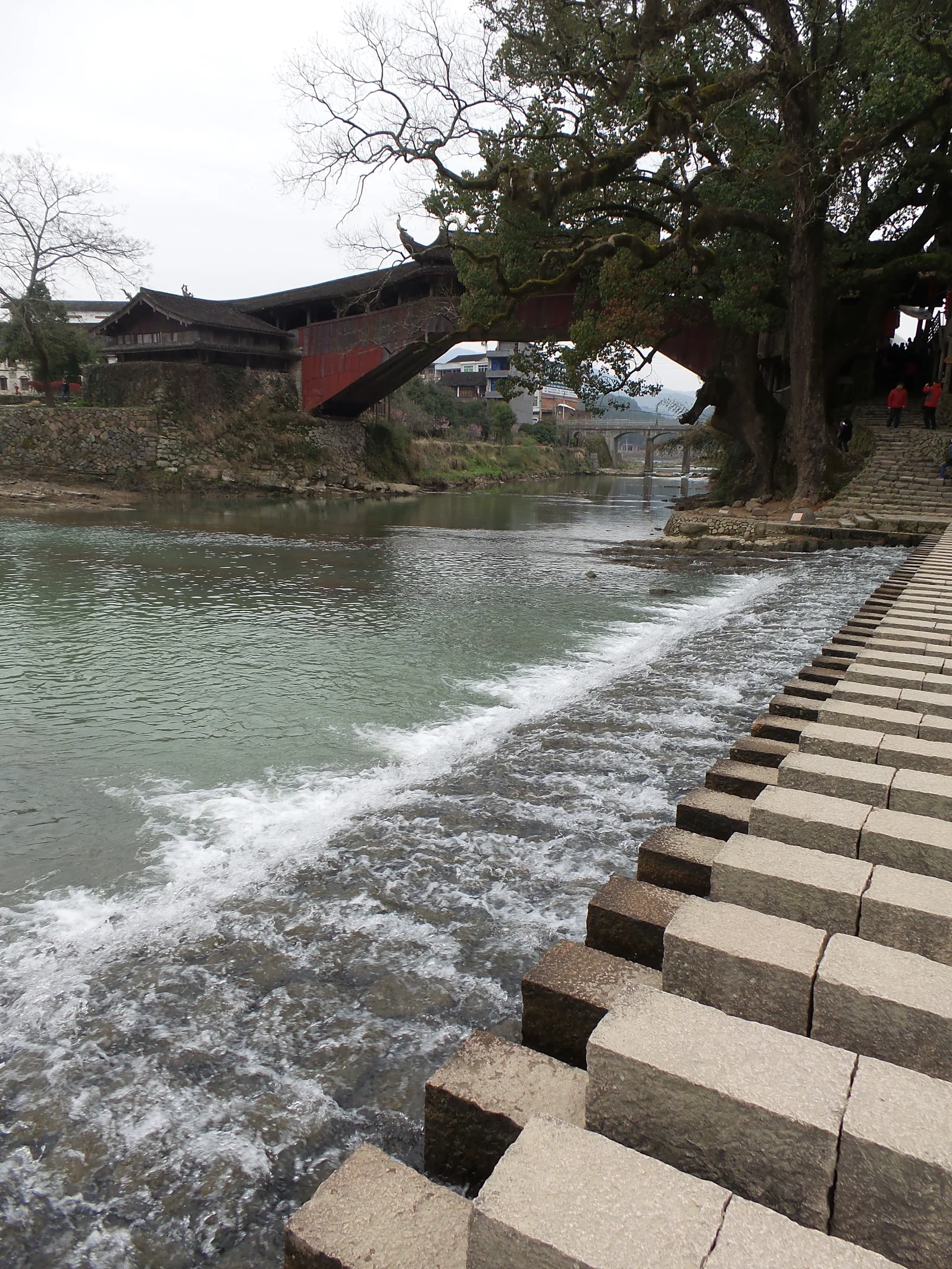
Taishun lies locked deep within the corrugated folds of the southern Zhejiang borderlands, where jagged valleys channel turbulent mountain torrents. Severed from coastal thoroughfares by steep crests, mountain artisans developed one of the world's most intricate timber architecture traditions: the woven-timber lounge bridge. In Sixi, Beijian Bridge and Xidong Bridge cross wide ravines using interlocking cedar trunks held together purely by compressive gravity without a single iron nail. Functioning as sheltered village squares above churning rapids, these covered corridors anchor hillside communities alongside Ku Village's ancient pebble-paved alleys.
What to see
Beijian and Xidong bridges in Sixi town are known as the sister lounge bridges, featuring sweeping eaves and exposed timber arches; Xuezhai Bridge in Sankui spans a sheer gorge with dramatic posture; Ku Village preserves Tang-Song pebble-walled dwellings and the Ming-era Shiying Arch; Wuyanling Nature Reserve protects subtropical virgin broadleaf forests.
What to eat
Taishun thin pancakes wrap stir-fried shredded pork, bean sprouts, and chives inside gossamer wrappers; nine-layer steamed rice cake layers soaked japonica rice pulp before being drizzled with ginger syrup; green herb tofu curds are made from wild shrub leaves and served chilled; free-range highland chicken is slow-braised with Sanbeixiang tea leaves.
Getting here & around
Take high-speed rail to Wenzhou South or Cangnan station, then transfer by regional coach or rental car via the Yun-Jing Expressway to Taishun in around ninety minutes. The various lounge bridges are dispersed across Sixi, Sankui, and Xiaocun townships, best reached by rental car.
Choose a neighbourhood
Each area offers a different side of the city. Pick one to explore at your own pace.
Sixi Lounge Bridges & Feiyun Valley
The historical heart of Taishun carpentry, where Beijian and Xidong bridges stand within a kilometer of each other under giant camphor and maple canopies.
Inspecting the nail-free woven timber arches from underneath and resting along cantilevered riverfront balustrades.
Ku Village Heritage Pebble Settlement
A twelve-hundred-year-old secluded mountain enclave where courtyards, lanes, and compound walls were constructed using river pebbles.
Wandering labyrinthine Song-dynasty pebble alleys to discover ancient gatehouses untouched by modern commercial sprawl.
Wuyanling Reserve & Highland Tea Terraces
A virgin ecological redoubt crowned by Baiyun Peak, cloaked in subtropical montane cloud forests and stepped green tea fields.
Hiking cloud-veiled forest trails, tracking rare high-altitude pheasants, and tasting early spring Sanbeixiang green tea.
Interlocking Gravity of Woven Timber Arches
Gazing upward from the riverbank beneath Beijian Bridge, the skeleton of the timber arch reveals extraordinary structural logic. Because ferocious seasonal floods would sweep away stone pillars, master builders adapted the woven rainbow arch principles recorded in the Northern Song dynasty. Alternating sets of three-segment and five-segment cedar beams are interwoven across the chasm, holding each other in tight compression. Any downward load exerted by pedestrians or pack horses transfers naturally down the sweeping curves into solid rock embankments on either shore. The timber lounge superstructure above shields vulnerable structural joints from rotting rain while its heavy tile roof anchors the arch firmly against surging drafts.
Pebble Masonry and Tang-Song Ward Architecture
Entering Ku Village, the eye is greeted by walls composed entirely of smoothed, multicolored river stones. In the late Tang dynasty over twelve centuries ago, the Bao and Wu clans sought sanctuary in this mountain basin, hauling tens of thousands of water-polished granite pebbles from adjacent river beds. Stacked skillfully without mortar, stone faces lock together through careful selection of shape and balance, forming defensive compound ramparts up to six meters high. These pebble walls insulate courtyards against seasonal extremes while stone drains silently channel mountain rainwater. High fire-stop walls enclose traditional quadrangles that quietly attest to centuries of communal endurance.
Cool Mist Sanbeixiang High-Mountain Teas
The peaks of Taishun maintain an average elevation above five hundred meters, wrapped in dense Pacific mountain fog throughout the growing season. Farmers establish stepped tea terraces in the weathered granite slopes flanking Baiyun Peak, where diffuse sunlight and chilly mountain nights slow leaf growth to concentrate natural sweetness. Young shoots gathered before the grain rain undergo gentle pan-firing, needle-shaping, and charcoal finishing to yield glossy green, downy leaves. When infused with boiling water, the liquor reveals a pale emerald glow with lingering notes of wild chestnuts and mountain orchids. Famous for resilience, the brew retains its full body through three successive pots.