Taiyuan
The Fen River flows south, and Taiyuan's flour boards are shaved from dawn until dark, the scent of boiled dough arriving ahead of the wind.
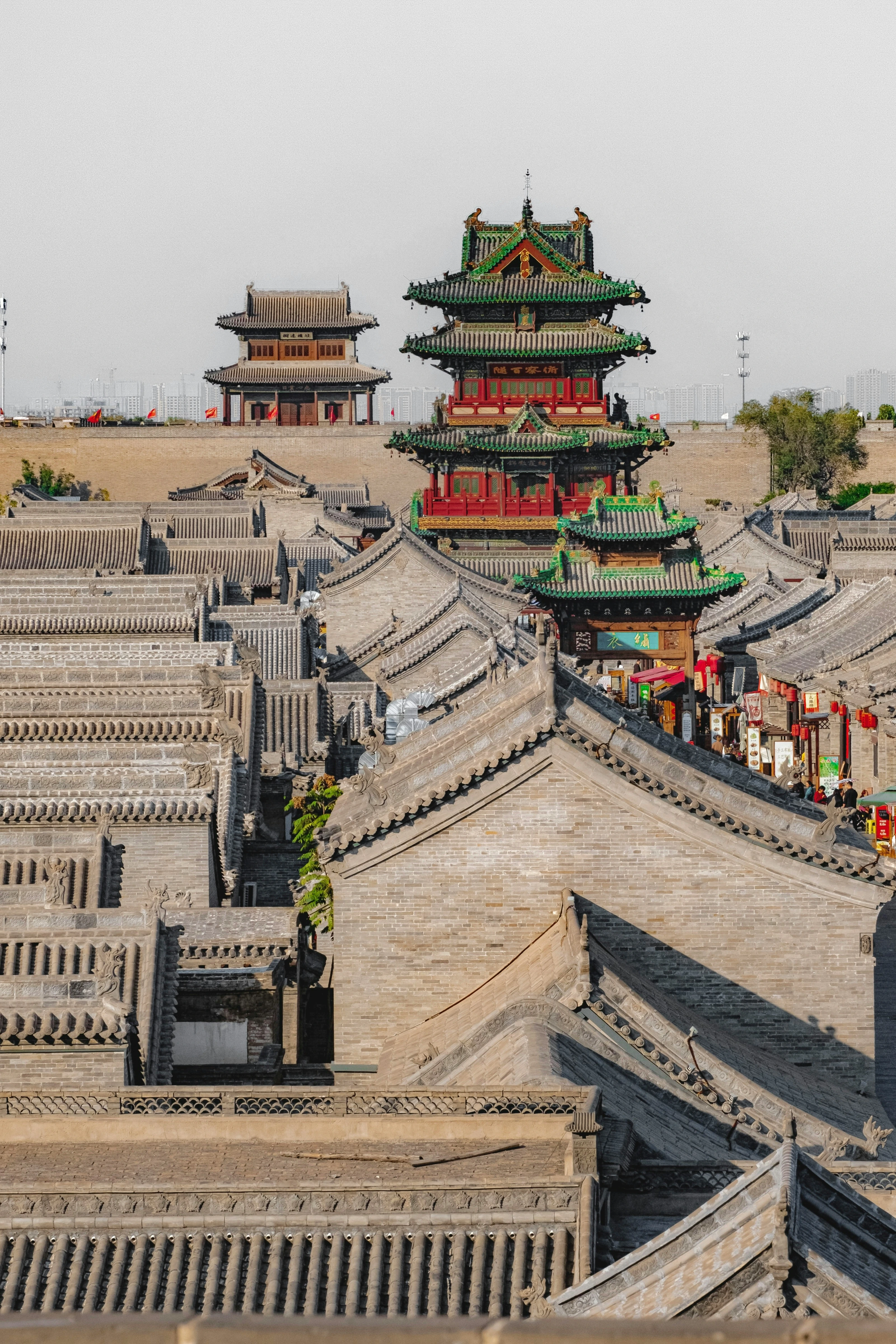
Taiyuan sits in the Fen River valley sheltered by the Taihang and Lüliang ranges. From the coiled wooden dragons and Song-dynasty polychrome clay maidens of Jinci's Holy Mother Hall to dawn bowls of tou nao herbal broth and ribbons of noodle dough flying into boiling cauldrons, the ancient city of Jinyang moves to an unhurried urban cadence scented with aged sorghum vinegar.
What to see
At the foot of Xuanweng Mountain, Jinci holds ancient Zhou cypresses and the Nanlao Spring flowing beneath temple floorboards; Shanxi Museum houses Houma bronze covenants and ancient ritual vessels; the linear Fen River parkland offers wide western horizon walks at dusk.
What to eat
Breakfast begins with Fu Shan's herbal tou nao soup paired with salted chives and yellow rice wine; midday brings cooks shaving arc-like noodles over scalding water; ceramic jugs of aged sorghum vinegar sit beside every salt cellar, giving robust wheat dishes and rolled oat cylinders their earthy depth.
Getting here & around
Taiyuan Wusu Airport and Taiyuan South Railway Station connect directly to Beijing and central plains hubs; Metro Line 2 bisects the city core, while Jinci is reached by frequent express buses; on foot, Liuxiang and Shuiximen reveal everyday neighbourhood lanes.
Choose a neighbourhood
Each area offers a different side of the city. Pick one to explore at your own pace.
Jinci & Mount Xuanweng Foot
The ancient source of Jin River away from the city centre, housing Song-dynasty dragon pillars, polychrome court maidens, and the clear Nanlao Spring channeled through garden channels.
Appreciating Song timber-frame architecture, clay sculptures, and ancient cypresses sheltering historic stone channels.
Liuxiang, Shuiximen & Heritage Noodle Houses
The historic urban quarter gathering heritage food shops, Fu Shan's tou nao soup houses, the Ninghuafu vinegar distillery, and sidewalk noodle stalls.
Experiencing dawn medicinal herbal breakfasts, following vinegar scents to historic vats, and tasting everyday noodles.
Shanxi Museum & Fen River West Bank
The cultural and riverfront corridor west of the Fen River, gathering ancient bronzes and Northern Dynasties tomb murals, adjoining open willow-lined walking paths.
Tracing three millennia of Jin state bronzes and viewing sunset ridge lines over the broad water.
The Curved Blade and Boiling Pot
A Taiyuan cook rests a firm loaf of kneaded wheat dough across his left arm, rhythmically shaving ribbons with a curved blade guided entirely by flicking wrists. The pieces arc like white swallows straight into a roaring cauldron. Thick along the spine and razor-thin at the edges, each noodle cooks through in seconds yet retains resilient bite, served beneath fragrant pork stew or simmered tomato relish.
Centuries in Earthenware Crocks
Deep within the lanes of Ninghuafu, rows of massive earthenware crocks sit beneath the sun. Shanxi aged vinegar is brewed from red sorghum with a starter of barley and field peas, passing through steaming, fermenting, smoking, rinsing, and years of ageing. Under the dry plateau air, winter frost freezes out moisture while summer sun evaporates water, leaving an unhurried, rich, and rounded acidity.
Ancient Cypresses and Song Clay Maidens
Before Jinci's Holy Mother Hall, eight carved timber dragons cling to outer pillars, holding their scaly postures across nine hundred years. Inside, life-sized polychrome clay maidens gaze downward with subtle, deeply human expressions of patience, melancholy, and restraint. Outside, three-thousand-year-old Zhou cypresses twist horizontally above the stone lip of Nanlao Spring.