Tianjin
Nine northern rivers unite here toward the Bohai Sea, steel bridges pivot with tidal shifts, and morning street griddles crisp green-mung crepes.
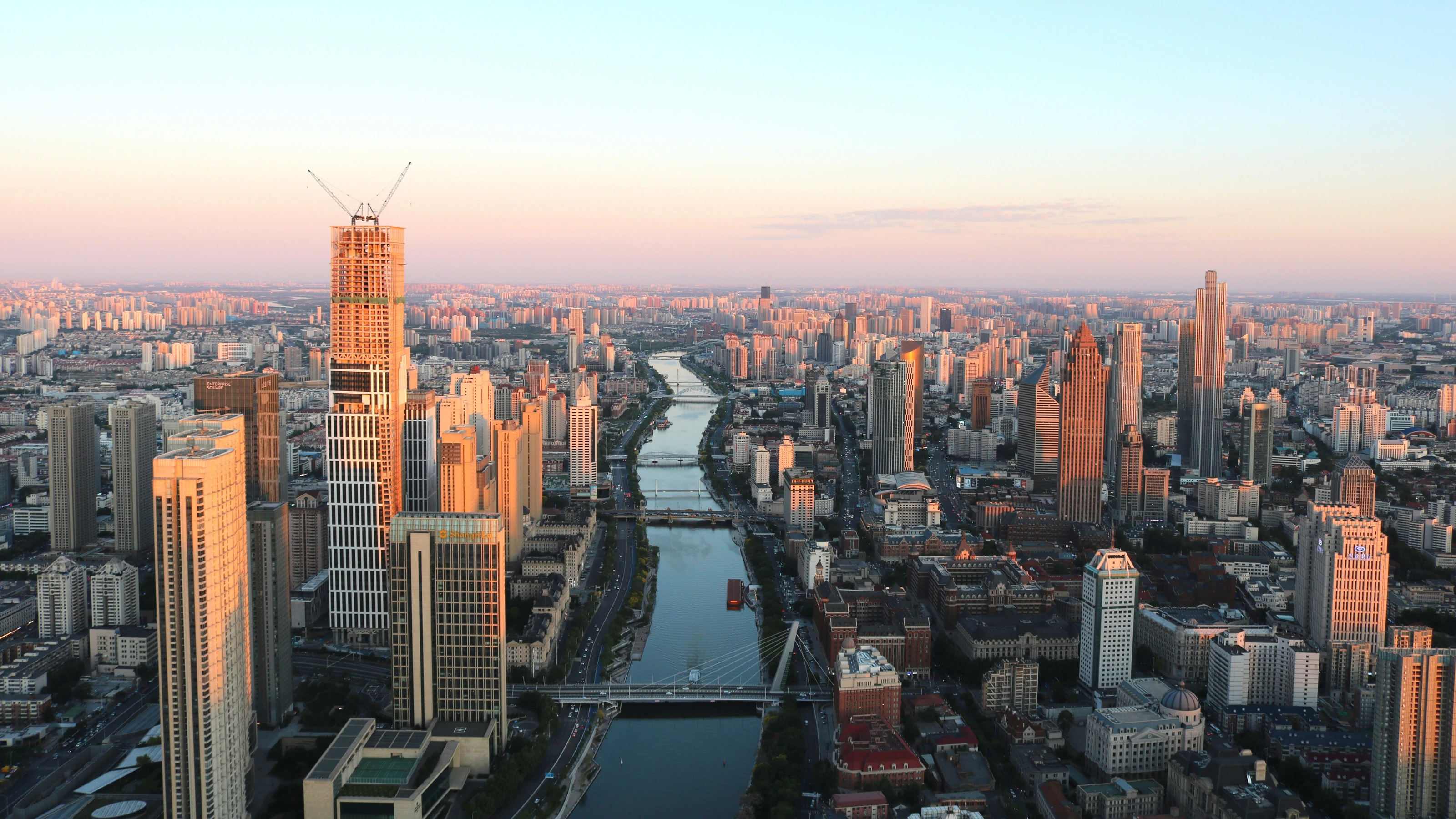
Tianjin crowns the northeastern reaches of the North China Plain where the Haihe River collects northern tributaries before entering the Bohai Gulf. As the northern maritime terminus of the Grand Canal, waterborne grain transit transformed a military garrison into northern China's premier commercial hub. Concession-era western classical mansions along the Five Avenues stand alongside historic canal wharves, creating a vibrant riverfront metropolis famed for crisp green-mung bean crepes, witty performing arts, and a laid-back port city temperament.
What to see
Historic steel bridges link the Haihe banks, with the Jiefang Bridge displaying early-twentieth-century bascule engineering; the Five Avenues preserve over two thousand Western eclectic brick villas; the Italian Style Area showcases Mediterranean-style piazzas; Ancient Culture Street and Tianhou Palace celebrate Grand Canal shipping heritage; the Tianjin Eye Ferris wheel spans the river confluence.
What to eat
Tianjin jianbing guozi spreads stone-ground green mung bean batter over a flat griddle with egg, brushed with sweet flour paste, fermented bean curd, and chili oil before folding around a shatteringly crisp fried cracker; guobacai tosses sliced mung crepes in thick spiced star-anise gravy; Erdeyan fried cakes encase sweetened red bean paste inside blistered golden crusts; steamed pork buns display eighteen delicate pleats.
Getting here & around
The Beijing-Tianjin Intercity High-Speed Rail links Beijing South to Tianjin Station in thirty minutes. Tianjin Binhai International Airport serves extensive domestic and international connections. Modern subway lines connect the Five Avenues, Italian Concession, and Ancient Culture Street, complemented by scenic Haihe river cruise boats.
Choose a neighbourhood
Each area offers a different side of the city. Pick one to explore at your own pace.
Haihe Riverfront, Jiefang Bridge & Jinwan
The historical maritime corridor linking colonial architecture with the steel Jiefang Bridge and century-old wharves.
Walking along riverside boardwalks at sunset watching heritage drawbridges, or boarding an evening cruise beneath illuminated facades.
The Five Avenues & Munan Road
A quiet residential enclave of tree-lined boulevards lined with over two thousand brick-and-timber European villas.
Bicycling under mature plane trees to examine British and Romanesque brickwork of early-twentieth-century courtyard estates.
Ancient Culture Street & Northwest Corner
The vibrant core of Tianjin street folklore and morning delicacies, packed with traditional tea-house comedy theaters.
Joining early morning breakfast queues for fresh mung crepes and listening to live stand-up crosstalk in teahouses.
Haihe River Confluence and Grand Canal Shipping Nexus
Standing along the river embankment at Sanchakou, currents sweep east toward Bohai Bay. This junction where the Southern and Northern Grand Canals join the Haihe River was the birthplace of Tianjin's earliest settlement. During the Yuan and Ming dynasties, grain fleets sailing from southern deltas docked here to transship imperial rice. Thousands of wooden masts once crowded the docks before the Tianhou Temple. River trade shaped the resilient, open-hearted temperament of the local populace. The riverbanks evolved into bustling merchant streets, crowned by the steel-truss Jiefang Bridge spanning the water.
Stone-Ground Mung Crepes and Spiced Breakfast Broths
At six in the morning in the Northwest Corner district, street stalls are enveloped in aromas of sesame, scallion, and savory bean paste. Authentic Tianjin jianbing guozi relies exclusively on soaked green mung beans ground into smooth batter without wheat fillers, ensuring an elastic, fragrant texture that never turns soggy. The vendor ladles batter onto a seasoned iron griddle, spinning a wooden spreader to form a paper-thin disc before cracking two fresh eggs across the surface. Flipped and brushed with sweet flour paste, fermented red tofu, and chili oil, it wraps around a crisp fried cracker with irresistible savory crunch.
The Five Avenues and Eclectic European Brick Architecture
Entering Munan and Dali Roads in the Five Avenues neighborhood, urban traffic fades beneath thick plane tree boughs. This quarter preserves one of China's largest clusters of European classical and eclectic domestic architecture. Steep-pitched British gables, Italian colonnades, and Romanesque rounded arches frame quiet street corners. Red-brick facades display soft patinas, while decorative wrought-iron gates enclose private courtyard gardens. Built by political dignitaries and industrialists during the early twentieth century, these mansions have settled into a peaceful residential rhythm.