Urumqi
The snowline of Bogda Peak shines against blue skies, while earthen tandoor ovens at the Grand Bazaar bake flatbread brushed with onion water.
Backed by the glaciated summits of Mount Bogda in the Tianshan range and facing the sweeping gravel basins of the Junggar Basin, Urumqi stands as the major metropolis farthest from any ocean in the world. As a historic node along the northern branches of the Silk Road and a continental hub across Eurasia, oasis agriculture, nomadic pastoralism, and trading communities meet here. Beneath minarets and brick arcades at the International Grand Bazaar, merchants sell dried melon, walnuts, and hammered brass; tandoor pit ovens glow with fruitwood embers and supple hand-pulled noodles celebrate high-gluten spring wheat, anchoring an expansive oasis rhythm at the edge of the desert.
What to see
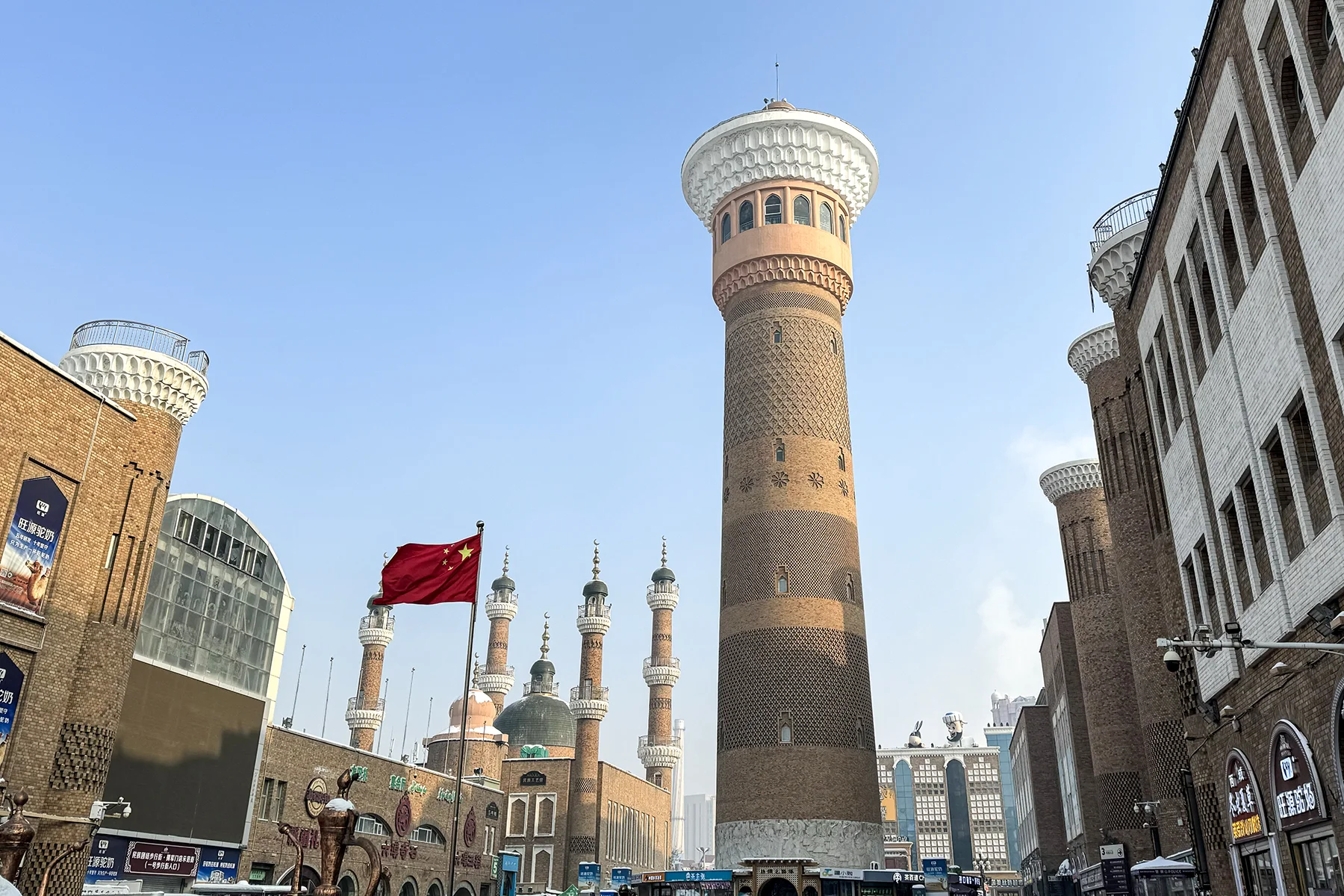
The Xinjiang International Grand Bazaar features Islamic-style brick minarets, central plazas, and hundreds of carpet and dried-fruit stalls; Hongshan Park perches atop red sandstone cliffs in the city center, offering views where modern towers frame glaciated Bogda Peak; the Xinjiang Regional Museum exhibits prehistoric Tarim mummies and Tang dynasty embroidered silks; the Shuimogou Scenic Area preserves freshwater springs and willow-shaded mountain mill flumes.
What to eat
Guoyourou banmian hand-pulled noodles are stretched by hand from high-gluten wheat dough, blanched al dente and topped with flash-fried lamb, tomatoes, wood ear mushrooms, and peppers; nang tandoor flatbreads are baked directly against clay oven walls until golden and blistered; tandoor roast lamb marinates bone-in cuts with onion juice and sea salt, slow-roasted inside sealed earthen pits; polo pilaf simmers yellow carrots, mutton chunks, and long-grain rice in cast-iron cauldrons until glistening and tender.
Getting here & around
Urumqi Railway Station terminates the Lanzhou-Xinjiang high-speed corridor with connections across national trunk lines; Urumqi Diwopu International Airport serves major destinations across Central Asia, West Asia, and Europe; underground Metro Line 1 links the rail hub, airport, and central districts; an extensive bus rapid transit (BRT) network covers major avenues.
Tandoor Embers at Erdaoqiao Bazaar
In the lanes of Erdaoqiao and the Grand Bazaar, pit ovens roar with flame from dawn to midnight. Tandoors (nang坑) are hand-built from yellow Tianshan clay blended with sheep wool and river sand, shaped like inverted earthenware urns heated by fruitwood charcoal embers below. Bakers work with astonishing speed: kneading fermented dough into discs, pressing a concave center with raised outer rims, and indenting geometric patterns with metal-pinned stamps (nangzhua). Resting the raw disc upon a padded cloth mitt, the baker plunges his arm deep into the scalding oven, slapping the dough firmly against the vertical interior wall before brushing it with salted onion water. Heat causes the bread to swell with crisp blisters, while the onion glaze releases caramelised aromatics. This ancient dry-heat craft provided travel-hardy sustenance across Eurasian caravan routes for centuries.
Stretched Banmian and Guoyourou Gravy
In Xinjiang, banmian noodles are not merely a fast lunch, but an exacting benchmark of gluten development and manual elasticity. Using regional spring wheat grown under long northern sunshine, the flour is kneaded solely with light salt water, rested, and coiled on oiled trays. Upon order, the chef grips both ends of a dough rope, rhythmically bouncing and stretching it against the counter until it thins into cylindrical cords, dropping straight into boiling cauldrons. Meanwhile, a high-heat wok flash-fries tender slices of lamb with onions (piyazi), crushed garlic, tomatoes, and wood ear mushrooms in rich oil, bound with light starch slurry. Diners toss the savoury sauce through the steaming noodles, enjoying a dense, toothsome bite that encapsulates the bold wheat traditions of the northern Silk Road.
Tianshan Glacial Runoff and the Shuimogou Springs
Despite its arid inland location, Urumqi's urban ecology depends entirely on snowmelt descending from the glaciated heights of Mount Bogda. In summer, torrents flow down mountain valleys, sinking beneath deep alluvial gravel fans at the base of the range to create extensive subterranean aquifers. These filtered groundwaters emerge along geological faults at Shuimogou, maintaining sweet, clear flows at a steady fifteen degrees Celsius year-round. During the eighteenth century, agricultural garrisons constructed stone weirs to direct the springs, powering dozens of timber watermills to grind wheat flour and gunpowder, giving the district its name. Today, the pristine streams drive urban greenbelts, reflecting the enduring hydrological covenant between high glaciers and oasis cities.