Xi'an
Xi'an leaves half the labor of a meal quietly in the hands of the diner.
The Qinling Mountains block humid air from the south, while the Wei River washes yellow loess into the flat, fertile Guanzhong Basin. Square Ming-dynasty city walls enclose the historic grid within a ring of moat willows. In this ancient heartland, life values substance over ornament: morning begins over a bubbling cauldron of spiced meatball stew, while midday brings wide ribbons of hand-pulled noodles scalded in smoking rapeseed oil and fragrant ground chillies.
What to see
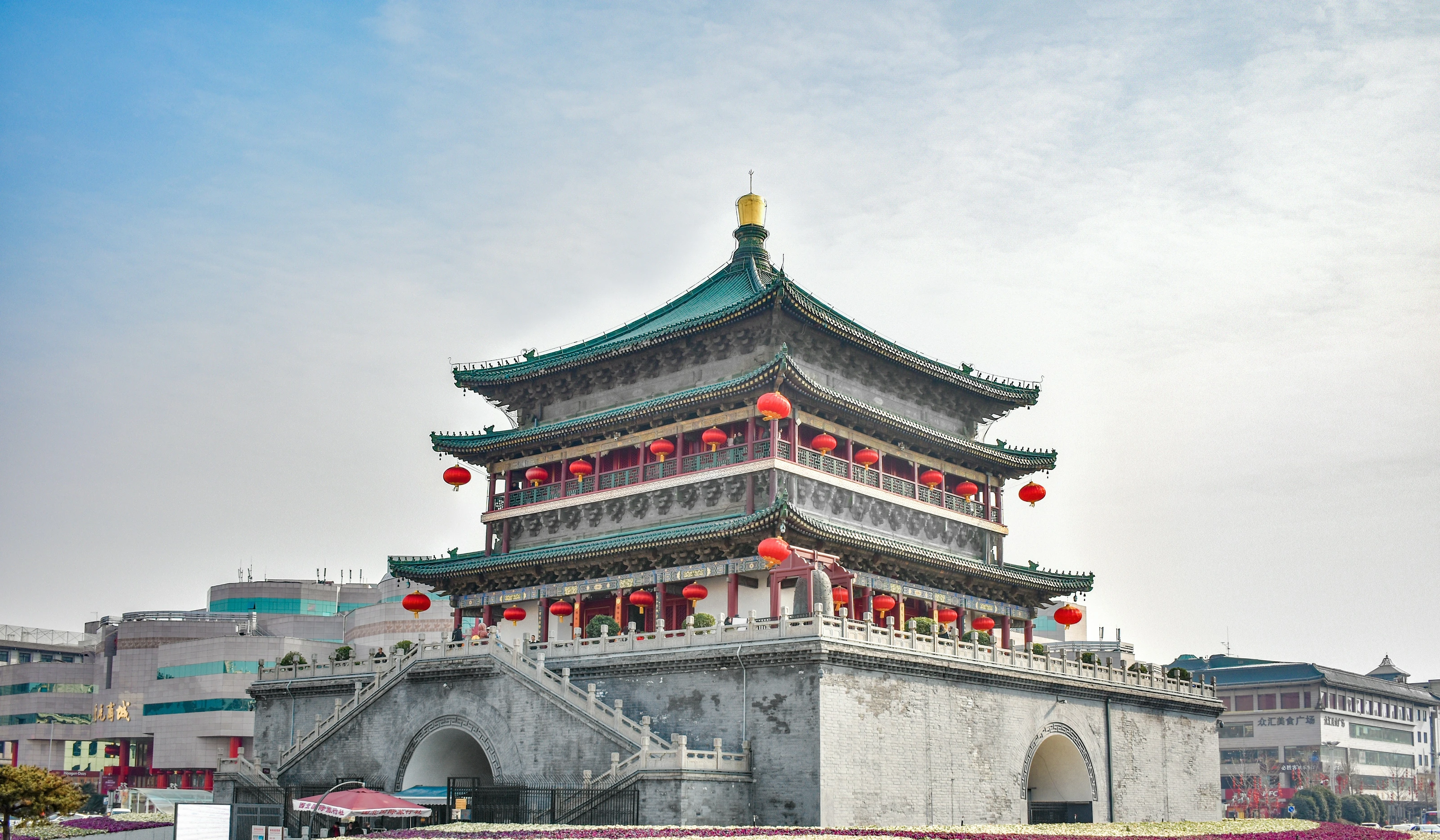
The Ming city walls are best cycled in the early morning breeze, gazing down over low-rise courtyards and the outer moat. The Bell and Drum Towers command the central crossroads, while the Forest of Stone Steles houses priceless Han and Tang calligraphy. The Terracotta Army in Lintong requires a full day; inside the city, take your time walking the historic quarters.
What to eat
Carbohydrates anchor the Guanzhong diet. Beef and mutton paomo requires you to pinch and tear unleavened flatbreads into grain-sized morsels before cooking. Roujiamo encases slow-braised pork belly inside freshly baked crusty buns. Biangbiang noodles come coated in garlic and roasted pepper oil, accompanied by sweet pickled garlic.
Getting here & around
Flights arrive at Xi'an Xianyang International Airport, while high-speed trains pull into Xi'an North Station, both linked by subway. Inside the walls, streets follow a clean rectilinear grid best explored on rented bicycles along the inner wall alleys.
Choose a neighbourhood
Each area offers a different side of the city. Pick one to explore at your own pace.
Muslim Quarter & Sajinqiao
Step away from the central tourist corridors into the quiet alleys of Sajinqiao, Dapiyuan, and Beiguangji Street at six in the morning. Steam rises from copper caldrons as cooks slice steaming zenggao date rice cakes, and freshly baked tuotuo flatbreads crackle with warmth.
Experiencing authentic morning market bustle and traditional Islamic culinary street life.
South Gate & Sanxue Street Steles
East of Yongning Gate, Sanxue Street lies shaded under ancient pagoda trees. Ink-rubbing shops and calligrapher ateliers line the stone flagging leading to the Forest of Stone Steles Museum, where Tang-dynasty master carvings stand preserved in quiet courtyards.
Immersing yourself in ancient stone carvings, ink scholarship, and classical Tang aesthetics.
Small Wild Goose Pagoda & Jianfu Temple
Far quieter than the expansive plaza of the Big Wild Goose Pagoda, this Tang-dynasty brick tower rises among old locust trees. Having withstood major earthquakes that cracked and closed its core, the temple grounds preserve the serene contemplative rhythm of ancient Chang'an.
Finding tranquil monastic gardens and original Tang architectural harmony away from crowds.
Tearing your own bread
Paomo arrives as two dry, unleavened flatbreads and an empty bowl. A diner must sit patiently, splitting the bread along its circumference, tearing it into strips, and pinching it into morsels no larger than soybeans. Tear it too coarse, and the dense dough will fail to absorb the broth; pinch it fine, and the kitchen can boil it into rich, silky perfection.
When the bowl returns to the kitchen, the cook judges the diner's patience at a glance. Ladling rich mutton stock simmered overnight with star anise and cassia bark, the chef flash-boils the morsels with glass noodles and tender meat. From the same stockpot, two people tearing their bread differently will receive completely distinct bowls.
Chilli as aroma
Wide hand-pulled noodles, torn as broad as trouser belts, emerge from boiling water into a heavy ceramic bowl. They are showered with minced garlic, spring onions, and finely stone-ground Qin pepper. From a smoking iron ladle, pure rapeseed oil is poured directly over the spices, creating a sharp crackling sizzle as clouds of toasted garlic and chilli steam billow into the air.
People in Guanzhong do not pursue stinging tongue burns; they seek the rounded, roasted warmth that emerges when hot fat extracts the aromatics of dry chilli hulls. Tossing the noodles vigorously coats each ribbon in fragrant red oil, warming the body from within.
A spade of dawn zenggao
Traditional zenggao is slow-cooked all night in deep earthenware pots. Layers of glutinous rice alternate tightly with Shaanxi dried red dates and red kidney beans. Steam rising through vents in the pottery base gradually dissolves the dates into rich crimson caramel that permeates every grain.
At first light, the vendor uses a broad steel spatula to cut an angled slice from the steaming mound. Heavy, fragrant, and deeply comforting, a small bowl eaten alongside savoury oil tea or hot soy milk provides enough enduring stamina to power a morning's hard labor.