Chengdu
Life here does not wait for dinner to begin; it unfolds in the quiet minutes spent watching kettle steam rise.
Silt from the Min River built the Chengdu Plain flat, sheltered beneath a persistent ceiling of grey basin fog. The humid climate created an outward-looking street life: as soon as morning breaks, low bamboo armchairs are set under gingko boughs, and copper kettles send arching streams of boiling water into blue-and-white porcelain. People walk briskly to work, yet the moment they sit at a tea table, no one rushes to see the bottom of the bowl.
What to see
Shaocheng's low-slung tile roofs preserve centuries of quiet residential alleys, while the Jinjiang River traces the old Tang-dynasty canal network. Wuhou Shrine hides behind quiet bamboo groves, and Du Fu Thatched Cottage sits deep in humid nanmu woods. Visit historic courtyards early at opening, saving lazy afternoons for sidewalk benches.
What to eat
Sichuan cuisine is built on layered aromatics rather than unvarnished chilli heat. Pixian fermented bean paste sizzles into fragrant oil for twice-cooked pork, while Hanyuan pepper leaves a subtle tingling numbness on the lips. Late at night, trotter soup simmers into rich ivory broth, served with a sharp chilli-garlic dipping dish.
Getting here & around
Tianfu International Airport lies far out, while older Shuangliu is closer to the city centre. Metro lines connect major districts, but the historic alleys of Shaocheng and Yulin are best walked on foot.
Choose a neighbourhood
Each area offers a different side of the city. Pick one to explore at your own pace.
Shaocheng & People's Park
Fishbone-patterned lanes dating from the Qing dynasty garrison, shaded by spreading paulownia trees. At eight in the morning in Heming Teahouse, copper kettles gleam as tea masters pour from long spouts. Just outside, Citang Street blends contemporary art spaces with noodle shops.
Early morning tea culture, birdsong, and the calmest pace of old Chengdu.
Wuhou Shrine & Ximianqiao
Crimson walls framed by tall bamboo form the quietest corridors of Wuhou Shrine, dedicated to the statesman Zhuge Liang. Stepping away from neighbouring tourist crowds, walk into Ximianqiao, where Tibetan butter tea shops sit beside fiery local Sichuan diners.
Three Kingdoms history followed by Sichuan culinary backstreets.
Yulin & Fangcao Street
Red-brick walk-up apartment blocks from the 1980s draped in bright bougainvillea. Wet markets, neighbourhood tailors, craft beer taps, and indie bookshops share the same stairwells. Pick up fresh herbs in the afternoon and linger over sidewalk skewers after dark.
The most authentic contemporary neighbourhood rhythm in town.
The clatter of porcelain
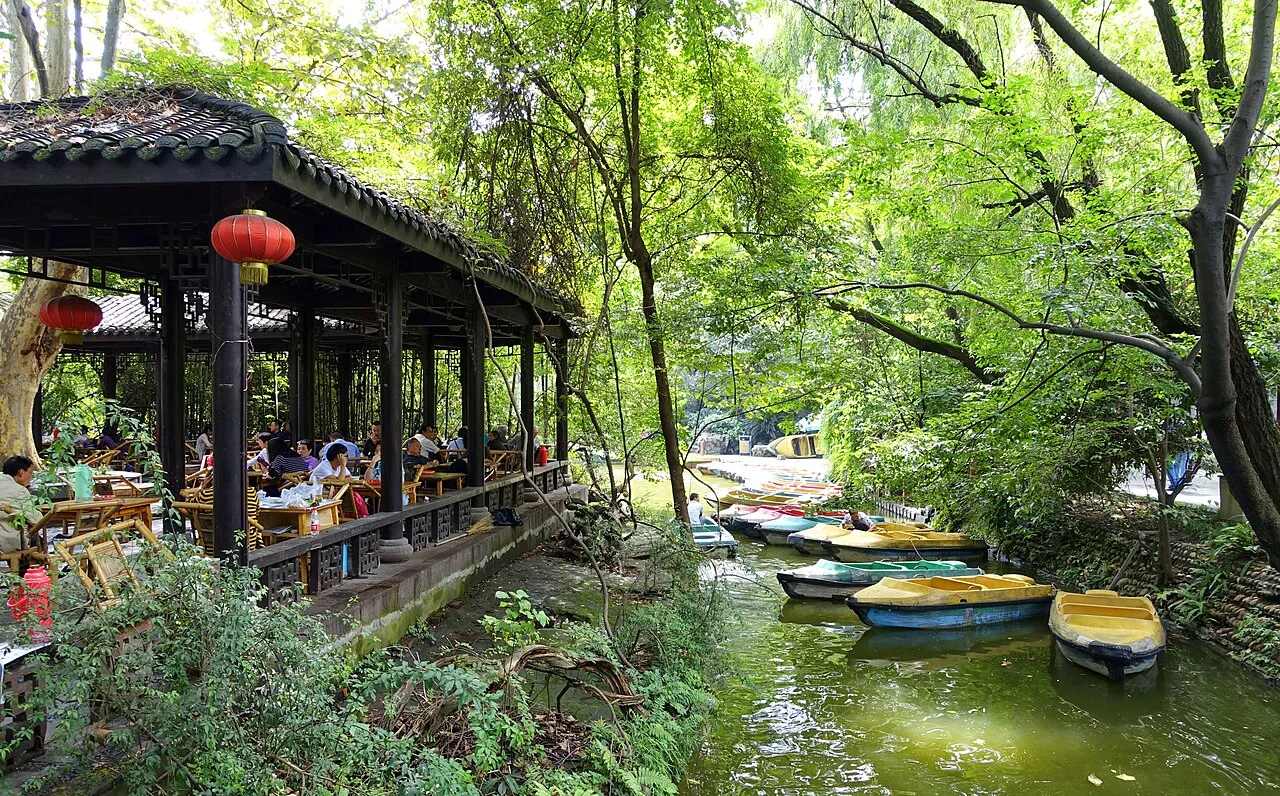
At Heming Teahouse, running water never stops. Low bamboo chairs groan softly under shifting weight. Tea arrives in three pieces: saucer to protect fingers, bowl to concentrate aroma, and lid to brush away floating leaves. Boiling water hits dried jasmine blossoms, lifting immediate floral steam into damp morning air.
Drinking tea in Chengdu requires no stiff formality. Tilting the lid against the bowl rim asks the server for more boiling water; placing the lid flat on the table signals that you will return shortly. Nearby, an ear-cleaner strikes a brass tuning fork, letting a clear ping reverberate under the tree branches.
Twenty-four flavor profiles
Outsiders often reduce Sichuan cooking to blunt, scorching heat, but master cooks live by the phrase 'each dish its own character, a hundred dishes a hundred flavors.' Broad bean paste turns ruby-red in hot rapeseed oil, pickled ginger and salted chillies lend crisp acidity, while wild Hanyuan peppercorns leave a cool vibrating hum across the tongue.
By twilight, old brick alleys fill with the bubbling roar of beef-tallow hotpots. Heavy fat holds heat across dozens of roasted spices. Fresh ox tripe is swirled through boiling broth for mere seconds before being dipped into sesame oil and crushed raw garlic. The dip is not for seasoning; it rapidly cools the morsel, sealing in texture so the heat lands smoothly.
A midnight bowl of trotter soup
Past eleven at night, white steam rolls from towering aluminium kettles along Banbian Street. Pig's trotters simmer for six hours alongside large white kidney beans until collagen melts entirely into the broth, yielding meat so tender it requires no chewing.
What elevates the bowl is the small sauce dish served alongside: dark soy, toasted chilli oil, mashed garlic, roasted pepper oil, and a dash of black vinegar. Dipping a piece of rich trotter into the sauce cuts through natural fattiness with instant acidic sharpness.