Dali
Acid from fruit, milk pulled into a sheet, wheat into the coals.
Dali lies in western Yunnan, with old towns, villages and fields between Cangshan and Erhai Lake. Explore its lakeshore, Bai houses and local food in separate, unhurried outings.
What to see
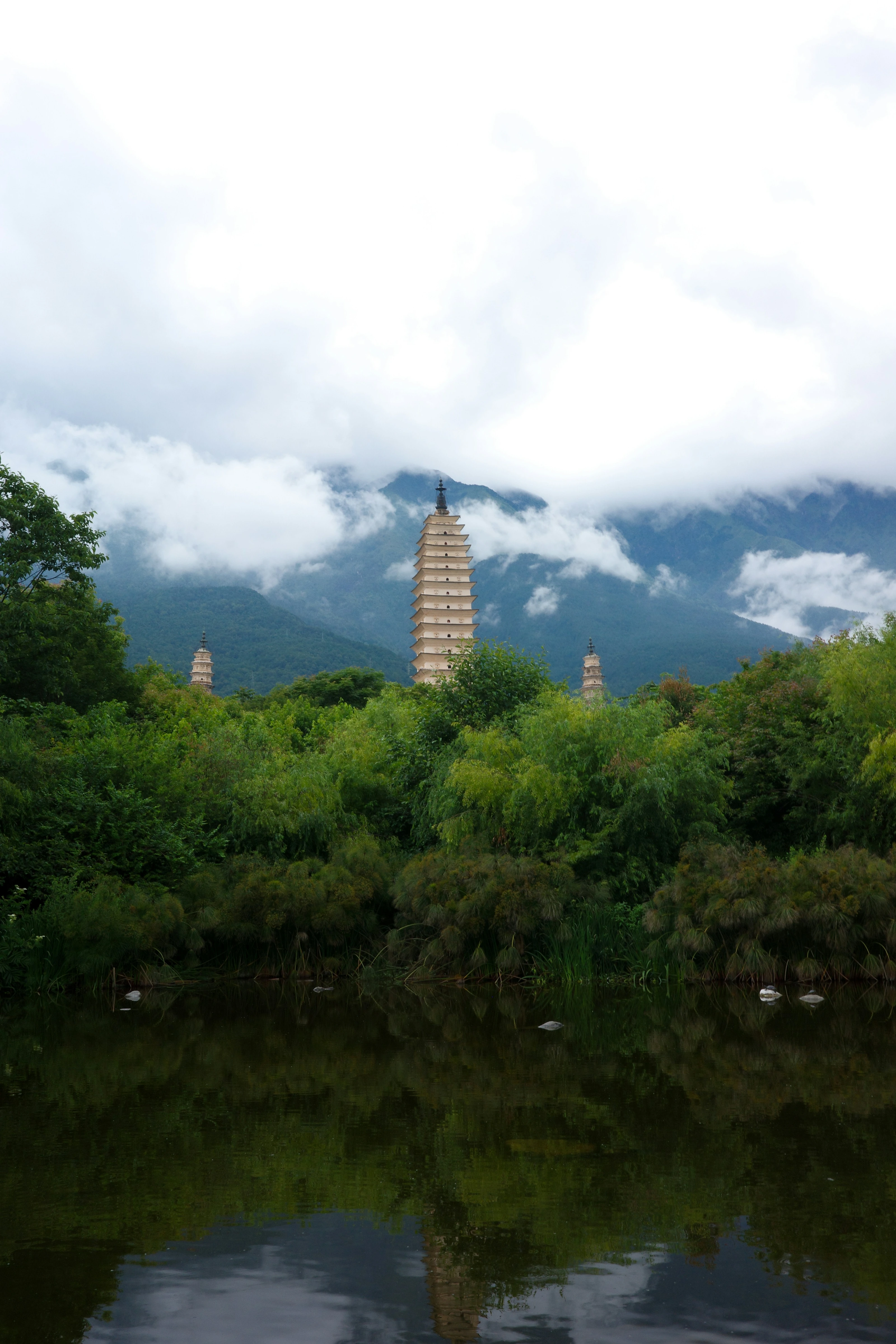
Nineteen peaks of the Cangshan mountain range flank the turquoise expanse of Erhai Lake, cradling a fertile highland valley. Historic Dali, Xizhou, and Shuanglang each command distinct vistas between mountain and water, their white-walled Bai courtyards scattered across barley paddies. Time your journey with the light: morning sun strikes snow-dusted ridges, while twilight paints the lake in liquid amber.
What to eat
Dali's palate avoids processed sugars and standard vinegars, relying instead on wild orchard fruit and fermented cow's milk. Sour papaya imparts sharp, clean acidity to fresh lake fish; Xizhou baba pastries bake over glowing charcoal until flaky and golden; and crisp sheets of rushan cheese swell in hot oil, drizzled with fragrant wild rose preserve.
Getting here & around
Dali Railway Station and airport lie south in Xiaguan, about thirty minutes by car from the Old Town. Rented cars or bicycles along the dedicated lake path offer the best flexibility, while local minibuses connect village markets.
Choose a neighbourhood
Each area offers a different side of the city. Pick one to explore at your own pace.
Xizhou & Haishedao Peninsula
Mountain runoff trickles through stone gutters fronting stately Bai family compounds with ornate painted screen walls. In the morning at Sifang Square, charcoal embers bake crisp baba pastries while translucent rushan cheese dries on courtyard bamboo poles. Walking east into green paddies brings you to ancient willow groves dipping directly into Erhai Lake.
Experiencing traditional Bai agrarian architecture, courtyard living, and lively morning trading.
Yinqiao & Foothill Villages
A tranquil farming strip between Dali Old Town and Xizhou. Farmhouses built of smooth river pebbles border fields of golden rapeseed and tea bushes. Following rocky stream gullies up into the foothills reveals pine-scented breezes and breathtaking vistas over the mirror-like lake below.
Escaping crowds to walk among barley paddies and watch the sun set behind Cangshan.
Dali Old Town & West Gate
Resting against the lower slopes of Zhonghe Peak, the Ming-dynasty town maintains its nineteen spring-fed stone canals. Bypassing commercial storefronts, walk along Bo'ai and Yu'er roads where elderly residents chat under ancient banyan trees over bowls of cold chicken rice noodles.
Historic urban fabric, mountain springways, and rustic street markets.
Fish in fruit
Sour papaya is hard, astringent, and violently fragrant. Cut into chunks and put in with the fish, it does not sour the pot the way vinegar does; it gives its acid up slowly, over the cooking. Which is why the broth stays clear, and the sourness arrives with the fish rather than ahead of it.
Further north, in Eryuan, plums are cooked down with salt and sugar into a black paste called dunmei. Heavier than papaya, and it keeps. Along one lake shore, sourness has more than one road in.
A sheet of milk
The acid is not vinegar. It is the whey kept back from the last batch. Milk is heated, the whey goes in, the curd rises in flakes; the flakes are worked and pulled until they can be spread thin, then wound around bamboo poles to dry.
Dry, rubing is hard and brittle. Held over charcoal it blisters and softens and takes a layer of rose jam; dropped in oil it puffs into rolls. Most of it is made around Dengchuan and Eryuan, where the dairy herds are.
The Xizhou oven
The dough is laminated with oil, filled, rolled flat, and set into the oven: charcoal in the basin beneath it, charcoal in the lid above it, the cake between the two. Because both faces cook at once, the cake balloons and the layers come apart. It is turned once, and taken out.
Sweet is rose and brown sugar, which melts and runs. Savoury is spring onion and minced pork: more fat, crisper crust. In Xizhou the shops light the coals in the morning and are sold out by afternoon.
Market day
The year's largest is Sanyuejie, opening on the fifteenth of the third lunar month outside the west gate of the old town: mules, herbs, farm tools, goods off the mountain. It began as the tea-horse road's annual wholesale market; it now runs about a week, and the livestock pens still hold a corner of it.
The everyday markets rotate. The towns and villages of one basin each take a day, and the stalls follow the people — so you ask which street is open before you set out. The square at Sideng in Shaxi is one of the few market places on that road that never moved.