Guiyang
The Nanming River flows past the limestone foundation of Jiaxiu Tower, while neighbourhood noodle counters fill mornings with the aroma of spicy oil and crisp pork cracklings.
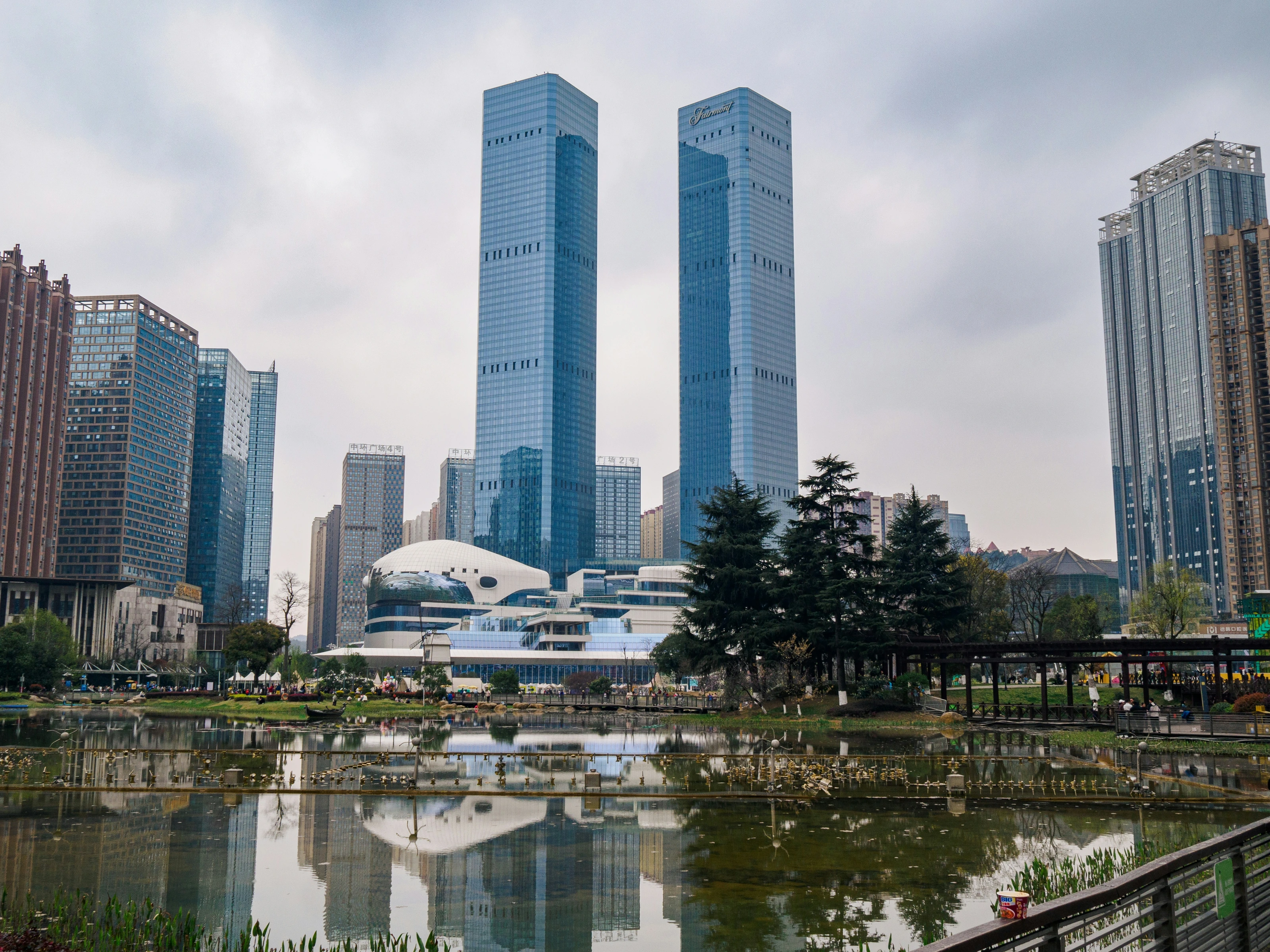
Spread across karst peaks and subterranean river channels in central Guizhou, Guiyang is a forest metropolis formed directly from stone and river bends. The clear Nanming River loops through town, framing Jiaxiu Tower on a natural limestone islet where it has withstood four centuries of river current. While cool mountain breezes temper summer heat, local kitchens foster China's most dynamic flavour spectrum: thin duck-egg egg noodles tossed with crimson chilli oil and crispy cracklings in the morning, followed by paper-thin steamed pancakes wrapping shredded garden roots and fermented sour tomato broths by evening.
What to see
Jiaxiu Tower was founded during the Ming dynasty, its three-tiered timber pavilion standing on an islet anchored by the stone arches of Fuyu Bridge; Qianling Mountain Park features forested slopes and macaque troops roaming between Buddhist monasteries and cold springs; Qingyan Ancient Town preserves stone defensive walls, Qing dynasty scholar residences, and Catholic church spires; the Huaxi River wetland park provides dedicated riverside cycling trails.
What to eat
Changwang noodles feature chewy duck-egg noodles flash-boiled to order, accompanied by tender braised pork intestine, silky pork blood curd, and crispy deep-fried pork lardons (cuishao) under a surface of red chilli oil; siwawa wraps shredded vegetables, pickles, and houttuynia root in thin rice pancakes drizzled with sour tomato broth; sour soup beef hotpot simmers tender beef in naturally fermented tomato stock; Huaxi beef noodles feature clear bone broth and wood-fired chilli paste.
Getting here & around
Guiyang North and East railway stations serve as major high-speed rail junctions for the Guiyang-Guangzhou and Shanghai-Kunming lines, reaching Chengdu, Chongqing, and Kunming within two hours; Guiyang Longdongbao International Airport integrates directly with high-speed trains; subway lines link downtown shopping hubs with ancient town gates.
Changwang Noodles and Crispy Cuishao
By seven in the morning, queues form outside neighbourhood noodle shops along Guiyang's older streets. The fresh noodles are prepared without water, kneaded exclusively with duck egg whites and trace alkaline water into dense, springy dough before being sliced into fine curly ribbons. Dropped into rolling boiling water for mere seconds, they retain a firm, toothsome bite. In the bowl, they meet tender cubes of braised pork intestine, silky slices of set pig blood curd, and a spoonful of cuishao—pork belly diced fine and fried golden until dry and crunchy. Bathed in rich bone stock and ladled with bright red chilli oil, the harmony of crackling lard, tender offal, and snappy noodles sets an invigorating morning tempo.
Sour Broth Siwawa and Wild Roots
At a street-side siwawa table, diners receive platters of paper-thin, steamed circular wrappers accompanied by over a dozen small bowls of finely shredded vegetables: carrots, seaweed ribbons, crisp cucumber, pickled daikon, fried soybeans, and pungent zheergen (houttuynia cordata). Holding a translucent wrapper in the palm, one gathers pinches of each vegetable into a tight roll before spooning seasoned sour broth inside. The sourness comes from wild mountain tomatoes fermented naturally inside earthen crocks, compounded with toasted wood-fired chilli flakes and wild herbal notes. Biting through the pancake releases a burst of vegetable crunch, fruity acidity, and cool herbal salinity, demonstrating how mountain foraging shapes refined sour gastronomy.
Jiaxiu Tower on the Nanming River
The Nanming River cuts deeply through karst limestone gorges, subject to sudden seasonal surges between dry winters and torrential monsoon downpours. In 1598, governor Jiang Dongzhi observed a massive turtle-shaped limestone outcrop standing steadfast in the midstream currents, capable of deflecting raging eddies, and erected Jiaxiu Tower directly upon its stone back. The twenty-metre timber pavilion rises three storeys with sweeping eaves supported by twelve carved stone columns. Upstream, the nine-arch Fuyu Bridge spans both banks with wedge-shaped cutwaters that split incoming floodwaters before they strike the pavilion plinth. Across four centuries of shifting river levels, this partnership of living bedrock and carpentry has remained a masterwork of mountain hydraulic architecture.