Hangzhou
The lake is not an enclosed bonsai; it is the reflection of misty ridges, tea smoke, and a millennium of literary composure.
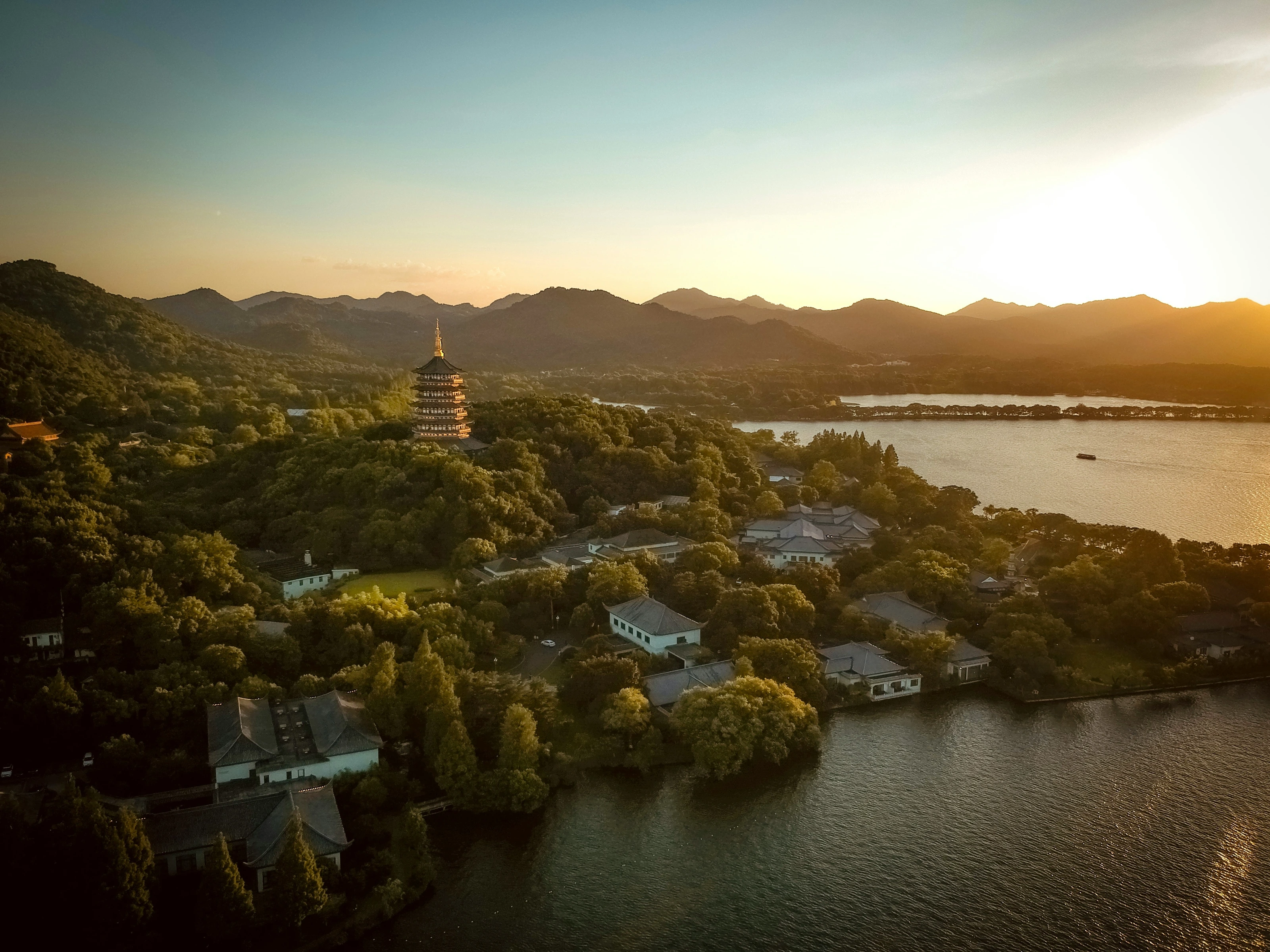
The Qiantang River rushes violently to the south, the Grand Canal reaches its historic southern terminus, and West Lake lies cradled on three sides by soft, forested hills, meeting urban commerce only on its eastern shore. Hangzhou's enduring allure lies in moisture: after spring showers, mountain mists drift lazily among the arched bridges of Su Causeway; under summer squalls, miles of lotus leaves toss droplets in the lake breeze. Its finest pleasures hide in subtle nuances: climbing into terraced hills at dawn to watch tea masters pan-fire fresh spring shoots, savoring piping-hot eel and river-shrimp noodles at midday, and watching Leifeng Pagoda cast its bronze shadow across golden twilight waters.
What to see
West Lake is best explored at six in the morning or during misty rainfall, avoiding midday tour buses. Climbing Mount Baoshi affords a classic view of slender Baoshu Pagoda overlooking the entire lake basin. Lingyin Temple and Feilaifeng stone carvings lie shaded among ancient camphor trees, while Longjing and Meijiawu offer scenic trails through terraced tea groves.
What to eat
Hangzhou cuisine prioritizes natural clarity and gentle seasoning. Longjing shrimp uses early spring green tea to accentuate the delicate sweetness of freshwater shrimp; West Lake vinegar-braised fish glistens with an amber glaze balancing delicate sweet and tart notes; and heritage noodle shops flash-fry yellow eel and white river prawns over high flame.
Getting here & around
Xiaoshan International Airport connects by direct subway, while Hangzhou East Station serves high-speed lines. Motor traffic is tightly restricted around the lake; walking and public bike rentals provide the most delightful access to the tree-lined causeways.
Choose a neighbourhood
Each area offers a different side of the city. Pick one to explore at your own pace.
Longjing Village & Nine Creeks
Nestled beneath the steep slopes of Shifeng Peak, tea terraces step upward into cloud forests. Hiking along the stone flagstones of Nine Creeks and Eighteen Gullies, cold spring streams wash over mossy steps beneath ancient cedars. In spring, village courtyards fill with the nutty aroma of roasting tea leaves.
Hiking secluded mountain stream trails and discovering authentic tea-country living.
Beishan Road & Gushan Island
A historic boulevard between the lower slopes of Mount Baoshi and the inner lake, shaded by massive plane trees. Past Xiling Bridge and autumn lotus beds lies Gushan Island, where the pavilions, carved rockfaces, and scholar halls of the Xiling Seal Art Society step gracefully up the slope.
Lakeside heritage walks and exploring early twentieth-century villas and classical seal-carving arts.
Gongchen Bridge & Xiaohe Street
The grand southern terminus of the Beijing-Hangzhou Grand Canal, crossed by an imposing triple-arch stone bridge. Xiaohe Straight Street preserves late-Qing waterside shophouses with canal-facing tearooms, carpentry shops, and soy-sauce breweries as freight barges glide through.
Experiencing working canal culture and historic canal-town everyday life far from the lake.
Two tender leaves in iron wok
Around the Qingming festival each spring, the steep ravines of Shifeng and Meijiawu fill with the quiet silhouettes of tea pluckers. True Longjing demands only the tender 'bird's tongue' bud and its first opening leaf, snapped cleanly by fingernail into bamboo baskets. So fragile are the fresh leaves that they must be withered in bamboo trays away from direct sun.
Firing requires bare human hands. When the cast-iron wok reaches two hundred degrees Celsius, the master roaster tests the heat with his palm, dropping a handful of leaves and tossing them rhythmically across the curve. Pressing, sweeping, and flattening them against the hot metal with bare skin instantly seals their floral aromatics. Steeping the spear-shaped leaves in eighty-five-degree spring water reveals a rich toasted-bean sweetness that resolves into lingering, crystalline orchid fragrance.
Flash-fried eel and sweet shrimp
Gentle as Hangzhou seems, its noodle kitchens live by ferocious heat. Noodle bowls crowned with eel and river shrimp date to the late nineteenth century. Boneless ribbons of live river eel are flash-fried in heavy oil until blistered and crisp, while miniature river prawns are poached at gentle temperature to keep them pearlescent and succulent.
Fresh alkaline noodles drop into boiling water just until cooked through. In a smoking iron wok, aromatics sizzle before eel, rich bone broth, and dark soy are tossed over roaring flame. The noodles are turned through the bubbling sauce to absorb the rich gloss, finished with a ladle of smoking sesame oil and topped with delicate white shrimp. The contrast of crunchy braised eel, tender sweet prawns, and piping-hot savory soup delivers immediate culinary drama.