Hohhot
Daqing Mountain rims the northern skyline, morning bamboo steamers puff with mutton shaomai, and Dazhao Temple's silver Buddha reflects four centuries of butter lamps.
Hohhot rests on the Tumochuan Plain beneath the imposing granite ridge of Daqing Mountain, north of the Yellow River. Named the 'Blue City' in Mongolian, it was founded in the late sixteenth century by Altan Khan as a political and cultural crossroads where nomadic grasslands converged with farming frontiers. Gilded Tibetan Buddhist sanctuaries like Dazhao Temple feature historic silver Buddha statues and butter lamps. To the north, Daqing Mountain shelters the fertile plain, while morning streets celebrate freshly baked flaxseed flatbreads, delicate mutton shaomai, and steaming bowls of salted brick milk tea.
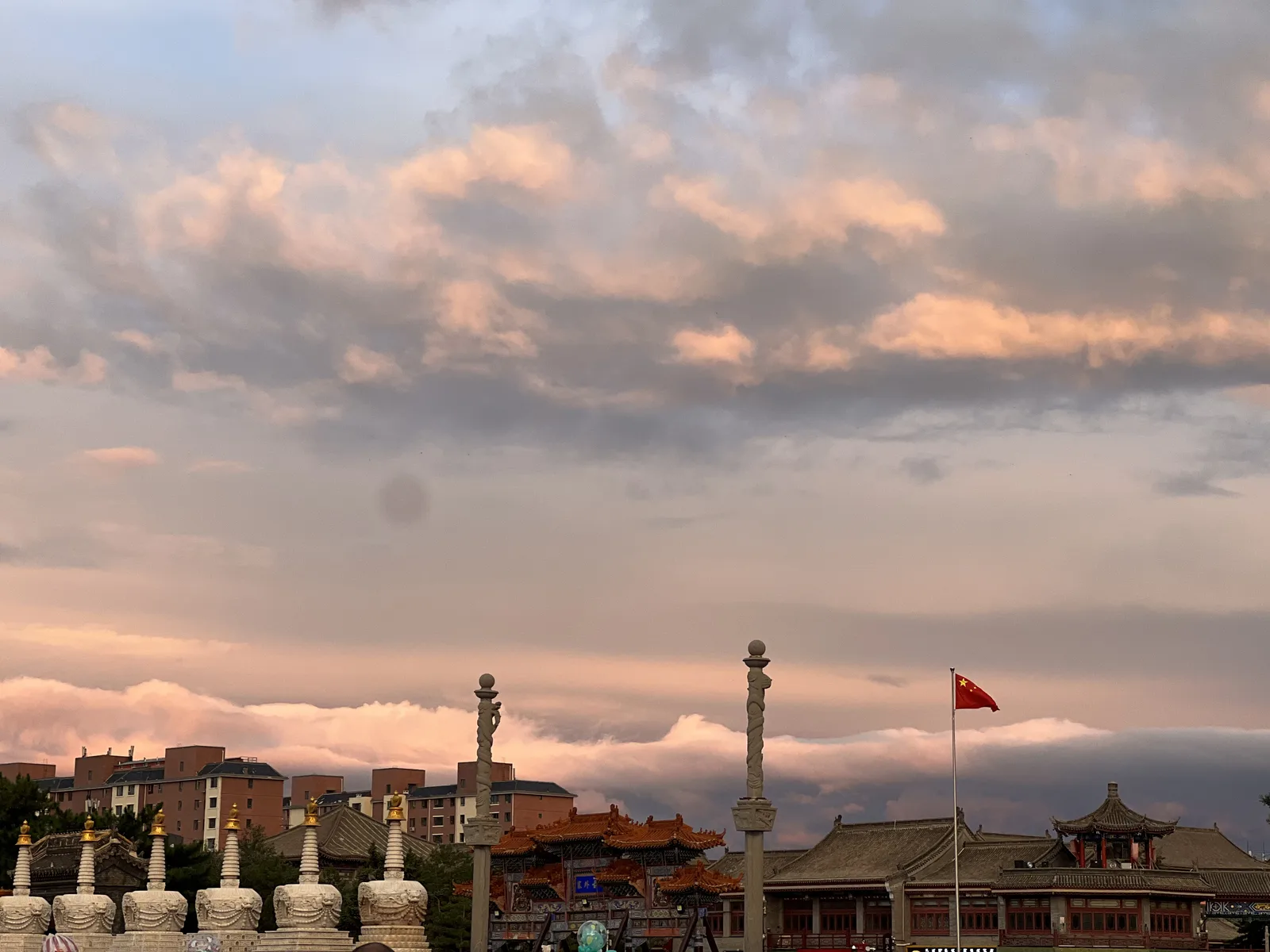
What to see
Dazhao Temple preserves its famous trio of treasures: the silver Sakyamuni Buddha, painted murals, and dragon-carved pillars; Xilituzhao features an ornate white stone stupa blending Tibetan and Han motifs; Five Pagoda Temple displays a rare stone-carved Mongolian astrological chart; the Qing Princess Mansion preserves Qing imperial palace architecture; Inner Mongolia Museum houses the nomadic gold eagle crown.
What to eat
Hohhot mutton shaomai packs diced mutton from mountain sheep with green scallions and flaxseed oil into gossamer pleated wrappers, steaming into translucent pockets bursting with hot broth; beizi flatbreads layer wheat dough with toasted flaxseed oil baked crisp inside ovens into flaky rounds; Mongolian milk tea boils brick tea with fresh cow's milk and sea salt, topped with roasted millet; boiled mutton ribs are cut with traditional knives; Mongolian pan-fried meat pies are paper-thin and golden.
Getting here & around
The Beijing-Zhangjiakou and Zhangjiakou-Hohhot high-speed lines link Beijing to Hohhot East Station in two hours and ten minutes. Hohhot Baita International Airport operates domestic flights and regional routes to Ulaanbaatar. Subway Lines 1 and 2 directly serve Dazhao Historic District, the museum, and railway hubs.
Choose a neighbourhood
Each area offers a different side of the city. Pick one to explore at your own pace.
Dazhao Temple, Saishang Old Street & Xilituzhao
The four-hundred-year-old historic core of Hohhot, featuring Ming-Qing grey-brick shops and grand Tibetan monastic halls.
Browsing handmade brass teapots along Saishang Old Street and gazing at the three-meter solid silver Buddha inside Dazhao Temple.
Five Pagoda Temple & Qing Princess Mansion
An architectural precinct containing the stone-carved Sarira Stupa and an intact Qing imperial courtyard mansion.
Studying the rare stone-inscribed Mongolian celestial star chart and strolling courtyard gardens beneath ancient trees.
Daqing Mountain Hadamen Highland Grasslands
The monumental ecological ridge north of Hohhot, marked by craggy ravines, birch forests, and rolling alpine meadows.
Driving mountain pass roads overlooking the Tumochuan Plain and hiking through quiet subalpine birch woods.
Morning Mutton Shaomai and Brick Milk Tea
By seven in the morning around Dazhao Temple, shaomai tea houses are bustling with breakfast diners. Locals order shaomai by the 'liang'—an archaic measure referring to the dry flour weight, which arrives as an entire wooden steamer holding eight plump dumplings. Cooks roll scalded dough using specialized fluted rolling pins that crimp edges into ruffled petal rims. Hand-diced grassland mutton from tender leg meat is tossed with crisp scallions and local toasted flaxseed oil. Steamed over intense fires, the skins become paper-thin and translucent. Lifted with chopsticks, hot juices pool within before bursting across the palate.
Dazhao Temple Silver Buddha and Gilded Dragon Pillars
Crossing the thresholds of Dazhao Temple, rich butter incense and resonant low-pitched chanting fill the air. Founded in 1579 by Altan Khan, this Gelug monastery was the first Tibetan Buddhist establishment built in the Tumochuan basin. In the main hall stands a nearly three-meter-tall Sakyamuni Buddha hammered from three tons of pure silver by Tibetan artisans over four centuries ago. The deity is flanked by twin pillars wrapped in carved, gilded dragons with outstretched talons. Vibrant mineral murals flank the altar, commemorating Altan Khan's alliance with the Third Dalai Lama and solidifying long-standing peace.
Daqing Mountain Hadamen Meadows and Chilean Plain
Looking north from downtown Hohhot, the jagged ridgeline of Daqing Mountain rises like a colossal dark wall across the skyline. Ascending via steep switchbacks into Hadamen National Forest, temperatures drop as the landscape transforms. Rolling alpine meadows spread like green velvet across high plateaus, interspersed with pale birch forests and wind-carved granite tors. Looking southward from the cliffs reveals the vast expanse of the Tumochuan Plain. The mountain massif blocks biting Siberian storms while natural springs channel freshwater into agricultural canals below.