Huizhou
Meicai mustard greens wilt under the sun before pickling in sea salt: sun and salt share equal roles, just as Su Shi left behind a slow-braised claypot of pork and greens.
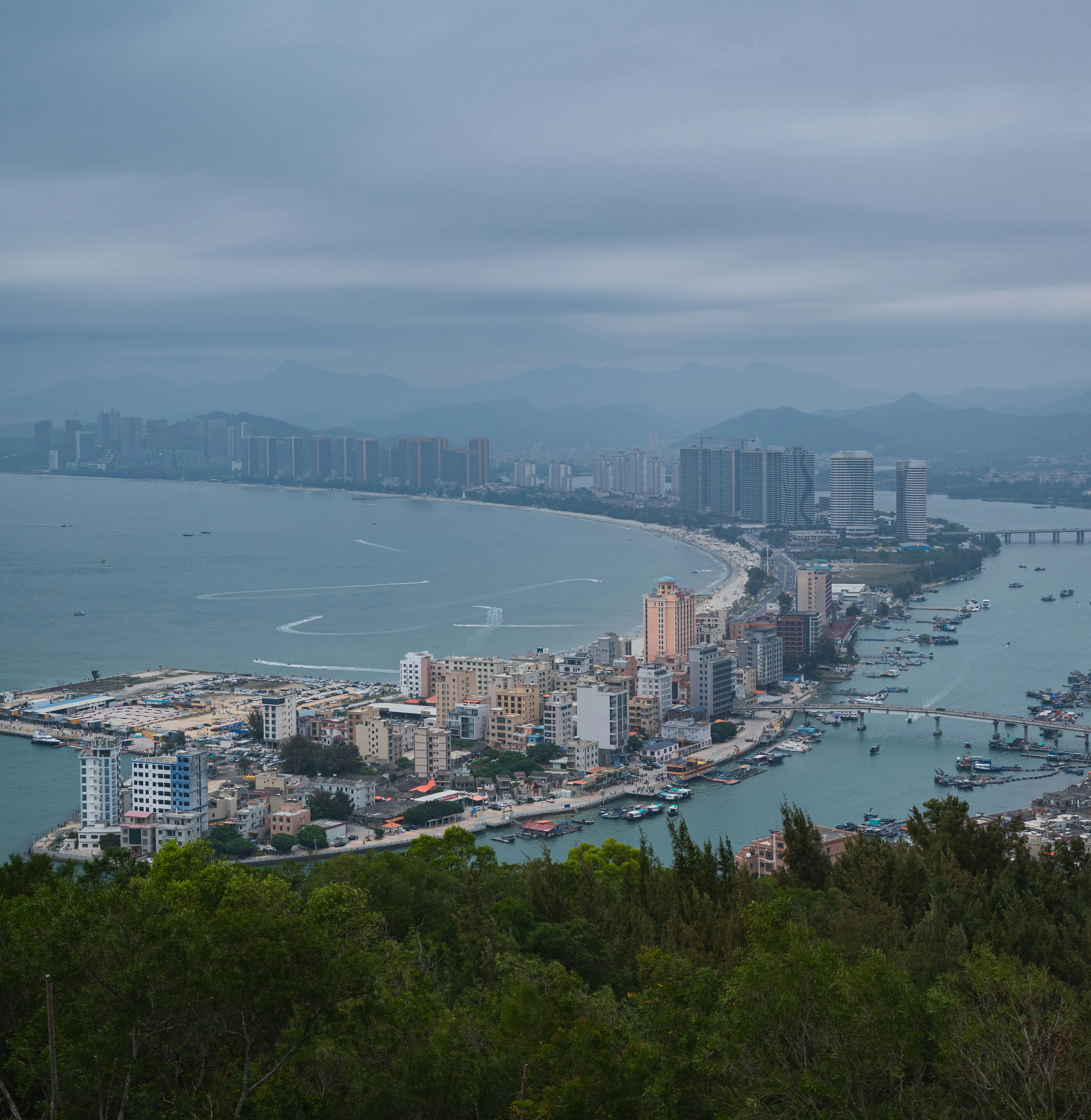
The East River rushes westward toward the delta, spreading beneath urban Huizhou into the serene expanses of its West Lake. When Song dynasty master Su Shi was exiled here, he famously declared he would gladly dwell forever in Lingnan among its lychees, building a lakeside causeway that anchors the city's literary calm. Positioned at the cultural frontier between Cantonese and Hakka traditions, historic Shuidong Street's arcades mirror slow river currents, while the Hejiang Tower recalls centuries of salt shipping along water highways. Mornings open with fragrant Hengli rice noodle broth, while earthenware steamers patiently tenderize pork belly over black pickled meicai mustard greens for hours. Rich animal fat dissolves completely into the fermented leaves, yielding pork that melts on the tongue and greens infused with deep, savory sweetness.
What to see
Huizhou West Lake is celebrated for quiet seclusion; Gushan Island preserves the Su Shi Memorial and ancient stone causeways, with the Nine-Turn Bridge spanning lotus waters. Mount Luofu stands among Taoism's sacred grotto mountains, where philosopher Ge Hong cultivated herbal medicine amid crags and cascades. Shuidong Street and Hejiang Tower overlook the confluence of the East and Xizhi rivers, lining historic quays with late Qing arcaded shophouses animated by riverside tea stalls at dusk.
What to eat
Cooking in Huizhou blends East River Hakka staples with freshwater delta harvests. Meicai roasted pork belly leads banquet traditions: broad leaf mustard greens are sun-wilted, dry-salted, and fermented until dark and glossy, steamed beneath thick slabs of five-layer pork belly until fat and leaves fuse. Salt-baked chicken buries local free-range birds inside scalding coarse sea salt, yielding crisp, golden skin and fragrant, tender meat. Hengli noodle soup combines springy rice noodles with braised pig trotter, dace fish meatballs, and sun-dried shrimp broth.
Getting here & around
The Guangzhou-Shanwei and Ganzhou-Shenzhen high-speed rail lines converge at Huizhou North and Huiyang stations, reaching Guangzhou East or Shenzhen North in thirty minutes. The West Lake and Shuidong Street quarters are easily explored on foot or by taxi; visiting Mount Luofu is best reached via direct express coaches or rental cars.
Choose a neighbourhood
Each area offers a different side of the city. Pick one to explore at your own pace.
West Lake & Gushan Su Shi Shrine
The literary heart of Huizhou's classical lake gardens. Six ancient bridges span verdant waters flanked by weeping willows, where Gushan Island shelters the Su Shi Memorial and ancient Buddhist monasteries. Crossing Su Causeway reveals distant reflections of the Song-dynasty Sizhou Pagoda mirrored across still water.
Strolling the historic Su Causeway and tracing the exile heritage of poet Su Shi.
Shuidong Street & Hejiang Tower
The historical riverine trading port where the East and Xizhi rivers meet. Built during the Northern Song, Shuidong Street's colonnaded shophouse facades shelter traditional apothecaries, tea merchants, and artisanal workshops. The multi-tiered Hejiang Tower offers panoramic vistas of river barges and evening bridges.
Wandering restored East River commercial shophouse arcades and climbing Hejiang Tower at twilight.
Mount Luofu Taoist Sanctuary
One of southern China's most celebrated sacred peaks. Over four hundred granite crags shelter Chongxu Ancient Temple beside tumbling waterfalls, where fourth-century Taoist physician Ge Hong compiled herbal pharmacopeias. Mountain paths wind through wild camellia groves and secluded mountain springs.
Hiking misty mountain forests and exploring ancient Taoist alchemy and herbal heritage.
Sun and salt in the golden meicai vat
In the river basins of Tuqiao and Hengli around Huizhou, fields of broad-leaf mustard greens reach lush maturity after the onset of winter frost. Crafting meicai requires precise weather conditions. Freshly harvested heads are laid across bamboo racks, absorbing the gentle, dry heat of southern autumn until emerald stalks wilt and turn pliable.
Transferred into wide wooden troughs, the wilted greens are rubbed by hand with coarse ocean salt, expressing bitter vegetable juices until salt granules dissolve into the leaf core. Packed tightly into deep glazed earthenware crocks, jars are sealed with mud to ferment for a month. Once opened, the leaves are sun-dried again and returned to the brine in repeated cycles. Over months, sharp astringency mellows into deeply aromatic, obsidian-dark meicai. Steamed beneath thick slabs of braised pork belly, the leaves absorb rich lard, rendering pork tender and greens sweet, savory, and restorative.
Su Shi's causeway and summer lychees
In 1094, fifty-nine-year-old poet Su Shi was banished to remote Huizhou. Rather than despairing over humid wilderness and rustic isolation, the philosopher threw himself wholeheartedly into village life.
At the time, the seasonal rising of West Lake flooded town passages, forcing residents to risk dangerous ferry crossings. Su Shi pawned an imperial golden rhinoceros-horn belt bestowed by the court and organized community donations, designing a broad earthen causeway anchored by five stone arch bridges to link both shores. Across his three years in residence, he composed verses celebrating local lychees, fresh bamboo shoots, and river catches, infusing the frontier river settlement with resilient philosophical grace.
Burying three-yellow chicken in seared salt
Historically tied to salt shipping along the East River, Hakka cooks developed salt-baking into an extraordinary dry-heat culinary technique. Authentic salt-baked chicken avoids boiling in saline brine; it relies entirely on thermal conduction through scalding crystals. Free-range Sanhuang hens with fine bones and sweet fat are eviscerated, washed, dried, and massaged with wild sand-ginger powder and sesame oil.
The whole bird is swaddled in three layers of permeable oil-brushed straw paper. In heavy cast-iron cauldrons, fifty pounds of coarse ocean salt roast over roaring fires until crystals turn scalding hot and crackle violently. The paper-wrapped bird rests upon a thick bed of searing salt in an earthenware pot before the remaining boiling crystals bury it completely. Over a gentle ember flame, radiant heat penetrates the paper, melting subcutaneous fat while sealing every drop of natural juice within. Unwrapped at table, the crisp skin releases intoxicating aromas of toasted salt and peppery sand ginger.