Lanzhou
The Yellow River cleaves two mountain walls from west to east; the town stretches along a narrow trench where daybreak echoes to slap of hand-stretched noodles.
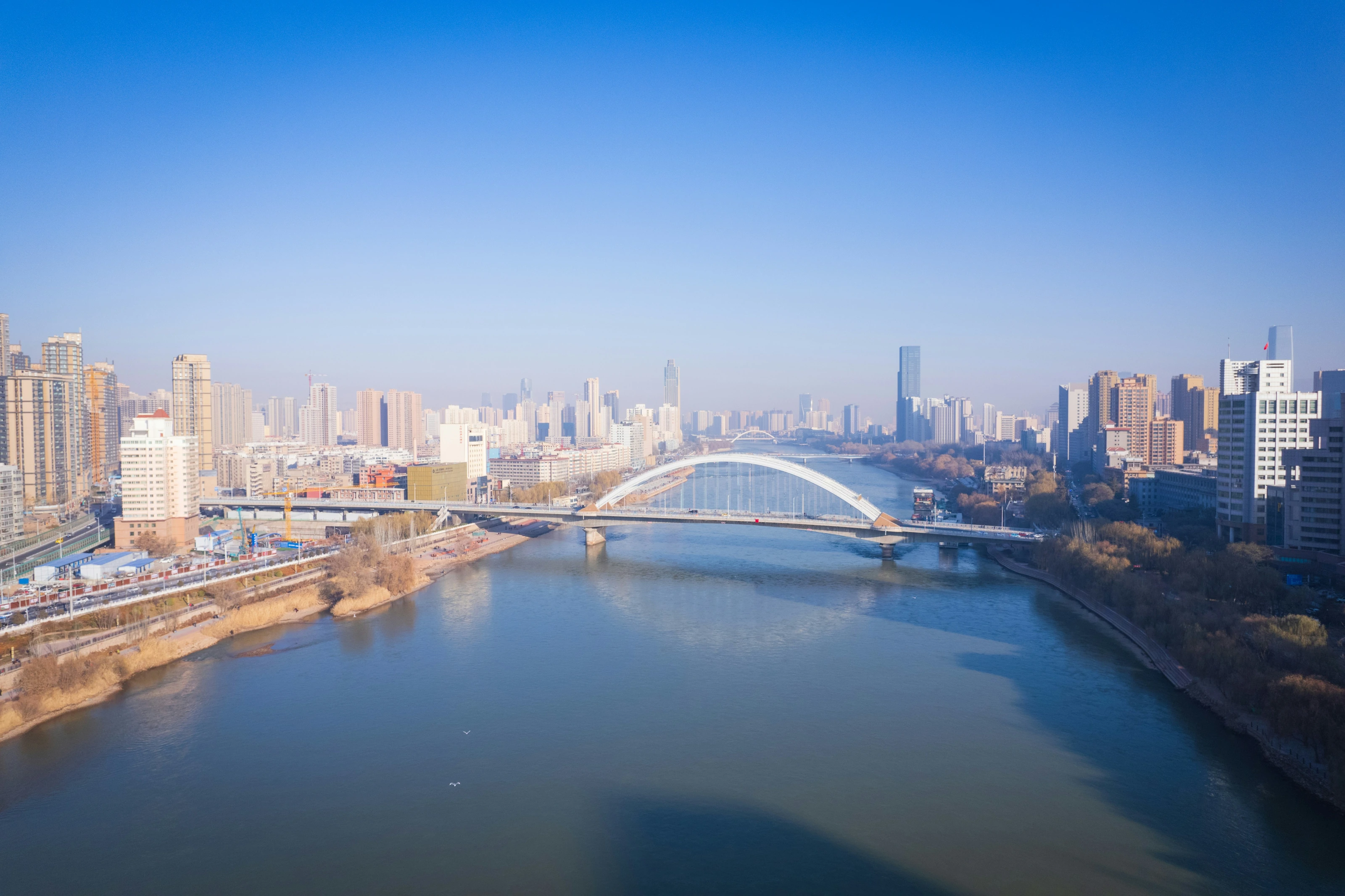
The Yellow River charges off the Tibetan Plateau, slicing between the North and South mountains to confine Lanzhou within a narrow alluvial trench. Historically anchoring the Silk Road and the Tang-Tibet road, travelers here exchanged overland pack trains for river ferries. Mornings begin over boiling cauldrons of beef lamian: ash extracted from native halophyte plants lends high-gluten wheat dough its elastic spring and pale gold tint. The noodle master's arms work in rhythmic cadence, stretching, looping, and slapping against the floured bench, drawing raw dough into ribbons ranging from thread-thin maoxi to belt-wide dakuan. Simmered overnight with beef bones and whole spices, the broth ladles up crystal clear over white turnip slices, blanketed in scarlet chilli oil and fresh green garlic shoots.
What to see
Zhongshan Iron Bridge spans the Yellow River, engineered by German builders in the late Qing dynasty as the river's first permanent crossing. Baita Mountain Park rises along the north bank, where stone stairs ascend to panoramic vistas over the narrow urban trench. The Yellow River Waterwheel Expo Park reconstructs giant timber irrigation wheels rotating against the current. The Gansu Provincial Museum houses the iconic Eastern Han Bronze Flying Horse and Neolithic painted pottery.
What to eat
Local cooking revolves around wheat flour and highland lamb. Beef lamian demands the dawn first-pot broth between six and eight, served with sliced braised beef shank and boiled eggs. Hand-grabbed mutton chooses grass-fed wethers, boiled simply in salted water until fat turns silky and odorless, eaten with raw garlic cloves. Tianpeizi ferments upland hulless barley into sweet, bubbly grain beer, while huidouzi simmers grey field peas with red dates and brown sugar into a thick, soothing dessert porridge.
Getting here & around
Lanzhou Zhongchuan International Airport connects via express intercity trains to Lanzhou West Station in forty minutes. Lanzhou West anchors high-speed lines linking Xi'an, Xining, and Urumqi. Metro Line 1 traverses the valley from east to west, complemented by riverside promenades.
Choose a neighbourhood
Each area offers a different side of the city. Pick one to explore at your own pace.
Zhongshan Bridge & Baita Mountain
The historical geographical choke-point of Lanzhou. Zhongshan Iron Bridge spans swirling muddy currents beneath Mount Baita, where a Yuan-dynasty white stupa crowns the summit. Climbing stone steps through cypress groves reveals panoramic vistas of the slender valley metropolis framed tightly between mountain walls.
Walking the century-old steel bridge and ascending Mount Baita for twilight river panoramas.
Zhangye Road & Zhengning Night Market
The bustling core of traditional culinary life. Alleys bordering Zhangye Road shelter historic halal beef lamian eateries like Mazilu; at dusk, Zhengning Road Night Market flares with roaring burners, tossing copper pots of milk-and-egg fermented rice soup and sizzling mutton skewers over charcoal.
Tasting dawn first-pot beef noodles and diving into the vibrant night market street snacks.
Gansu Provincial Museum & West Station Hub
The cultural sanctuary of Hexi Corridor and Silk Road civilization. The provincial museum showcases Majiayao painted ceramics, Han wooden slips, and the world-renowned Flying Horse of Gansu bronze sculpture, while the surrounding district showcases the city's modern transportation gateway.
Viewing premier Silk Road archaeological artifacts and exploring western railway networks.
Nine gauges of hand-stretched dough
At the ordering window of a Lanzhou noodle hall, diners call out simple terms: erxi, jiuye, qiaomaileng, or dakuan. Without looking up, the puller's hands launch into motion.
The elasticity of Lanzhou dough depends on penghui, alkaline potash leached from wild desert halophyte plants. Grasping the dough cylinder at both ends, the master pulls, loops, and snaps the strands against the floured elm table. One fold yields thick belts; five folds flatten into translucent jiuye leek leaves; eight folds stretch the dough into thousands of hair-thin filaments called maoxi, which cook in rolling water in fifteen seconds. Thick strands offer dense, toothsome resistance; fine filaments absorb savory broth like silk. Varying surface areas transform how wheat and broth interact across the palate.
Clear bone broth simmered in darkness
In Lanzhou, connoisseurs maintain that the broth carries the soul of the dish. At three in the morning, giant stainless cauldrons have been simmering for hours. The foundation relies on yak marrow bones and beef cuts from high alpine pastures of Gannan, blanched clean in cold mountain water.
Whole spices steep inside tightly woven muslin sacks: cracked black cardamom, sweet fennel, cloves, and dahurian angelica. Brought to a rolling boil and reduced to a patient simmer, marrow and connective collagen dissolve into the stock. Before opening, the chef carefully skims away every trace of cloudy froth and heavy fat, leaving behind a clear, pale-amber broth. Ladled over boiled noodles, diamond-cut white turnip slices, minced garlic chives, and deep-red chili oil, the hot soup warms the core against cold river winds.
Iron trusses and sheepskin rafts
Before the construction of Zhongshan Bridge, crossing the Yellow River at Lanzhou depended entirely on pontoon bridges and inflated sheepskin rafts. Raft men flayed mountain wethers whole, tied off neck and limb openings, and inflated the skins like balloons, rubbing outer leather with flaxseed oil to maintain buoyancy. Bound onto willow-wood lattices, these rafts bounced safely over submerged boulders, drifting hundreds of miles downstream to Baotou.
In 1907, the Gansu government contracted with German engineers, hauling over a thousand tons of prefabricated steel trusses across rugged mountain passes by mule cart from Tianjin. Working beside Chinese stonemasons, they anchored four massive stone caissons into the riverbed. Spanning the roaring water without piers in the navigation channel, the iron bridge opened a permanent gateway, ending centuries of hazardous ferry passage.