Lhasa
Sunlight floods the gilded roofs atop Red Hill; footsteps polish Barkhor's circumambulation stones while aluminum kettles circle between teahouse tables.
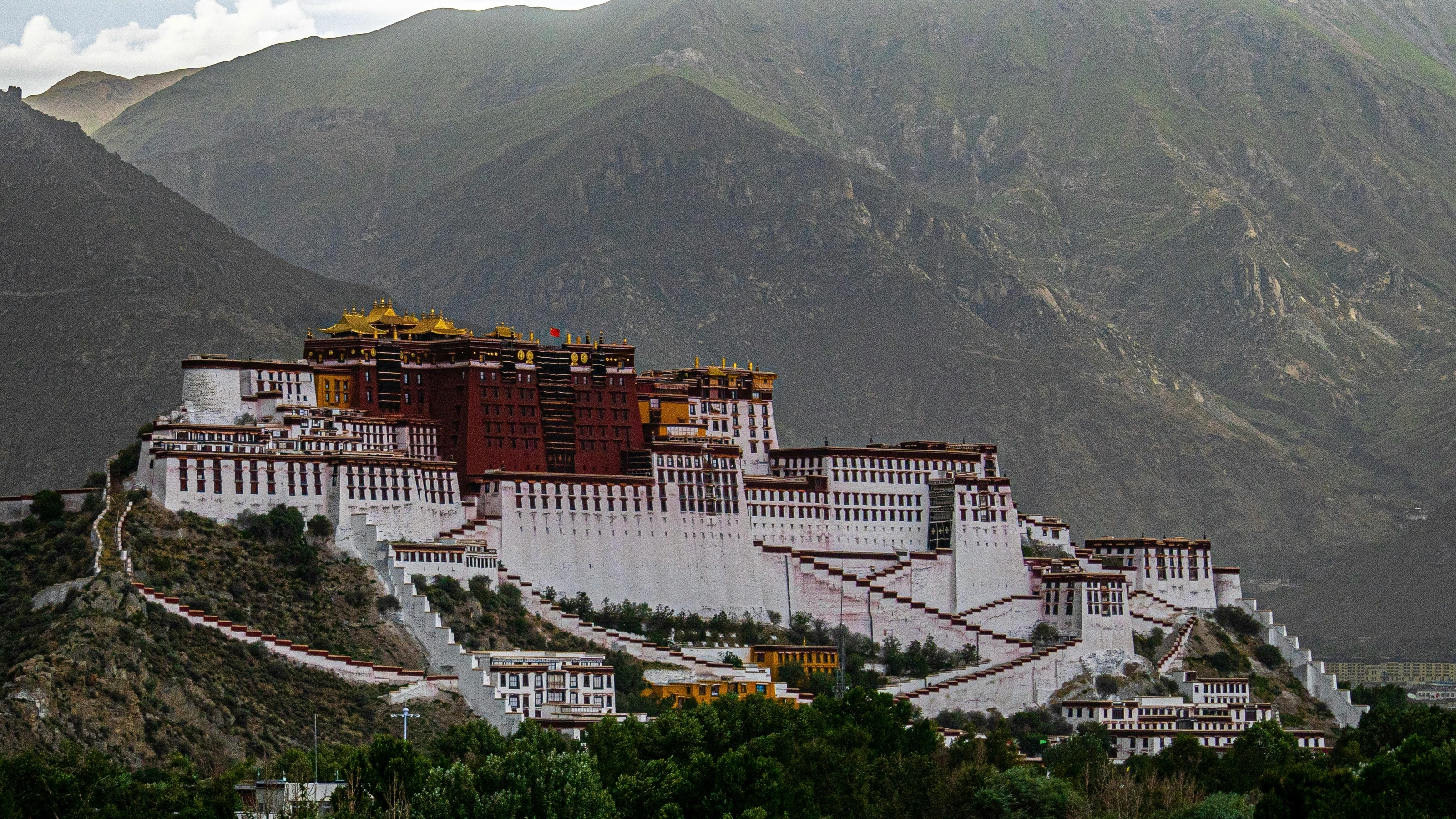
Lhasa occupies the broad valley of the Kyichu (Lhasa River) in southern Tibet at 3,650 metres, encircled by the Himalayan and Nyenchen Tanglha ranges. The Potala Palace crowns Marpori (Red Hill) above the city, its tapered white and crimson granite masonry supporting golden roofs that blaze under an azure plateau sky. From stone slabs outside Jokhang Temple worn smooth by prostrating pilgrims to sweet tea poured steaming into glass tumblers from aluminum kettles, Lhasa balances sacred monastic traditions with unhurried daily life.
What to see
The Potala Palace represents the architectural zenith of the Tibetan plateau, preserving gilded stupa tombs of past Dalai Lamas and historic murals; Jokhang Temple houses the revered Jowo Rinpoche statue brought by Princess Wencheng in the 7th century; Barkhor Street forms the circular pilgrim circuit around Jokhang; Sera Monastery on the northern mountain slopes comes alive during afternoon philosophical debates.
What to eat
Highland staples sustain everyday vitality: Tibetan noodles (Zangmian) feature chewy barley flour noodles submerged in piping-hot yak marrow broth; tender poached yak meat is sprinkled with coarse salt; tsampa is kneaded by hand with warm butter tea and dried cheese curds; sweet milk tea simmered with black tea and fresh dairy warms crowded neighbourhood teahouses.
Getting here & around
Lhasa Gonggar Airport connects major domestic gateways with shuttle coaches to the city centre; the Qinghai-Tibet Railway terminates at Lhasa Station with direct trains from Xining, Beijing, and Shanghai. City transport uses local buses, electric scooters, and taxis. Taking ample rest during the first twenty-four hours to acclimatize to high altitude is strongly advised.
Choose a neighbourhood
Each area offers a different side of the city. Pick one to explore at your own pace.
Potala Palace & Zongjiao Lukang Park
The visual anchor of the plateau capital, where the towering Red and White palaces rise from bedrock above willow-lined pools reflecting the palace fortress.
Ascending stone staircases into the historical state rooms, panoramic skyline photography from Chakpori Hill, and peaceful lakeside park walks.
Jokhang Temple, Barkhor Street & Teahouses
The spiritual heartland and millennium-old circumambulation pathway, lined with traditional apothecaries, thangka studios, and bustling tea halls like Guangming Gangqiong.
Paying homage before the life-sized Jowo Buddha image, walking clockwise with chanting pilgrims, and experiencing vibrant teahouse society.
Sera Monastery & Northern Hermitages
One of the great Gelug monastic universities at the base of northern scree slopes, famous for daily afternoon courtyard debates where monks clap hands and pace in lively philosophical inquiry.
Witnessing energetic theological debates, hiking mountain hermitage trails, and taking in wide valley perspectives over Lhasa.
Granite and Thatch on the Red Hill
The construction of the Potala Palace stands as a masterpiece of mountain fortress architecture. Rising directly from the bedrock of Marpori Hill, stone foundations reach over five metres in thickness, tapering inward as they climb to anchor the fortress against mountain gales and seismic tremors. The outer White Palace is painted each autumn with a sacred blend of slaked lime, milk, and saffron, glowing warm white under highland sun; the central Red Palace utilizes red mineral earth mixed with woven stalks of wild baimacao reed to reduce deadweight on upper storeys. Thirteen storeys of gilded copper-tile roofs crown the citadel like a floating gold pavilion.
The Polished Stones of Barkhor
Encircling the outer walls of Jokhang Temple, Barkhor Street flows like a living spiritual river. Paved entirely with heavy plateau flagstones, the path has been buffed over centuries by the felt-soled boots and prostrating bodies of countless pilgrims to a jade-like sheen. Massive whitewashed stone incense burner towers rise along the circuit; each dawn, worshippers feed bundles of fresh mountain cypress, juniper, and ground roasted barley into glowing embers, sending aromatic smoke into the sky. Moving unhurriedly clockwise with hand-held prayer wheels, walkers whisper mantras, leaving deep spiritual impressions upon the mountain earth.
Aluminum Kettles and Small Banknotes
Step inside Guangming Gangqiong Sweet Tea House and you encounter the warm communal heartbeat of old Lhasa. Pilgrims, monks, and neighbourhood residents squeeze onto long timber benches around shared tables. Customers place a single one-yuan note beside an empty glass tumbler on the table; soon a tea server carrying a massive steaming aluminum kettle approaches, topping the tumbler to the brim with hot sweet tea and collecting the note in an unspoken rhythm. Boiled from dark black tea leaves, fresh milk, and sugar in heavy iron cauldrons, the tea is fragrant, creamy, and soothing, washing down bowls of hot yak-broth barley noodles.