Mizhi
Named for spring waters that nourish golden millet until the cooking liquid coats the ladle like rich cream.
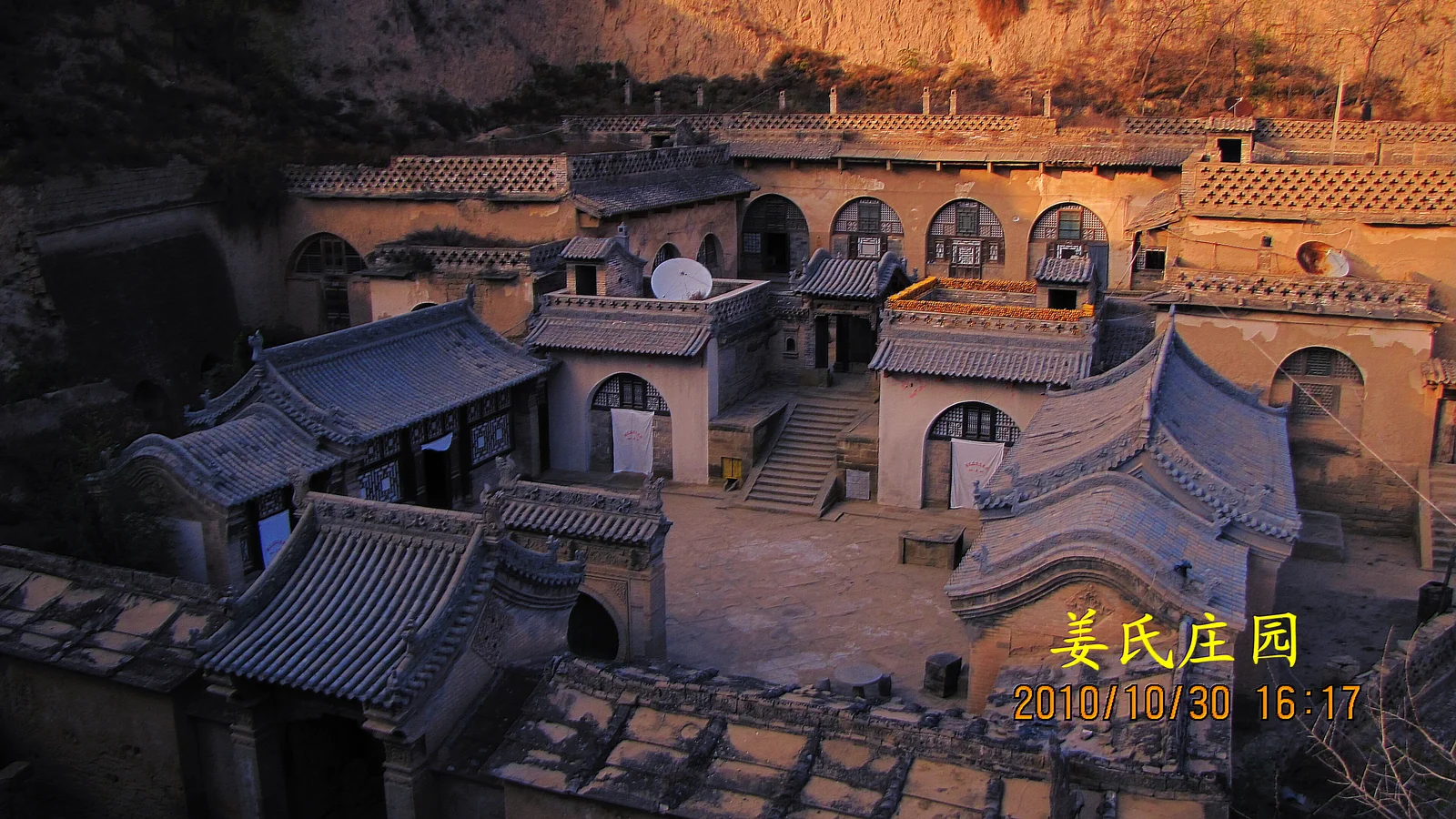
The Wuding River flows between Yulin and Yan'an in northern Shaanxi, nourishing Mizhi, a historic loess township renowned for producing China's premier golden millet. Ancient gazetteers record that mountain rills here fertilized soils so ideal for foxtail millet that the cooking water washed off grains like unctuous cream (mi zhi). Birthplace of Ming dynasty rebel king Li Zicheng, Mizhi also cradles the pinnacle of troglodyte architectural craft. The Jiang Family Manor in Qiaohecha scales a sheer loess ridge across three stepped courtyard tiers; stone-faced cave vaults nestle behind fortress-like ramparts, where intricate brick relief friezes and carved timber screens flourish deep within the rugged plateau. Despite harsh arid winds, local crops concentrate intense flavor: autumn fields ripple with golden foxtail heads, fresh-milled grain simmers into porridge as rich as condensed cream, and golden proso cakes puff in hot lard, as women snip scarlet papercuts to soaring folk songs echoing across the ravines.
What to see
The Jiang Family Manor stands as China's sole fortress-style cave-dwelling manor; climbing across lower, middle, and upper courtyards, its dressed granite portals, concealed arrow slits, and brick carvings combine castle defense with domestic elegance. The Li Zicheng Palace on Panlong Mountain rises on elevated masonry terraces crowned with carved pavilions and bell towers. The ancient Cave Walled Town preserves Ming flagstone streets bordered by quadrangle cave compounds. Along the Wuding River, Wanfo Grottoes carve nearly ten thousand Song-dynasty Buddha reliefs directly into red sandstone cliffs.
What to eat
Mizhi cooking refines coarse northern grains into delicate comfort foods. Fresh millet porridge simmers until thick and fragrant, quickly forming an unctuous, golden film across the surface. Deep-fried yellow proso cakes wrap sweet date paste in fermented millet dough, puffing into crisp, golden fritters. Mixed pea-and-wheat noodles are rolled thin as silk and shredded into delicate threads, sliding into clear mutton broth. Qianqianfan stews flattened black beans with millet, while winter vegetable pots braise potatoes, pickled cabbage, tofu, and pork belly into hearty highland stews.
Getting here & around
Yulin Yuyang Airport sits one hour north by express shuttle. Mizhi Railway Station sits along the Baotou-Xi'an line. Within the county town, the Li Zicheng Palace and Old Cave Town are walkable; reaching the rural Jiang Family Manor fifteen kilometers away is best served by local minibuses or rental cars.
Choose a neighbourhood
Each area offers a different side of the city. Pick one to explore at your own pace.
Qiaohecha Jiang Family Manor
The pinnacle of fortress cave-dwelling architecture in northern China. Constructed over sixteen years by late Qing landlord Jiang Yaozu, the manor ascends a sheer loess cliff through three tiered compounds. Fortress walls with hidden gun embrasures enclose upper stone-faced cave chambers carved with floral brick reliefs.
Studying the highest architectural achievement of stone-cut yaodong vaults and defensive mountain castle engineering.
Panlong Mountain Li Zicheng Palace
A monumental hillside pavilion complex honoring rebel king Li Zicheng. Perched along a commanding ridge line overlooking the silver Wuding River valley, masonry terraces support the Golden Hall and Double Bell Towers, where glazed roof tiles shimmer amid ancient cypresses.
Climbing commanding palace terraces to survey the surrounding loess ridges and explore Ming military history.
Old Cave Town & Ming-Qing Old Street
An authentic living loess county town. The central flagstone axis connects intact quadrangle cave compounds, where carved poplar gates open onto flagstone courtyards shaded by pomegranate trees and framed by papercut window lattices.
Wandering peaceful historic stone lanes and observing traditional quadrangle cave courtyard living.
The fortress cave manor of the Jiang lineage
During the late Qing dynasty, banditry swept across northern Shaanxi. Wealthy landlord Jiang Yaozu traveled to Beijing to recruit imperial stonemasons, spending sixteen years carving an impregnable stone stronghold into the cliffs of Qiaohecha.
Spanning forty acres, the manor integrates troglodyte caves with European castle fortifications. Three tiered courtyards ascend the ridge: the lower yard holds stables and granaries beneath murder holes; the middle yard serves as reception halls; and the upper yard houses patrician living quarters behind colossal granite archways. Nine vaulted stone caves tunnel into the mountain, lined with heated kang beds and shaded by carved brick gates. Crucially, a secret passage concealed in the master bedchamber tunnels directly to the clifftop fortress above, allowing escape under siege. The manor masks survival engineering behind elegant classical ornament.
Millet water as rich as unctuous cream
Mizhi millet was delivered to the imperial court as tributary grain for centuries, its sweetness rooted in plateau terroir. Wide diurnal temperature swings and intense sunlight combine with well-draining loess soils, encouraging roots to penetrate deep into mineral-rich red subsoils.
Harvested each October, round golden seeds are freshly hulled before cooking. Dropped into earthenware pots of cold mountain water, the grains swell over rolling fires. As starches and vegetal lipids emulsify in simmering water, the broth transforms into opaque, pale-gold velvet. Raked off the heat to rest for minutes, a thick, glossy skin of golden cereal oil sets across the rim. Smooth, nutty, and sweet, the porridge slips down easily, nourishing without companion side dishes.
Papercut flowers on the cave casements
Inside troglodyte cave dwellings, raw yellow earth meets brilliant scarlet papercuts in sharp visual contrast. The facade of a yaodong typically features an expansive semicircular poplar lattice window, sealed in autumn with heavy white hemp paper to keep out blowing sand. At the center of each panel sits a bold, hand-cut window flower.
Mizhi papercutters work freehand without preliminary sketches. Folding paper between thumb and palm, small pointed shears snip curves with instinctual speed. In moments, soaring magpies, galloping horses, and fertility symbols emerge from the paper. Bold and graphic, the designs possess raw primal vitality. Lit by candlelight from within the heated kang room, the scarlet silhouettes glow against snowy mountain ridges outside, affirming warmth and continuity.