Nantong
Where the Yangtze opens into the sea, long bolts of indigo cloth billow on drying poles like breaking waves.
At Nantong, the Yangtze River expands dramatically as sediment builds a calm, fertile river-sea delta. A century ago, the scholar-industrialist Zhang Jian worked with the waterways to build mills, academies, and museums, creating an intact showcase of early modern urban planning. Inside, the green Hao River wraps the historic town like an emerald necklace, while isolated Langshan Hill stands sentry over the mouth of the Yangtze. Tidal mudflats nourish renowned Asiatic hard clams, and in village courtyards, wooden indigo vats still brew deep mineral blues.
What to see
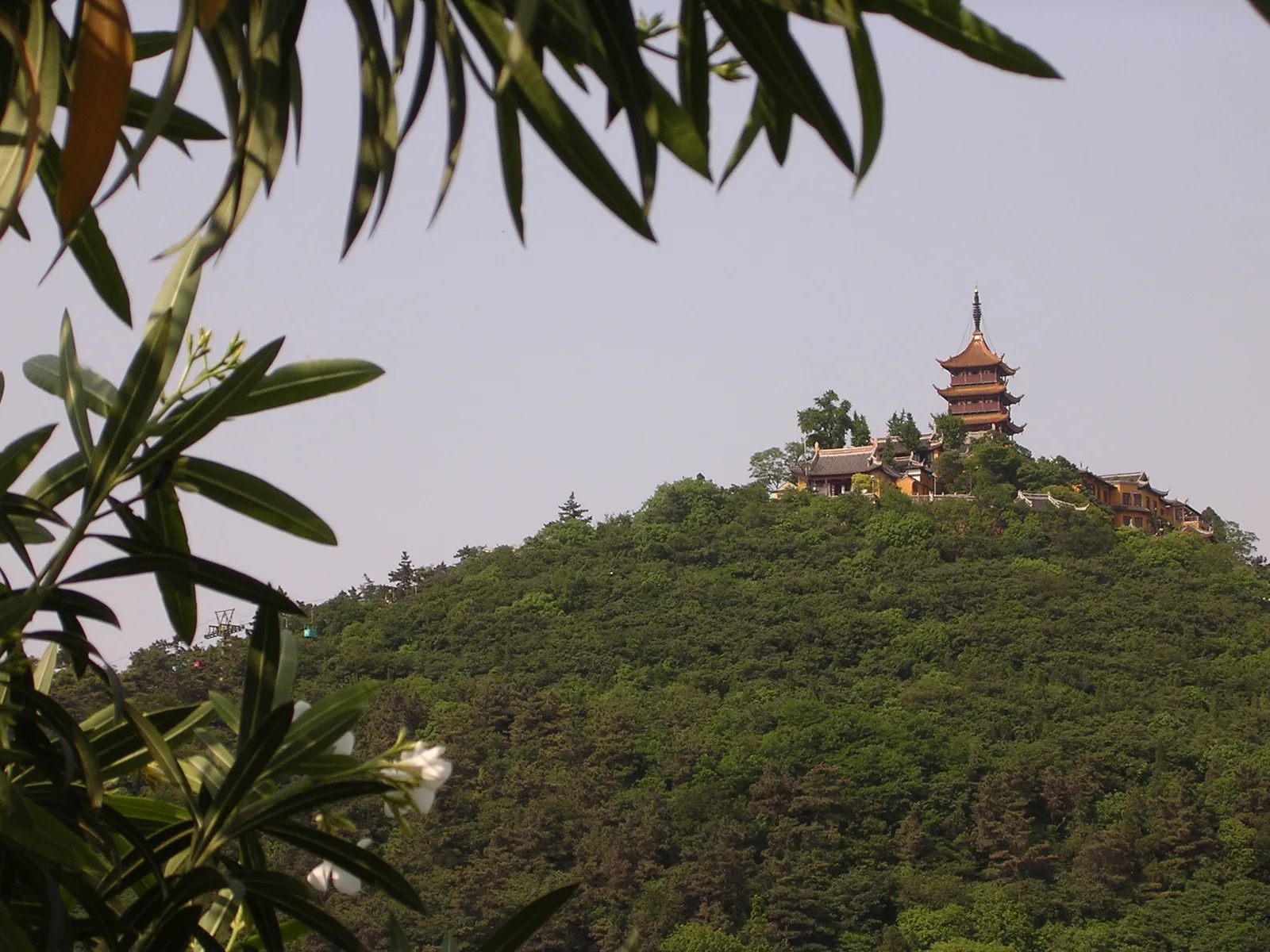
The Hao River encircles the old town, its still waters reflecting historic clock towers and cypress groves. Mount Lang offers an unmatched lookout over the busy shipping channels of the Yangtze estuary, while the Tangzha heritage district preserves red-brick textile mills and canal wharves. Walking through the Nantong Museum reveals China's earliest public educational complex.
What to eat
Estuary river fish meets yellow-sea seafood. Clams from Lüsi port are prized for their clean sweetness, flash-steamed with ginger and Shaoxing wine; Haimen goat meat is braised until meltingly tender without gamey sharpness; and flaky layered biscuits accompany steaming bowls of springy noodles in dawn breakfast alleys.
Getting here & around
High-speed trains link Nantong and Nantong West stations with Shanghai in roughly an hour. The central historic riverfront is ideal for relaxed walking, while buses connect outward to Mount Lang and Tangzha.
Choose a neighbourhood
Each area offers a different side of the city. Pick one to explore at your own pace.
Hao River & Nantong Museum
A natural moat that guarded the settlement for a millennium, now a serene ecological waterway. Weeping willows fringe stone embankments while century-old ginkgo trees shade China's earliest public museum gardens. In the evening, flat-bottom boats glide under arched moon bridges.
Tranquil waterfront walks and exploring the civic origins of modern Nantong.
Tangzha Canal Town & Dasheng Mill
The Tongyang Canal flows directly through the quarter, flanked by historic clock towers, weathered red-brick factory facades, and iron barge docks. As the cradle of China's domestic industrial reform, its waterside timber shopfronts still host local coppersmiths, dry-goods merchants, and bean-curd shops.
Experiencing authentic early-industrial heritage along quiet canal towpaths.
Mount Lang & Estuary Wetlands
A solitary green peak rising sharply from flat delta plains, revered as a sacred Buddhist sanctuary. Standing beside the rooftop pagodas of Guangjiao Temple, the Yangtze stretches away toward the horizon, filled with sea-bound freighters against vast tidal reed beds.
Panoramic views of the mighty Yangtze River mouth and bracing coastal winds.
Deep blue on high racks
The secret of Nantong blue calico begins in the rich delta soil that feeds local cotton crops. Village weavers spin tightly twisted yarn into durable, dense white cotton cloth. Master carvers take tough, tung-oil-soaked cardboard and meticulously cut delicate floral, plum-blossom, and fish motifs with angled blades.
A paste made from soybean flour and slaked lime is squeegeed through the carved stencil onto the fabric. Once dry, the cloth is submerged repeatedly in tall wooden vats of fermented plant indigo, turning deeper shades with each exposure to oxygen. When the dried paste is scraped away, brilliant white patterns emerge against midnight blue. Raised on high timber scaffolding, thirty-meter lengths flutter in the wind like whitecaps on the wide river.
Sweetness from tidal silt
Nantong's immense sand ridges and gentle mudflats emerge with every receding tide. Here, where river silt meets salty ocean tides, plankton thrives in balanced brackish waters, creating an ideal habitat for thin-shelled, plump hard clams.
Local cooks never drown fresh clams in heavy sauces. Freshly harvested clams purge their sand, then drop into a dry hot wok with just two slices of mature ginger and a splash of rice wine. The moment the shells pop open with a sharp crack, the wok is pulled from the flame. The milky liquor inside offers a delicate mineral brine followed by enduring, natural marine sweetness.