Pu'er
Arbor tea trees grow beneath tropical forest giants, reached with tall timber ladders while earthenware pots roast leaves into caramel aromas over charcoal.
Pu'er occupies the mountainous watershed of the middle Lancang River in southern Yunnan between the Ailao and Wuliang ranges, celebrated as the historic cradle of compressed tea and the staging ground of the Tea Horse Road. Across the slopes of Mount Jingmai, ancient arbor tea trees thrive symbiotically within the shade of primary subtropical rain forests alongside Blang and Dai timber stilt villages. From sun-dried broad leaves laid on woven bamboo racks to seven-piece tea cakes pressed beneath stone weights, Pu'er anchors centuries of tea craftsmanship.
What to see
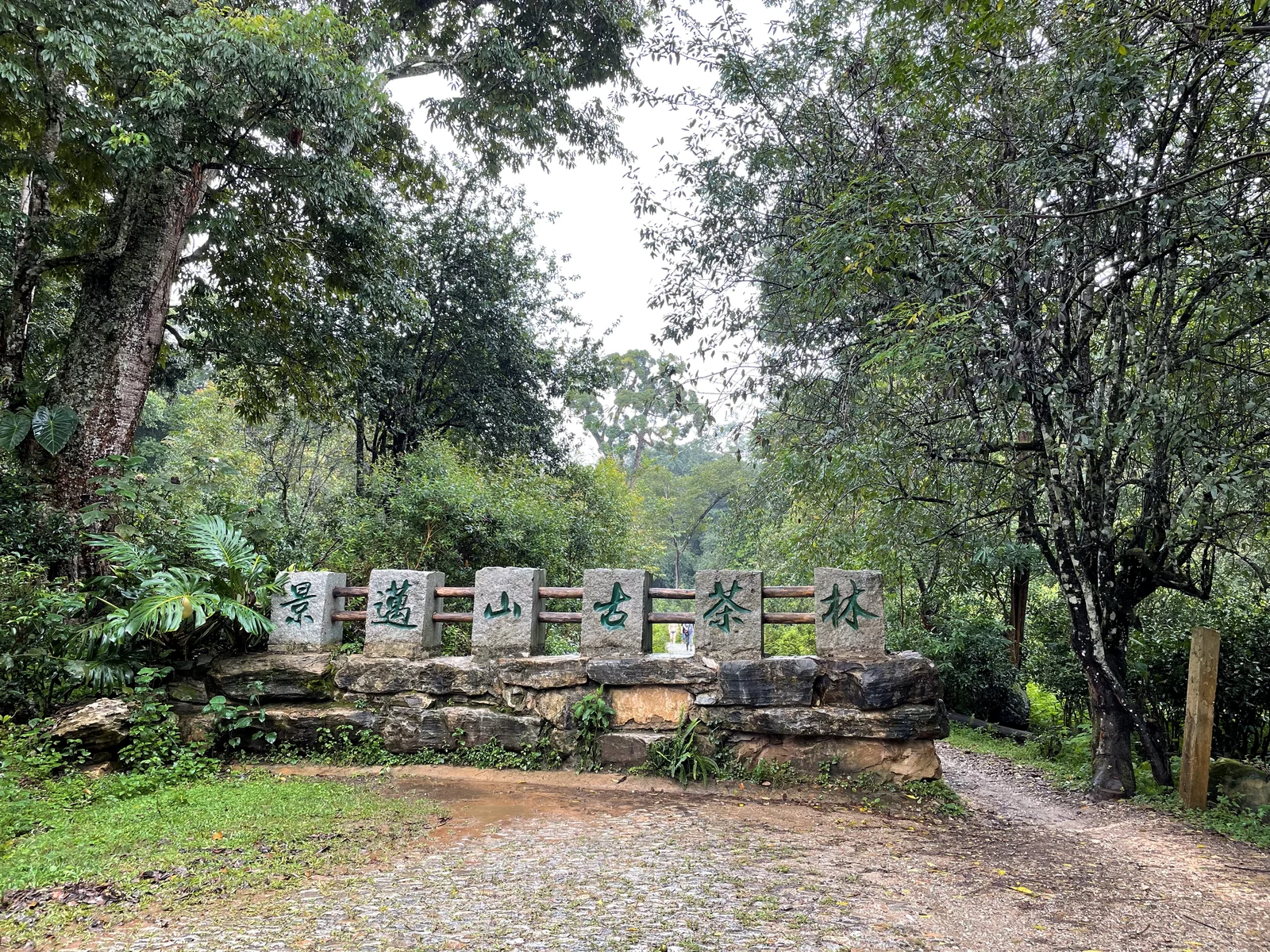
The Old Tea Forests of Jingmai Mountain stand as a UNESCO World Heritage cultural landscape, where centuries-old arbor tea trees host wild orchids and epiphytes; Wengji Blang Village preserves multi-eaved timber stilt dwellings; Nuogan Dai Village gathers hillside tiled houses around crystal mountain streams; Simao's historic Tea Horse Road features polished flagstone lanes.
What to eat
Tea culture influences everyday cooking: tender green tea buds are scrambled with free-range eggs; sweet fragrant rice is baked inside fresh bamboo tubes, lined with translucent edible bamboo membrane; paired with sour bamboo chicken, banana-leaf wrapped grilled river tilapia, and dry-cured mountain beef jerky.
Getting here & around
The China-Laos Railway serves Pu'er Railway Station, connecting from Kunming in two and a half hours; Pu'er Simao Airport handles domestic regional flights. Reaching Jingmai Mountain requires a three-and-a-half-hour drive southwest to Lancang County, best navigated by private rental car.
Choose a neighbourhood
Each area offers a different side of the city. Pick one to explore at your own pace.
Jingmai Ancient Tea Forests & Wengji Village
The core World Heritage zone, where thousands of acres of century-old arbor tea trees grow under primary forest canopies, surrounding the clustered timber houses of Wengji Blang village.
Walking beneath multi-tier forest canopies, exploring Blang timber architecture, and sipping orchid-scented ancient arbor tea.
Nuogan Dai Water Village & Huimin Valley
A serene Dai village tucked into a forested basin on Jingmai Mountain, where dark tiled stilt homes flank running mountain streams with air scented by curing tea leaves.
Viewing panoramic valley vistas of tiled village rooftops, enjoying peaceful village walks, and visiting artisan tea pressing workshops.
Simao Old District & Tea Horse Park
The historic administrative and merchant centre of Pu'er, featuring riverfront warehouses, old tea trading stores along Xima River, and buzzing night markets with Yunnan barbecue.
Walking original horse-caravan flagstone tracks, tasting vintage aged pu'er in heritage teahouses, and nocturnal market grazing.
Ancient Arbors in Forest Shade
The ancient tea groves of Mount Jingmai shatter the modern concept of terraced monoculture tea plantations. Here tea trees grow as true arbors several storeys tall, sheltered beneath towering banyans, red toons, and wild laurels. Tall forest canopies filter harsh ultraviolet rays; falling forest litter enriches slightly acidic humus; and wild crab's claw epiphytes twine alongside native orchids along lichen-crusted branches. Blang tea pickers construct three-legged timber ladders, climbing into the upper branches to pluck one bud and two leaves. Grown in ecological symbiosis, the large leaves possess a lingering wild finish and distinct orchid perfume.
Cakes Formed Beneath Granite Weights
Traditional pu'er compression preserves the warmth of human effort. Weighed portions of sun-dried maocha drop into perforated iron cylinders where surging steam softens the fibrous leaves in seconds. Master pressers tip the hot leaves into fine cotton bags, twisting the fabric into a tight navel knot to form a spherical loaf. Placed beneath heavy concaved granite weights weighing sixty pounds, the craftsman steps barefoot onto the stone corners, swinging his weight in fluid circular motions. Compacted under balanced heat and pressure, the resulting cake breathes through microscopic voids, allowing gradual fermentation over decades.
Roasted Leaves in Clay Pots
Sit by the hearth in a Blang mountain home and your host will roast a pot of tea. An open-mouthed rough earthenware pot rests beside glowing charcoal until hot. A generous fistful of dark sun-dried large-leaf tea drops inside. Holding the pot by its clay handle, the host shakes and swivels it over the coals. Within seconds, a rich toasted aroma with hints of caramel and burnt sugar rises from the leaves. The moment the tips take on a golden curl, boiling spring water is poured from a copper kettle, triggering an explosive hiss of frothing white foam, yielding an amber tea that coats the throat with sweet resonance.