Putian
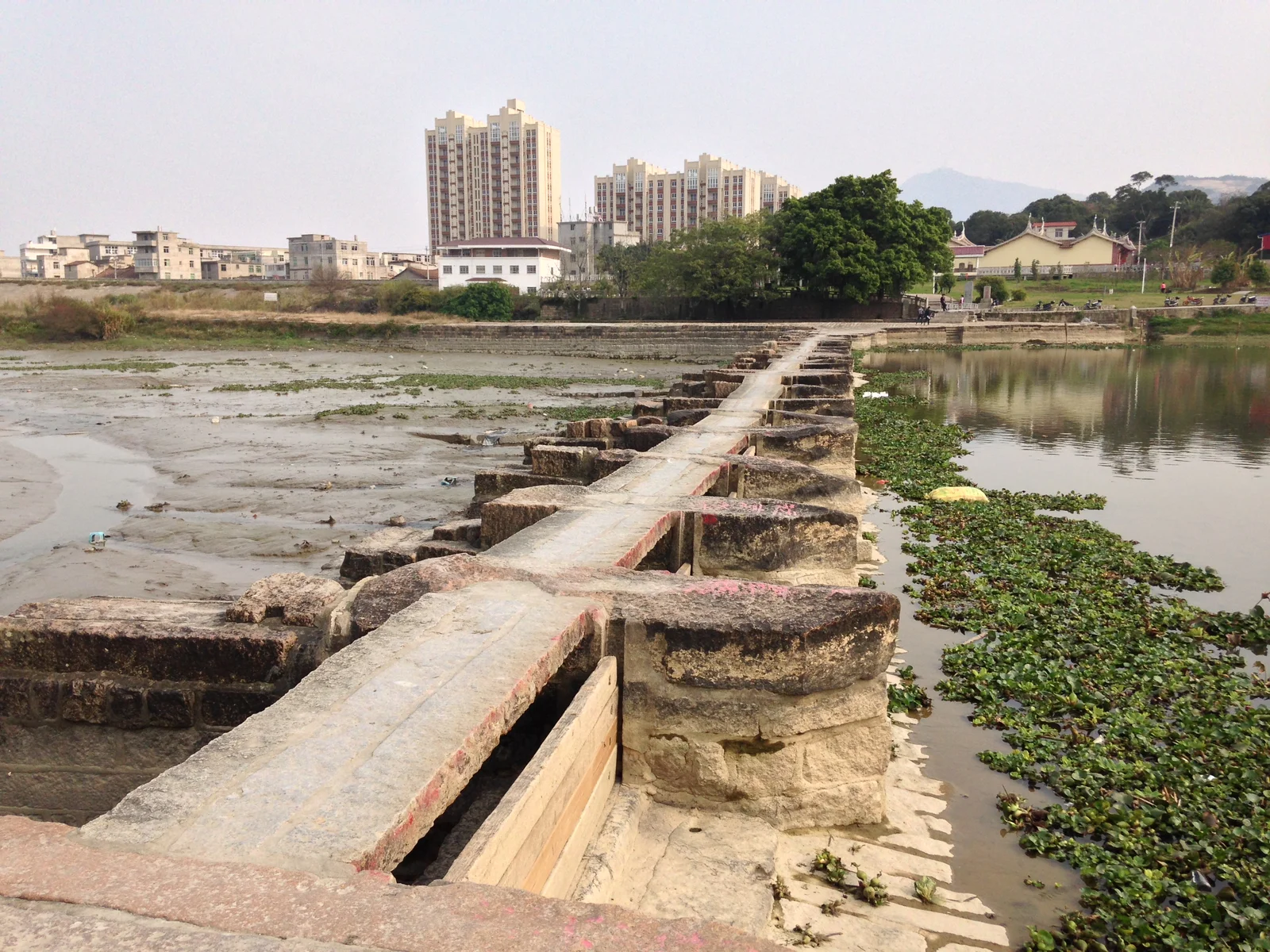
Mulanbei weir seals out incoming tides to water the Xinghua plain, while Mazu's coastal lanterns guide seafaring junks across the Taiwan Strait.
Putian curves along Xinghua Bay in central coastal Fujian, centered on the estuary where the Mulan River meets the Pacific tides. Constructed in the Northern Song dynasty, Mulanbei weir anchored huge granite blocks across tidal currents, resisting salt intrusion for nine centuries and converting barren coastal mudflats into the irrigated breadbasket of the Xinghua Plain. This marine fringe fostered the spiritual devotion of Mazu on Meizhou Island, whose seafaring patronage sheltered sailors across global maritime routes. On land, century-old lychee groves, seafood-laden Putian braised noodles, and festive sweet rice cakes express the rich flavors of coastal waters.
What to see
Mulanbei Water Conservancy preserves its Northern Song granite overflow dam and stone sluices; Meizhou Island Mazu Ancestral Temple rises above coastal bluffs with global pilgrimages; Xinghua Prefecture Historic District features Ming-Qing timber guildhalls and ancient town gates; Guanghua Temple houses a thousand-year-old Song stone pagoda; Jiuli Lake showcases dramatic mountain waterfalls.
What to eat
Putian braised noodles simmer homemade noodles inside a thick chicken and seafood broth packed with fresh oysters, razor clams, and prawns; Xitianwei dumplings pound pork into translucent wrappers with crisp bite; Mazu celebratory longevity noodles top yellow noodles with dried seaweeds, daylilies, and roasted peanuts; sweet red rice cakes wrap sweet bean paste inside crimson glutinous skins.
Getting here & around
The Fuzhou-Xiamen high-speed rail line serves Putian Station with frequent daily links to Fuzhou, Xiamen, and national hubs. Express buses connect the station to downtown and Mulanbei. To reach Meizhou Island, transfer to the regular ferry at Wenjia Pier for a fifteen-minute scenic boat ride.
Choose a neighbourhood
Each area offers a different side of the city. Pick one to explore at your own pace.
Mulanbei Ancient Weir & Lychee Groves
One of China's oldest operating hydraulic engineering structures, an expansive granite weir spanning the Mulan River shaded by centuries-old lychee groves.
Walking atop the Northern Song granite overflow dam to observe river currents, and visiting the memorial shrines of ancient hydraulic engineers.
Meizhou Island Mazu Shrine & Coast
The spiritual birthplace of oceanic goddess Mazu, with magnificent hall complexes climbing coastal hills above wave-carved granite seascapes.
Observing daily ancestral prayers and exploring dramatic sea-sculpted granite bluffs at Ewei Marine Geological Park.
Xinghua Old Town & Guanghua Temple
The historical heart of Putian, filled with red-brick arcades, ancestral temples, and Guanghua Temple's Song stone pagoda.
Savoring authentic hand-pounded bianrou soup in market alleys and examining carved Buddhist bas-reliefs on the ancient pagoda.
Mulanbei Stone Weir: Tidal Repulsion and Irrigation
Standing beside Mulanbei, the engineering scale of this ancient barrage commands immediate reverence. Constructed during the Northern Song dynasty, it was strategically sited at the inland apex of tidal bores. Builders hauled multi-ton granite slabs from nearby quarries, locking them together with dovetail keys cast with molten iron to form a two-hundred-meter weir. The weir repels high ocean tides from surging inland while impounding fresh river water for irrigation. Gravity canals branching for hundreds of miles distribute water across the Xinghua plain, converting barren salt marshes into a fertile breadbasket that continues to operate today.
Meizhou Island Mazu Rites and Oceanic Faith
Stepping ashore on Meizhou Island, ocean gales sweep over the ancestral shrine complex ascending the rocky ridge. Since historical records emerged of Lin Moniang aiding storm-tossed fishermen in the tenth century, she was venerated by mariners across maritime Asia as goddess of the seas. Ming admiral Zheng He worshipped here before voyaging to Africa, and merchant fleets carried her incense inside ship altars across the Pacific. During her spring birthday festival, thousands of pilgrims don traditional coastal attire featuring sailing-sail buns and ocean-colored costumes to offer ceremonial bows against the vast sea backdrop.
Mountain-Fed Lychee, Longan, and Red Rice Cakes
The fertile floodplains of the Mulan River, enriched by alluvial silt and temperate sea air, have yielded celebrated orchard fruits since the Tang dynasty. The local Chenzi lychee is famous for crimson peel and translucent flesh that yields floral sweetness without dripping. Late summer longans are slow-dried over charcoal embers into amber candied gems. During lunar celebrations, Putian households prepare hongtuan, vibrant red glutinous rice dumplings tinted with natural red yeast. Stuffed with sweet mung bean mash and pressed into wooden molds incised with longevity symbols, they steam into glistening crimson cakes celebrating sweet communal abundance.