Qufu
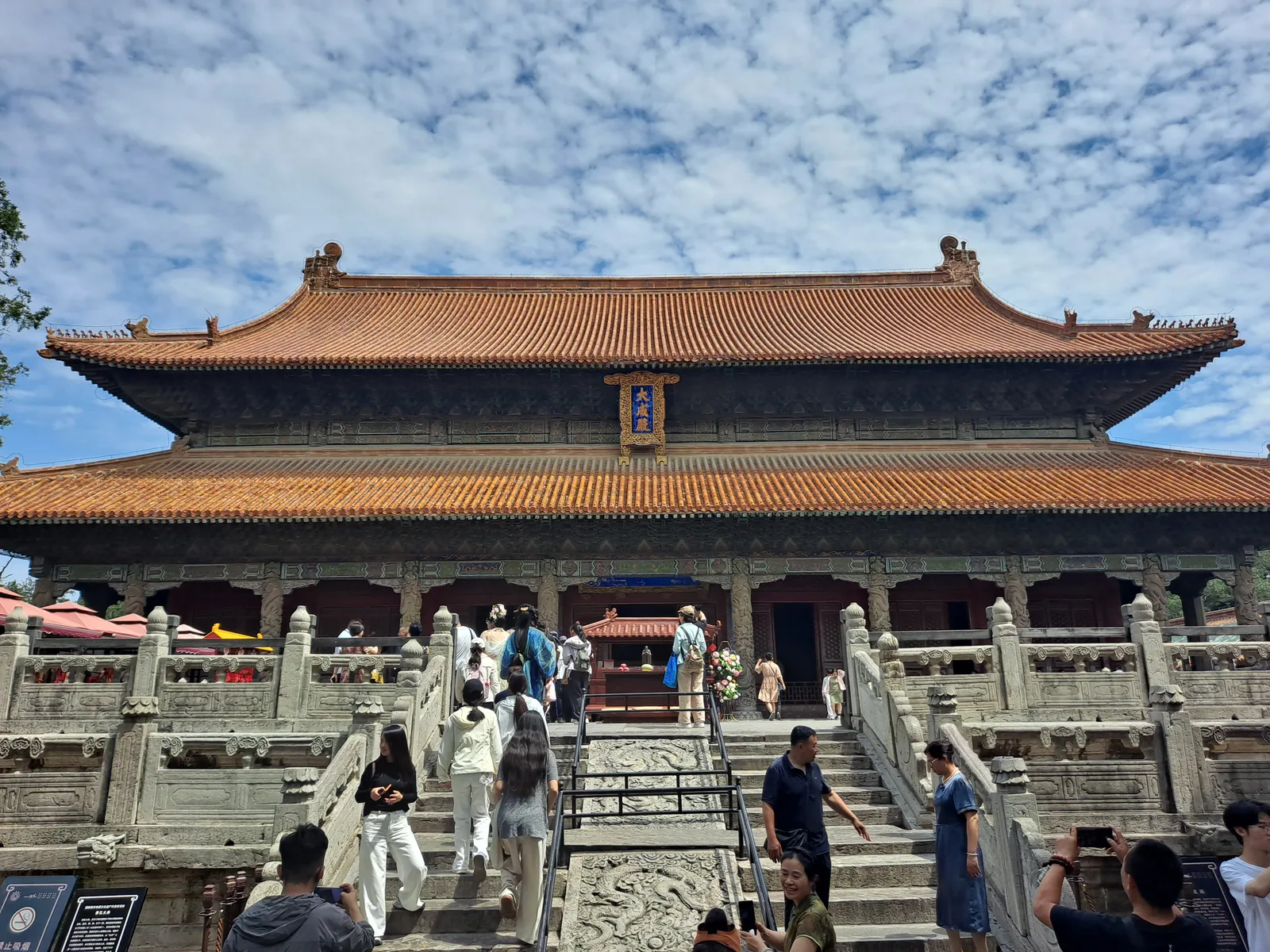
Carved dragon pillars support Dacheng Hall's heavy eaves, ancient cypresses shade the Kong forest, and Kong family feasts honor millennia of Confucian hospitality.
Qufu rests where the central Shandong hills descend into western plains, embraced by the ancient Si and Yi river courses. Venerated as the birthplace of Confucius, the city is defined by the UNESCO World Heritage 'Three Kong' sites: Confucius Temple, the Kong Family Mansion, and the Kong Cemetery. Dacheng Hall's heavy double eaves rest upon ten deeply carved marble dragon pillars; the Yan Sheng Gong Mansion preserves China's longest unbroken aristocratic estate; and the Kong Forest shelters over one hundred thousand graves beneath ancient cypress groves.
What to see
Dacheng Hall at Confucius Temple features high-relief marble dragon pillars and imperial yellow glazed tile roofs; the Kong Family Mansion preserves formal judicial halls, inner residential chambers, and back gardens; Kong Forest stands as the world's oldest and largest private clan cemetery; Nishan Sacred Land marks Confucius's birthplace in a tranquil hill valley; the Ruins of Lu State Capital preserve Eastern Zhou ramparts.
What to eat
Shili Yinxing glazes fresh ginkgo nuts harvested from ancient temple trees in rock sugar syrup and mountain honey until translucent and tender; Yangchun Baixue steamed rice cakes blend glutinous rice and poria root powder into delicate confections; Kong Family roast duck crisps skin served with scallions and sweet bean paste; Yipin braised tofu pan-fries soft bean curd in rich scallop broth; Sixi meatballs offer melt-in-the-mouth savory pork depth.
Getting here & around
The Beijing-Shanghai and Southern Shandong high-speed lines serve Qufu East Station, reaching Beijing in two hours and Shanghai in three hours. Dedicated tourist shuttle buses connect the station to the city center and Three Kong monuments in twenty minutes. The historical city core is easily explored on foot or by local rickshaw.
Choose a neighbourhood
Each area offers a different side of the city. Pick one to explore at your own pace.
Temple of Confucius & Dacheng Hall
The premier imperial sanctuary honoring Confucius, spanning nine successive courtyards shaded by ancient junipers.
Examining the high-relief carved dragon pillars of Dacheng Hall and contemplating Confucius's open-air teaching altar at Apricot Platform.
Kong Family Mansion & Gardens
The ancestral residence of Confucius's direct descendants, blending official administrative courts with private residential compounds.
Exploring inner courtyard halls, decorative gates, and strolling through rear gardens shaded by century-old wisteria trellises.
The Kong Forest (Cemetery of Confucius)
The world's oldest and largest private clan graveyard covering two hundred hectares beneath twenty thousand ancient cypress trees.
Walking the ceremonial Zhushui bridge path into deep evergreen groves to pay respects before Confucius's tumulus.
Dacheng Hall Eaves and High-Relief Marble Dragon Pillars
Passing through the Dacheng Gate of Confucius Temple, Dacheng Hall rises majestically beneath the canopy of ancient cypresses. Spanning nine structural bays under imperial yellow glazed tile eaves, its bracketing systems cluster like painted clouds. The crowning architectural triumph is the colonnade of ten high-relief marble pillars along the front terrace. Each six-meter column is chiseled from a single block of dense grey-white stone, depicting two coiling dragons leaping through undulating clouds. Local lore holds that when Emperor Qianlong visited to worship Confucius, officials wrapped the pillars in imperial yellow silk lest he be envious that their craftsmanship surpassed the Forbidden City.
Kong Family Mansion Courtyards and the Kong Forest
The Kong Family Mansion stands as China's most enduring aristocratic homestead, organized across central, eastern, and western axes encompassing hundreds of halls. Moving beyond formal judicial courts, carved gates open into quiet domestic quarters shaded by bamboo and rockeries. North of the city walls lies the Kong Forest, encompassing three thousand acres shaded by twenty thousand ancient cypresses. Dating back twenty-five hundred years, over one hundred thousand descendants of Confucius lie buried here beneath inscribed stelae, preserving an unprecedented living genealogy.
Shili Yinxing Candied Ginkgo and Ceremonial Confections
Echoing Confucius's celebrated aphorism that food can never be too refined, the cuisine of the Kong Family Mansion represents the zenith of ceremonial dining. Shili Yinxing draws its ingredients from ginkgo trees planted in the Song dynasty before the Hall of Poetry and Rites. Plump nuts are peeled, their bitter germ cores removed by hand, and simmered slowly in clay pots with mountain spring water, rock sugar, and wild honey until translucent and golden. Paired with Yangchun Baixue steamed rice cakes made from japonica rice and poria powder, the confections dissolve softly on the palate with gentle sweetness.