Wuhan
Two great rivers divide the metropolis into three towns; along dawn ferry docks, everyone walks while carrying paper bowls of sesame noodles through the river mist.
The Yangtze and Han rivers converge here, carving Wuhan into the three historic quarters of Wuchang, Hankou, and Hanyang. Wide shipping channels carry steady river traffic beneath double-deck bridges connecting north and south. From the boisterous morning ritual of guozhao along steam-filled alleyways to shaded plane trees outside Hankou's former trading banks, Wuhan balances dockside grit with open water and generous urban rhythm.
What to see
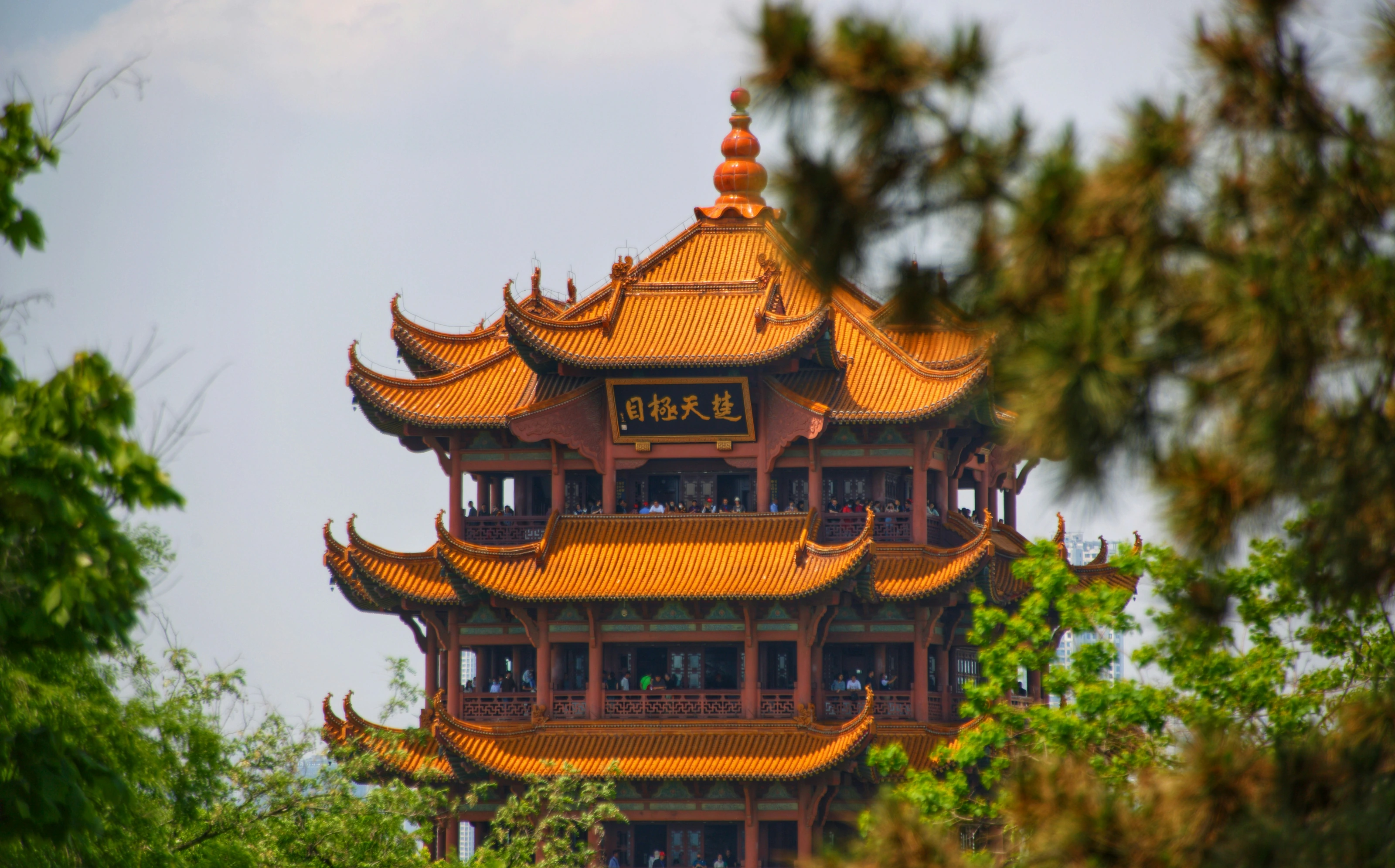
Stroll along Hankou's Yanjiang Avenue past early twentieth-century customs houses and red-brick trade offices; climb Yellow Crane Tower atop Sheshan for views over the Yangtze River Bridge; cycle beneath lakeside dawn redwoods along the East Lake Greenway.
What to eat
Morning breakfast is an all-city event: firm alkaline noodles coated in viscous stone-ground sesame paste and pickled spicy radish; three-delicacy doupi pan-fried inside broad shallow cauldrons layering sticky rice with smoked pork and bamboo; crispy rings of mianwo crullers dipped into peppery river-catfish starch soup.
Getting here & around
Wuhan forms the central high-speed rail crossroads of central China, served by Wuhan, Hankou, and Wuchang stations. Modern metro lines tunnel beneath the riverbed, while taking the historic passenger ferry between Hankou's Wuhan Customs Pier and Wuchang's Zhonghua Road Pier offers the most evocative crossing.
Choose a neighbourhood
Each area offers a different side of the city. Pick one to explore at your own pace.
Hankou Concessions & Jianghan Road
The treaty-port commercial heritage quarter, where red-brick legations and granite banks along Lihuangpi Road sit under sycamore shade, opening into old lane communities and lively street food alleys.
Admiring neoclassical and eclectic architecture, relaxing in historic street-corner cafes, and grazing through nocturnal lane markets.
Wuchang Sheshan, Liangdao Street & Tanhualin
The cultural and academic heartland of Wuchang: Yellow Crane Tower caps the ridge of Snake Hill, Liangdao Street gathers legendary morning breakfast counters, and hillside alleys in Tanhualin wind past century-old brick chapels.
Savouring classic dawn breakfasts on Liangdao Street, looking over the double-deck river bridge, and walking hillside heritage pathways.
East Lake Greenway & Moshan Hill
A vast urban lake network on the city's eastern fringe, shaded by towering water cypresses with bicycle causeways connecting lakeside tea hills and reconstructed Chu state pavilions.
Bicycling along lake causeways, sipping green tea beneath lakeside groves, and experiencing the city's relationship with open water.
The Dockside Breakfast Ritual
Locals call breakfast guozhao, meaning passing the morning with ceremony. Born to sustain dock workers carrying grain and iron along the riverbanks, hot dry noodles are boiled al dente in advance and brushed with oil. When ordered, a handful is plunged into boiling broth inside a woven bamboo basket for five seconds, then drained and tossed with stone-ground sesame paste, dark soy sauce, scallions, and pickled turnip dice. Eaten standing by bus stops or walking to the ferry pier, the noodles are chewy, dry, and intensely nutty.
The Sizzling Doupi Cauldron
Cooking three-delicacy doupi is pure performance theatre. Over fierce gas burners, cooks swivel a one-metre circular cast-iron pan, pouring a batter of ground rice and green mung beans, spreading it paper-thin with a sea-clam shell before cracking whole eggs over the surface. Steamed glutinous rice is pressed across the egg crepe, followed by a savory sauce of diced pork, dried mushrooms, and winter bamboo shoots. Tossed and turned in the pan until crisp on the base, it is cut into squares with iron scrapers: shattering crisp on the outside and moistly scented within.
Ferrying Across the Yangtze
Even with high-speed subways running deep beneath the riverbed, Wuhan's residents cherish their ferries. Boarding at Hankou's Wuhan Customs Pier, iron gangways clang against stone quays. The twin-deck vessel pulls into the rolling waters, past early-century customs clocktowers, grand truss bridges, and the distant ridge of Snake Hill in Wuchang. River breezes sweep across the open deck where commuters lean against steel railings beside their electric mopeds, tracing the city's liquid lifeline.