Xiangxi
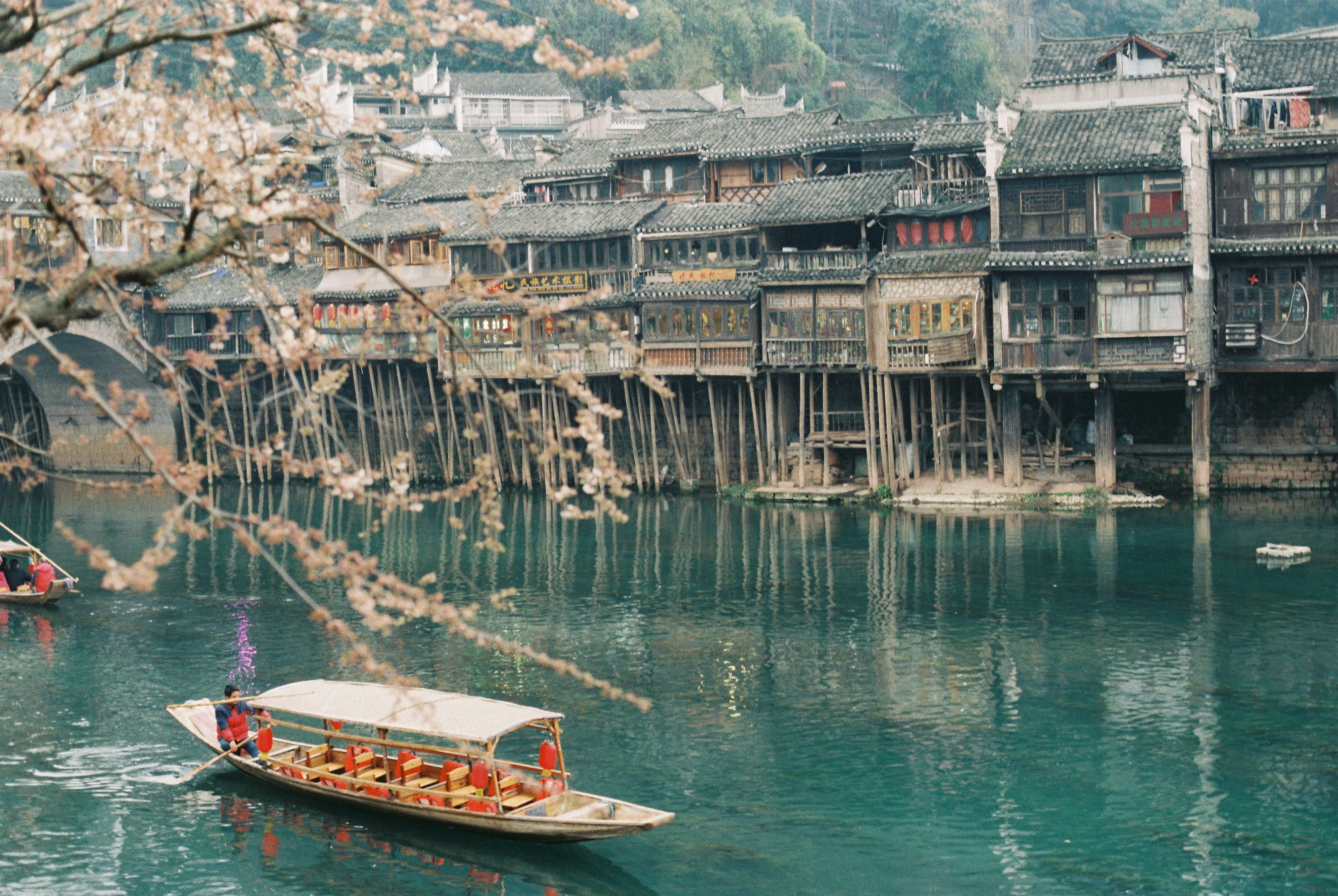
Mountains of Wuling roll ridge upon ridge; timber stilt houses hang suspended above jade rivers, where hearth smoke cures winter bacon for months.
Xiangxi lies cradled in the folds of the Wuling Mountains of northwestern Hunan, carved by the Tuojiang and Youshui rivers into steep limestone gorges. From the cantilevered wooden stilt dwellings flanking the water in Fenghuang to Furong Town suspended above roaring waterfalls, Xiangxi blends literary river solitude with the deep aroma of hearth-cured bacon and indigo textile crafts.
What to see
Fenghuang ancient city features endless stilt houses along the Tuojiang, where wooden skiffs cut through dawn mist; Furong Town sits dramatically over a waterfall plunging into the river canyon; Dehang Canyon displays terraced Miao hamlets beneath the monumental Aizhai suspension bridge.
What to eat
Hearth-smoked pork belly slices turn translucent when steamed, glistening with woodsy sweetness without greasiness; Miao cured sour fish and sour broth draw sharp, invigorating tartness from stone jars; blood-glutinous rice duck (xueba ya) stewed with cured fat yields robust mountain flavours.
Getting here & around
The Zhangjiajie-Jishou-Huaihua High-Speed Railway connects the region with dedicated stations at Fenghuang Gucheng, Furongzhen, and Jishou East. Shuttle buses run regularly from stations to ancient towns; mountain hamlets are best explored in regional day trips.
Choose a neighbourhood
Each area offers a different side of the city. Pick one to explore at your own pace.
Fenghuang Old Town & Tuojiang River
The evocative border city celebrated by writer Shen Congwen: the North Gate and Rainbow Bridge span the emerald river, lined with cantilevered timber stilts and lantern-lit flagstone lanes.
Witnessing dawn river mist and boatmen, visiting Shen Congwen's ancestral home, and evening riverside walks.
Furong Town & Mengdong River Falls
A thousand-year-old river town poised atop a cascade: multi-tiered wooden houses frame cliffs where waterfalls thunder into the gorge, dotted with rice tofu stalls and chieftain villas.
Walking cliffside paths beneath rushing waterfall spray, tasting warm rice tofu, and viewing illuminated night canyons.
Dehang Miao Village & Aizhai Grand Bridge
A secluded Miao valley community tucked between towering limestone pinnacles, featuring traditional drumming, terraced paddies, and the world-famous Aizhai canyon suspension bridge overhead.
Experiencing authentic Miao drumming ceremonies, hiking pristine river canyons, and marveling at engineering feats.
Three Months Above the Hearth
In the central room of a mountain home, hearth embers are rarely allowed to extinguish. In early winter, freshly dressed pork belly is rubbed with toasted salt and wild peppercorns, cured in clay vats, and hung directly from bamboo frames above the fire pit. Daily cooking fires send streams of pine, tea-seed hull, and dried tangerine peel smoke swirling upward, blackening the meat over months. Scrubbed in boiling water with straw ash and steamed tender, the fat turns translucent amber, rich with forest scent.
Stilt Houses Above the Water
Steep valleys leave little level land in Xiangxi, prompting Tujia and Miao builders to engineer wooden stilt dwellings. The front half rests on stone terraces while the rear extends outward on massive cedar piles wedged into river boulders, supporting cantilevered balconies high above the water. The upper floor stays dry and breezy for living quarters and embroidery, while the open space beneath circulates mountain air. Leaning against curved cedar balustrades, one feels the river rush directly below the floorboards.
Copper Knives and Indigo Pots
Under the overhanging eaves of village houses, Miao women hold crescent-shaped copper stylus knives, dipping them into molten beeswax to draw swift, freehand patterns across homespun cotton. Bird totems, pheasants, and mountain flora solidify into wax-resist barriers. The cloth is then submerged into fermented indigo vats, oxidized in open air repeatedly, and finally boiled in river water to melt away the wax. The melting leaves crisp white lines and distinctive cracked veins against deep blue.