Xining
Under high-altitude low pressure, water boils at ninety degrees: noodle dough must be kneaded stiff and pinched into thumbnail-sized flakes to cook through.
The Huangshui River carves through the transitional threshold where the Tibetan Plateau meets the Loess Plateau, spreading across a high, sunlit valley basin at 2,200 meters. Historically hailed as the throat of the western highlands, Xining gathers Han, Tibetan, Hui, and Mongol communities in a cultural mosaic. At the base of Mount Lianhua in Huangzhong, Kumbum Monastery gleams with gilded pagoda roofs beneath azure skies; its famed butter sculptures, mineral frescoes, and barbola embroideries flourish alongside revolving prayer wheels. In the old city, the jade-green domes and classical hip-and-gable roofs of Dongguan Grand Mosque survey bustling bazaar avenues. High elevation and low air pressure dictate culinary physics: noodle dough must be pinched by hand into thumbnail-thin flakes to cook thoroughly in ninety-degree water, paired with bone-simmered highland mutton and tart, thick yak yoghurt crowned with a golden layer of pasture butterfat.
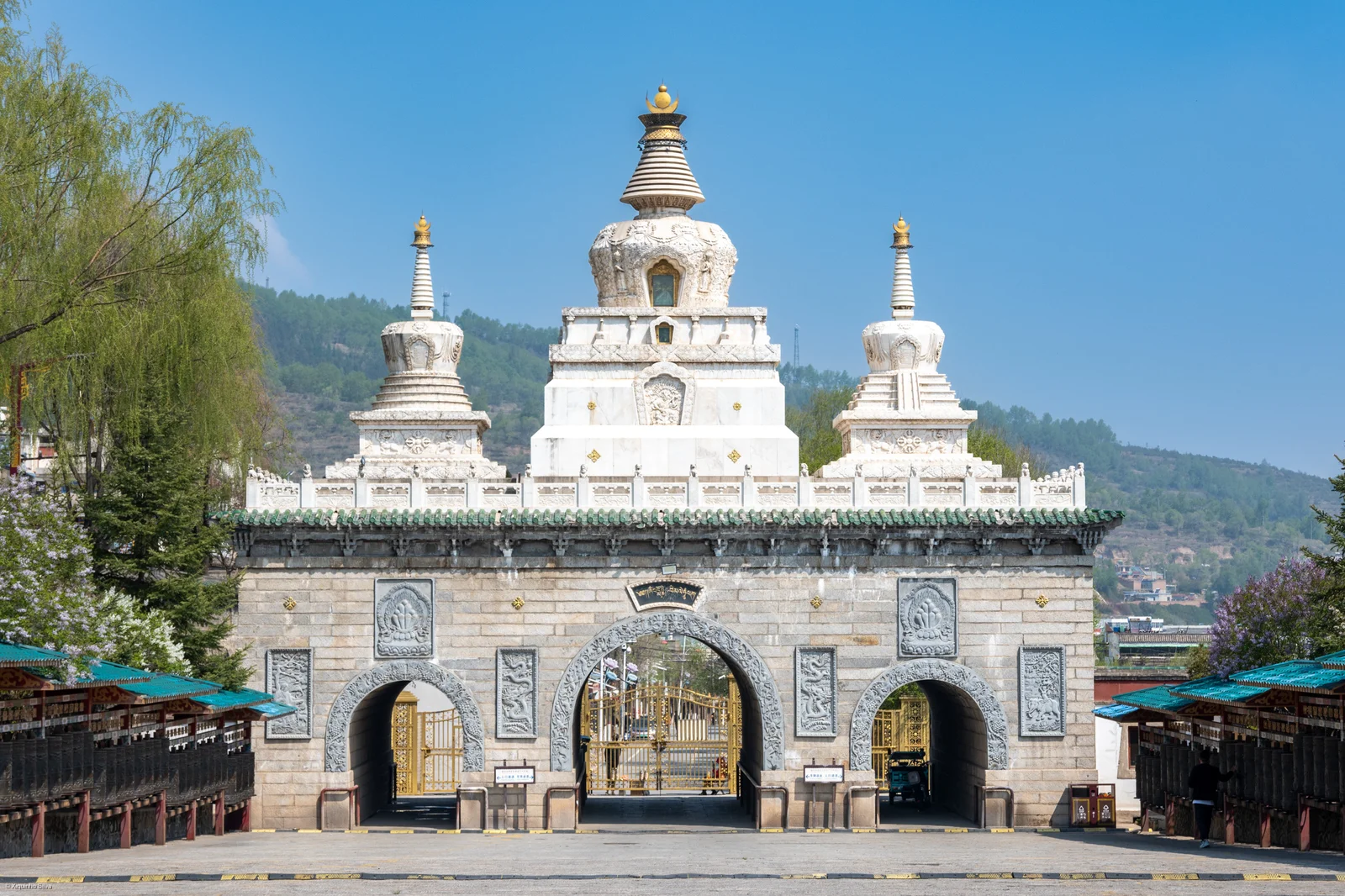
What to see
Kumbum Monastery stands among the six great Gelug monasteries of Tibetan Buddhism, marking the birthplace of reformer Je Tsongkhapa; its Great Golden Tile Hall gleams beneath sunlit peaks, housing astonishingly intricate butter sculptures. Dongguan Grand Mosque fuses Chinese palace joinery with Islamic arched portals, its great prayer hall accommodating ten thousand worshippers. The Qinghai Provincial Museum highlights prehistoric Kayue painted pottery and master thangkas. Beishan Temple clings to sheer red sandstone cliffs, linking historic grottoes via hanging timber walkways.
What to eat
Highland dining balances Tibetan pastoral staples with northwest halal cooking. Breakfast favors jioumianpian: elastic wheat dough torn into thumbnail-sized flakes simmered with diced mutton, tomato, and bell pepper in rich bone broth. Hand-grabbed mutton features free-range Tibetan sheep boiled gently in water, tender and sweet, eaten with coarse Sichuan pepper salt. Yak-milk old yoghurt sets in small ceramic bowls under a wrinkled skin of natural golden butterfat, thick, tart, and smoothed by a spoonful of white sugar. Tianpeizi ferments hulless plateau barley into sweet, bubbly grain porridge, while brick tea boiled with salt and yak milk sustains long mountain mornings.
Getting here & around
Xining Caojiabao International Airport connects downtown via express shuttles in thirty minutes. Xining Railway Station marks the starting terminus of the historic Qinghai-Tibet Railway and a core station along the Lanzhou-Xinjiang high-speed corridor. Taxis easily reach Kumbum Monastery in Huangzhong; travelers embarking toward Qinghai Lake and Caka Salt Lake typically rent SUVs downtown.
Choose a neighbourhood
Each area offers a different side of the city. Pick one to explore at your own pace.
Huangzhong Lushar & Kumbum Monastery
The spiritual center of Gelug Tibetan Buddhism. Gilded copper roofs gleam across mountainside monasteries, anchored by the Great Golden Tile Hall honoring master Tsongkhapa. The Butter Sculpture Pavilion displays miraculous seasonal polychrome figurines, while circumambulation corridors echo to revolving prayer wheels.
Pilgrimage to Kumbum Monastery and studying the three sacred arts of butter sculpture, murals, and embroidery.
Dongguan Grand Mosque & Mojia Street
The historical multi-ethnic civic core. Dongguan Grand Mosque integrates classical Chinese hip-and-gable roofs with green Islamic domes across a broad prayer square. Adjacent Mojia Street and Xi Nanguan Alley steam with boiling mutton offal cauldrons, cold starch noodles, and fresh charcoal mutton skewers.
Admiring Chinese palace-style Islamic mosque architecture and sampling authentic Hui street foods.
North Mountain Danxia & Hanging Temple
Ancient Taoist grottoes carved into sheer red sandstone cliffs. Natural wind erosion carved deep chambers into the red precipices, connected by vertigo-inducing hanging timber galleries. Looking out from the upper caves captures sweeping vistas over the Huangshui basin and distant snow-capped peaks.
Climbing timber gallery bridges along red sandstone cliffs for valley panoramas.
The butter sculptures of Kumbum
At Kumbum Monastery in Huangzhong, butter sculptures are revered as miracles that blossom in the depths of winter. Because animal butter possesses a low melting point, ambient body temperature dissolves sharp edges. Each winter, guild monks initiate months of disciplined production in unheated studios.
Monks keep basins of slushy ice water beside their benches, plunging bare hands into freezing brine every few minutes until fingertips lose sensation, allowing them to pinch and mould chilled butter without melting it. Purified white yak butter is worked thoroughly and blended with ground mineral pigments: lapis lazuli, turquoise, and vermilion. Over miniature timber armatures, fingers model flowing silk sashes, crown jewels, pagodas, and galloping horses. Staged on the Lantern Festival night under butter lamps, the polychrome sculptures gleam with lifelike animation, testifying to devotion through freezing pain.
Thumb-torn noodles in low-pressure kettles
Situated in a highland valley at 2,260 meters, atmospheric pressure lowers the boiling point of water to barely ninety degrees Celsius. Conventional thick noodles turn mushy outside while remaining raw at the core. Highland cooks resolved this physical hurdle through jioumianpian: thumb-torn noodles.
Using high-gluten spring wheat flour kneaded with cold water and rested under a film of rapeseed oil, the cook pulls a strip of flattened dough with the left hand. The right thumb and index finger work like flashing shears: pinch, snap, and flick. In rapid succession, paper-thin, thumbnail-sized flakes drop into rolling broth. Because each piece is remarkably thin, it cooks thoroughly in ninety-degree water within twenty seconds, remaining silky and firm. Ladled into bowls with rich mutton broth, tomato chunks, and wild garlic chives, the piping-hot bowl warms the traveler through mountain chills.
The golden skin of plateau yak yoghurt
Browsing street counters along Mojia Street or Dongguan, small white ceramic bowls sit arrayed beneath panes of window glass. Each bowl of old yoghurt is sealed by an unctuous, golden-yellow skin, the hallmark of alpine yak milk.
Plateau yak milk is naturally rich, testing at twice the butterfat of lowland cattle. Fresh morning milk is boiled to sterilize, ladled into bowls to cool to blood temperature, and inoculated with active heirloom starter whey. Kept warm for hours near clay stoves, bacterial cultures set the milk into firm custard. As the bowl chills, rich lipids rise to the surface, curing into an amber, wrinkled skin reminiscent of cold-pressed rapeseed oil. A spoon pierces the golden crust to reveal chalk-white, intensely tart curd beneath, sweetened by a sprinkle of granulated sugar that crunches against rich cream.