Xuanwei
Curing ham relies on dry mountain winds and high plateau temperature swings; salting over two winters turns pork into rose-red umami.
Xuanwei sits along the southern shoulders of the Wumeng Mountains in northeastern Yunnan, commanding high valleys where the headwaters of the Beipan River originate. Perched at an altitude of two thousand meters, the plateau basin experiences dry mountain winters marked by crisp winds and wide diurnal temperature variations. For centuries, farmers have utilized native black Wujin pigs fattened on field herbs and corn, rubbing fresh hind legs with sea salt during the winter solstice. Air-cured across two full winters without modern preservatives, the meat develops an intense rose-red marbling and buttery white fat, yielding rich aromas of roasted nuts and wild mushrooms.
What to see
Dongshan Park climbs pine cliffs with the Ming-dynasty Xuantian Pavilion and Feilai Temple; the Nizhu River Canyon features the Beipanjiang First Bridge, one of the world's highest bridges crossing vertical chasms; Kedu Ancient Town preserves Qin-Han post road ruins and stone town gates; Xuanwei Ham Heritage Estates demonstrate traditional two-winter curing methods; Furong Village preserves stone-masonry quadrangles.
What to eat
Xuanwei ham upper cut slices thin to eat cured or flash-fried in hot lard, yielding sweet savory richness; middle cut slices steam with local goat milk cakes; ham hock and mountain yam soup slow-simmers gelatinous knuckles into milky, comforting broth; ham and potato clay-pot rice cooks cured ham cubes with yellow mountain potatoes and rice until a golden crust forms at the bottom; spicy fresh pork blood curd salad tosses herbs with roasted chili.
Getting here & around
The Shanghai-Kunming High-Speed Railway serves nearby Qujing North, while regional intercity trains connect Kunming directly to Xuanwei Station in ninety minutes. Taxis and city buses reach Dongshan Park in fifteen minutes; reaching the Nizhu River Canyon and Beipanjiang First Bridge requires a ninety-minute drive across scenic mountain highways.
Choose a neighbourhood
Each area offers a different side of the city. Pick one to explore at your own pace.
Xuanwei Old Town & Ham Trading Quarter
The commercial epicenter of ham curing, where shops display thousands of cured hams hanging in cool breezes.
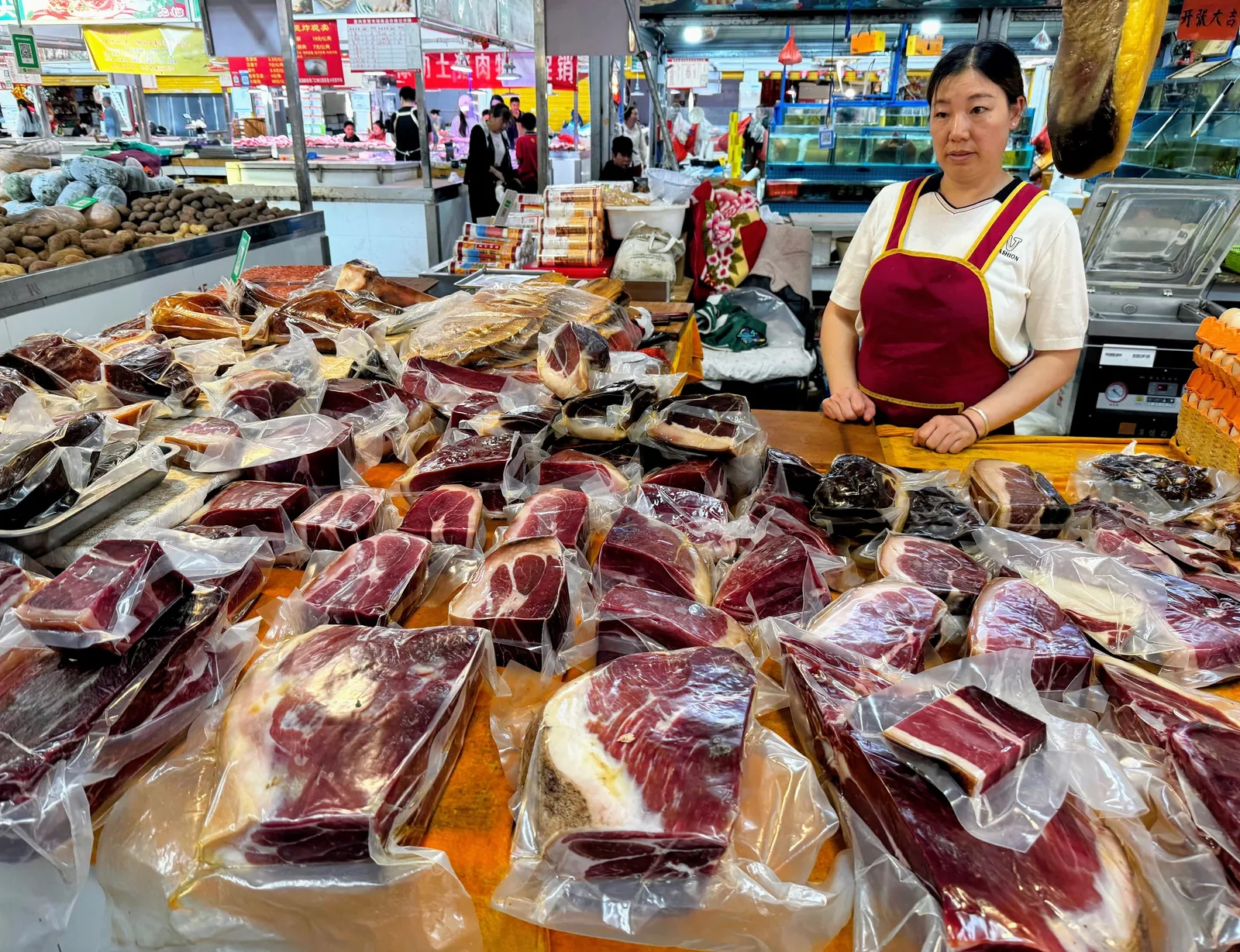
Visiting master curing cellars to observe bamboo bone-skewer grading and purchasing vacuum-packed upper-cut ham slices.
Dongshan Park, Xuantian Pavilion & Pine Cliffs
A dramatic mountain park guarding the eastern edge of the basin, crowned by Ming temples and pine forests overlooking the valley.
Climbing mountain stairs to Xuantian Pavilion for panoramic valley views and walking shaded paths among ancient pines.
Nizhu River Canyon & Beipanjiang First Bridge
A world-class canyon spanned by the 565-meter-high Beipanjiang Bridge soaring above sheer limestone chasms.
Gazing down into misty ravines from bridge observation decks and hiking cliff-hugging boardwalks through the gorge.
Wumeng Mountain Winds and Plateau Winter Curing
Inside the timber corridors of Xuanwei's historic ham houses, thousands of lute-shaped hams hang in orderly rows, perfuming the air with rich woodsy and roasted nut aromas. The exceptional quality of Xuanwei ham stems from its plateau terroir and native livestock. Foraged black Wujin pigs develop dense muscular marbling. During the sub-zero frost of the winter solstice, butchers trim the hind legs into tapered lute profiles and rub coarse sea salt deeply into muscle seams and bone marrow. Air-cured in well-ventilated wooden lofts at two thousand meters elevation, dry winds strip moisture. Developing a protective coating of white mold, the meat cures across two full winters into rich rose-red ham.
Four Cuts of Ham: Delicate Upper Slices to Rich Soup Bones
In Xuanwei kitchens, a cured ham is disassembled with anatomical precision. The top cut (shangfang) is the leanest and most tender, sliced translucent thin to be eaten as raw charcuterie or flash-fried with peppers. The middle cut (zhongfang) balances lean and fat, ideal for steaming whole before slicing alongside local goat milk cakes. The round shanks (jinqiantui) provide chewy skin, while the tough trotters and knuckle joints (huozhua) anchor rich stockpots. Simmered into vegetable or wild mushroom broths, the knuckles release rich collagen and cured umami, transforming simple ingredients into complex feasts.
Ham and Potato Clay-Pot Rice and Hearthside Simmers
Entering a Xuanwei farmhouse at dusk, hearth fires crackle as clay pots simmer on the coals. Xuanwei ham and potato clay-pot rice represents highland comfort food at its finest. Cooks cut yellow highland potatoes into chunks and dice aged ham into cubes, searing them in lard before adding soaked rice and mountain spring water. Covered tightly, the pot simmers until a golden, crunchy crust forms at the bottom. Lifting the lid releases an appetizing cloud of savory fat and sweet starch. Served with a bowl of milky ham trotter and yam broth, each spoonful provides deep sustenance against cold plateau nights.