Yibin
The tawny silt of the Jinsha meets the emerald Min at Hejiangmen, flowing east as the Yangtze; a bowl of fiery ranmian noodles coats the palate in chili and sesame.
Yibin stands at the southern gateway of the Sichuan Basin where the Jinsha and Min rivers unite to form the Yangtze River, venerated as the First City of the Yangtze. Silt-laden amber currents of the Jinsha churn against the crystal jade waters of the Min at Hejiangmen, merging into China's longest river. From Cuiping Mountain overlooking bustling river docks to the wartime scholarship of Liang Sicheng and Lin Huiyin among Ming timber guildhalls in Lizhuang, and the sixty thousand acres of emerald bamboo groves in Shunan Bamboo Sea, Yibin balances ancient multi-grain distilling with robust riverfront cuisine.
What to see
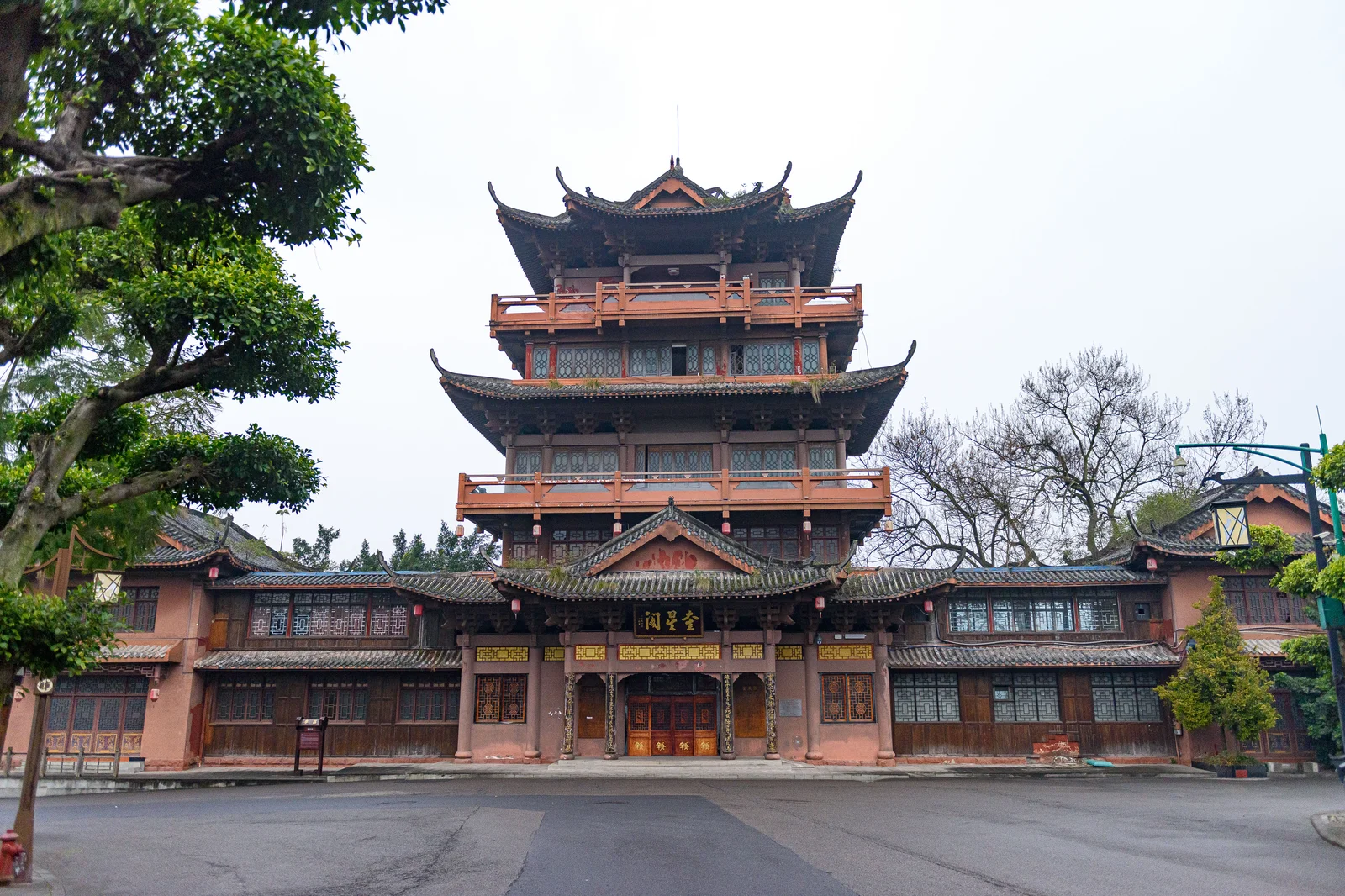
Hejiangmen Square directly faces the two-tone confluence where yellow and green river currents collide; Lizhuang Ancient Town lines the southern bank with the Qing-dynasty Xuanluo Hall and Kuixing Pavilion; Shunan Bamboo Sea spreads across forty-six peaks with scenic walking tracks through the Emerald Corridor; Cuiping Mountain offers panoramic city skyline views.
What to eat
Yibin ranmian (burning noodles) takes its name from being tossed dry in oil so that it can catch flame, featuring fine alkaline noodles mixed with fermented suimi yacai greens, crushed peanuts, scallions, and chili oil; Lizhuang white pork is sliced paper-thin and rolled around minced garlic chili sauce; full bamboo banquets present wild bamboo shoots, bamboo fungus skirts, and steamed bamboo rice.
Getting here & around
Yibin Wuliangye Airport connects major national hubs, and Yibin Railway Station connects to Chengdu and Guiyang via the Chenggui High-Speed Railway in eighty minutes. Local buses serve the city center; express buses reach Lizhuang in forty minutes, while Shunan Bamboo Sea is best explored by car or private driver.
Choose a neighbourhood
Each area offers a different side of the city. Pick one to explore at your own pace.
Sanjiang Confluence & Hejiangmen
The historical birthplace of the city, where stone stairways descend directly to the swirling confluence of the Jinsha and Min rivers under ancient banyans.
Witnessing the distinct two-color river collision, walking historic riverside stone stairs, and sipping riverfront teahouse brews.
Lizhuang Ancient Town & Yangtze South Bank
A riverside town along the southern Yangtze bank that sheltered Tongji University and the Society for Architectural Research during WWII, preserving historic wooden guildhalls.
Tracing Liang Sicheng and Lin Huiyin's historical footprints, examining Ming timber bracket carpentry, and tasting genuine Lizhuang white pork.
Shunan Bamboo Sea Scenic Area
A monumental bamboo forest park encompassing forty-six peaks cloaked in moso bamboo, shaded red sandstone walking paths, and hidden mountain cascades.
Immersing in deep bamboo forests, hiking the shaded Emerald Corridor, and dining on wild bamboo fungus banquets.
The Two-Tone Meeting of Great Rivers
Standing along the stone quays of Hejiangmen, visitors witness one of nature's great hydrological dramas. Churning down from the Tibetan Plateau, the Jinsha River carries silt that gives its wide waters an earthy ochre shade. In contrast, the Min River arriving from the Dujiangyan plain flows clear and jade-green. Where the two streams collide at the stone cape of Hejiangmen, a distinct division forms between yellow and green currents before they spiral and blend into the unified trunk of the Yangtze. Heavy cargo barges sound their horns across the rolling waters, marking the birth of China's primary river corridor.
Seas of Bamboo and Forest Banquets
South of Yibin, mountains disappear into an ocean of verdant green. Across sixty thousand acres, the Shunan Bamboo Sea rolls across ridges where mountain gusts send continuous jade swells rippling over the canopy. Towering moso bamboo creates a sheltered microclimate that provides everything for mountain living: timber pavilions, woven furniture, and seasonal feasts. Tender shoots harvested at dawn remain sweet and fiber-free; delicate white skirts of bamboo fungus unfurl in slow-simmered chicken broth; while rice and meat steam inside freshly sawed green bamboo tubes, perfumed with the scent of wild forest springs.
Five Grains Fermented in Century Pits
The alleys of old Yibin carry a sweet, yeasty aroma of fermenting grain. In historic distilleries like Changfasheng, mud fermentation pits have operated continuously since the Hongwu reign of the early Ming dynasty. Wuliangye's distillation philosophy blends five distinct grains: red sorghum contributes aroma, long-grain rice adds sweetness, glutinous rice softens the body, wheat provides depth, and corn imparts rich warmth. Mixed with heritage starters, the mash is sealed inside cellars lined with local mineral clay. Microorganisms nurtured over six centuries slowly ferment the grains, yielding an amber spirit of balanced complexity.