Zeya
Mountain rapids churn timber waterwheels at Silian Dui, stone lime pits soften green bamboo, and paper masters scoop gossamer sheets from mountain springs.
Tucked inside the western highlands of Wenzhou's Ouhai district, Zeya unfolds along steep ravines dense with moso bamboo and roaring torrents. Celebrated as a living fossil of ancient Chinese papermaking, the valley has practiced water-powered bamboo papermaking since the Song dynasty. Villagers harness mountain rapids through timber trip hammers; at Silian Dui, a single descending flume drives sequential waterwheels that pound bamboo soaked for months in hillside lime pits. Artisans dip fine bamboo screens into sloshing pulp vats to scoop out delicate handmade paper sheets, preserving an ingenious hydraulic manufacturing culture.
What to see
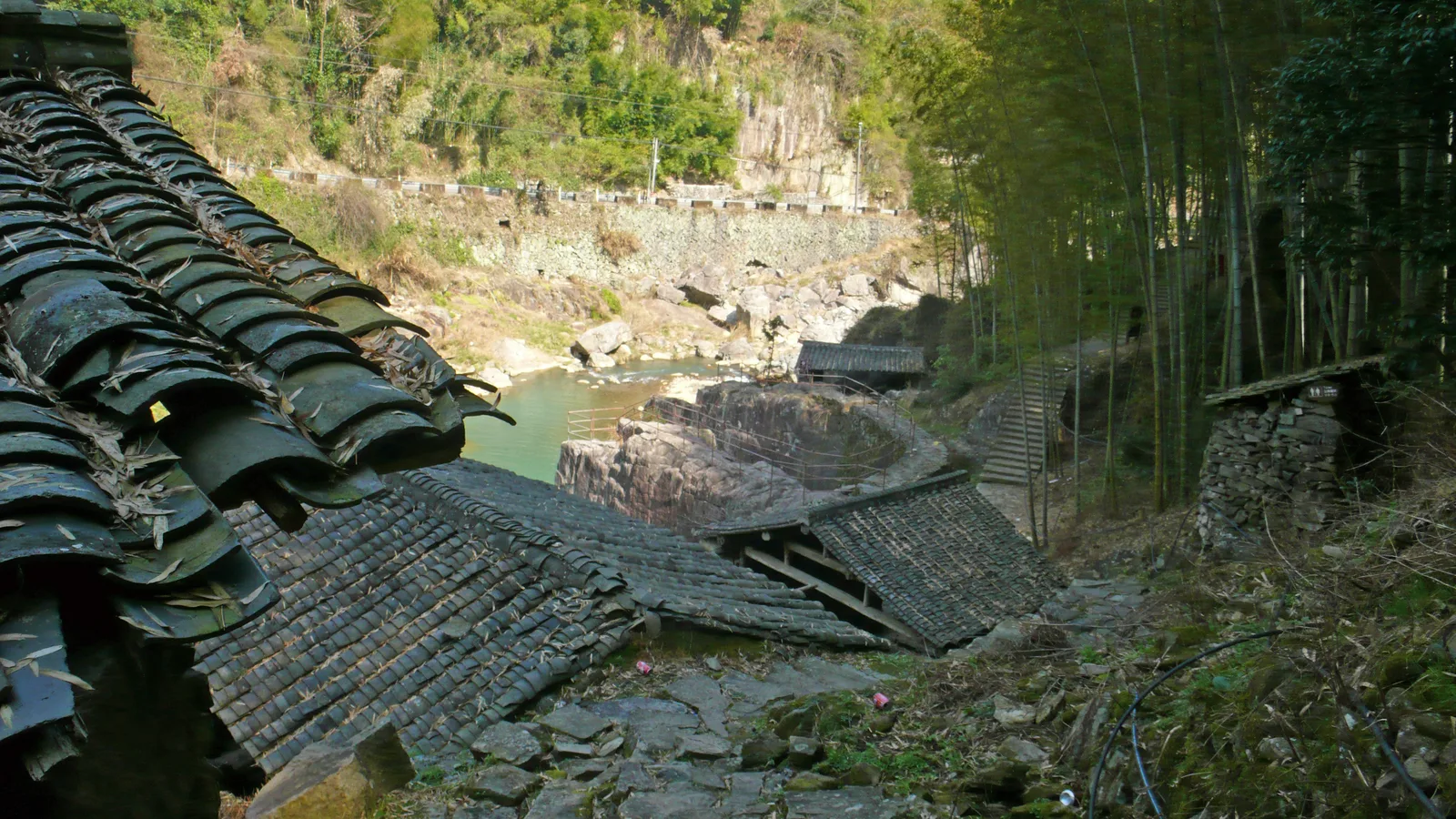
Silian Dui Papermaking Workshops preserve stepped hydraulic trip hammers and stone soaking pits dating from the Ming dynasty; Paper Mountain Eco-Museum documents twenty-six steps of bamboo papermaking; Qipujian Gorge features seven descending cascades through granite chasms; Zeya Lake spreads clear waters beneath bamboo mountains; Tangzhai Village retains paper-masters' stonewall cottages.
What to eat
Zeya mountain bamboo shoots braised with pork combines sun-dried spring shoots with native pork belly simmered in dark soy sauce; Zeya fried rice vermicelli tosses fine dried rice noodles with wild chives and shiitake strips; crispy stream minnows are flash-fried with salt and mountain pepper; free-range chicken soup simmers mountain chicken in pure spring water.
Getting here & around
Arrive by high-speed rail at Wenzhou South Station, then reach Zeya in thirty minutes by express bus or taxi. Urban buses link central Wenzhou to the scenic valley. Sights like Silian Dui, Qipujian, and Tangzhai lie clustered along the river corridor, accessible by car or scenic walking tracks.
Choose a neighbourhood
Each area offers a different side of the city. Pick one to explore at your own pace.
Silian Dui Workshops & Paper Eco-Museum
The spiritual heart of the paper mountain, where four water-driven trip hammers descend sequentially beside rapids, turning timber wheels.
Observing how descending river currents drive four waterwheels in succession, and examining bamboo fibers soaked in stone lime pits.
Qipujian Gorge Waterfalls & Stone Footpaths
The primary water source of Zeya, where streams drop through a granite chasm in seven sequential white cascades.
Hiking cliffside stone steps alongside rushing torrents and cooling off in the spray of deep mountain pools.
Tangzhai Village & Hands-On Paper Studios
A historic papermaking village along the creek where traditional dipping vats, paper presses, and drying brick ovens continue in daily use.
Dipping a fine bamboo screen into pulp slurry to scoop handmade paper sheets and brushing them against heated brick drying walls.
Silian Dui Waterwheel Trip Hammers and Hand Papermaking
Beside the stone bridge in Zeya, the rhythmic thudding of hydraulic trip hammers echoes across the ravine. Dating from the Ming dynasty, this multi-tier mechanical papermaking works utilizes the steep natural gradient of mountain rapids. A single diversion flume captures rushing currents, channeling water downwards across four large timber-paddled waterwheels in succession. Revolving timber cams lift massive wooden levers, dropping heavy stone hammers into stone mortar pits. Bamboo softened by months in lime pits is pounded into fluffy fibrous pulp. In adjacent stone workshops, artisans dip fine bamboo screens into clear vats to scoop out wet paper sheets with steady horizontal scoops.
Qipujian Multi-Tiered Cascades and Mountain Flumes
Water is the lifeblood and prime mover of Zeya's papermaking civilization. Ascending deep into the Qipujian Gorge, granite cliffs flank mountain slopes cloaked in moso bamboo. Rushing down from Mount Qiyun, mountain streams plunge through a sheer tectonic fissure, cascading over seven successive granite waterfalls into jade plunge pools. From Frog Pool to Heavenly Waterfall, rushing currents have carved deep cylindrical potholes into the riverbed stone over millennia. This abundant, uncontaminated flow provided the mechanical kinetic force to turn waterwheels and the pure water required for rinsing alkaline lime from raw pulp.
Soaking Green Moso Bamboo in Hillside Lime Pits
Following hillside footpaths around Zeya, stone-lined pits known locally as yantang dot the terrace edges. The mountains here produce thousands of acres of dense moso bamboo. Around the summer solstice, foragers harvest tender young bamboo canes, cutting them into four-foot segments and splitting them into coarse splints. Bundled tightly, the bamboo is loaded into circular stone pits and covered with quicklime and cold mountain spring water. The heat released by the slaking lime breaks down pectin and softens stubborn cellulose bonds over a three-month soaking period, transforming rigid green stems into soft, supple fibers ready for the pounding hammers.