Zunyi
In the valleys of northern Guizhou, cauldrons of mutton broth simmer before dawn, while baskets of fiery red peppers roast over charcoal.
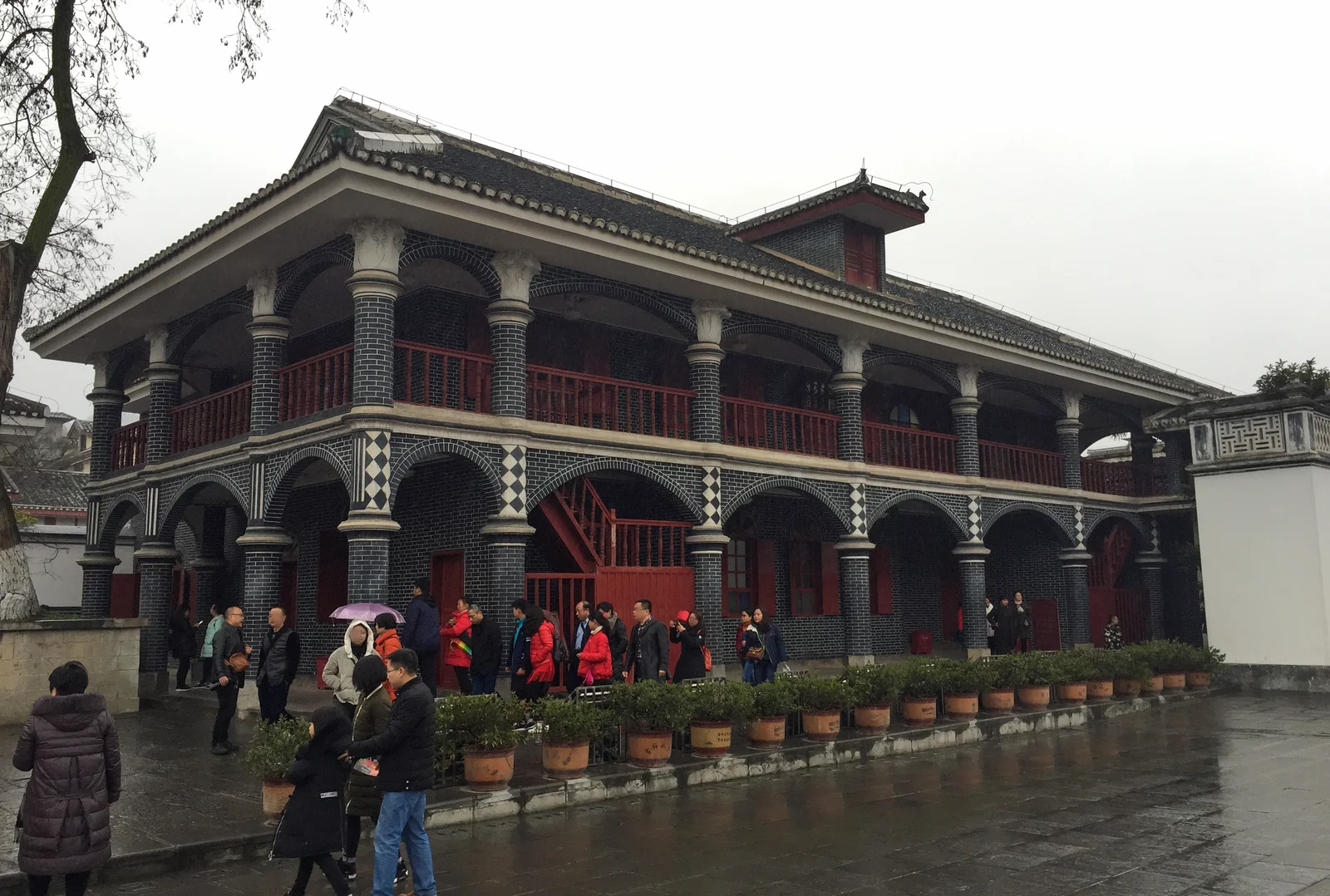
Zunyi occupies the Dalou mountain folds of northern Guizhou along the Xiang River valley, guarding the vital crossroads between Sichuan and Guizhou. In the historic core, the two-story brick-and-timber Zunyi Conference mansion marks a defining turning point in modern history. To the west, the Chishui River valley unfolds with towering crimson Danxia bluffs and rolling bamboo seas, where red sorghum ferments inside stone pits and dawn bowls of peppery mutton rice noodles warm the damp plateau air.
What to see
The Honghuagang heritage district preserves the Zunyi Conference site with its elegant grey-brick arches and carved timber balconies; the outlying Chishui Danxia region features thunderous waterfalls plunging over blood-red cliffs; Chishui Bamboo Sea forest offers miles of emerald hills.
What to eat
Zunyi mutton rice noodles represent Guizhou's premier breakfast: boiling goat bone broth poured over freshly scalded rice vermicelli, topped with sliced mountain goat, toasted coarse chili flakes, and Sichuan pepper oil; accompanied by griddled tofu pockets, baked egg cakes, and tender preserved bamboo shoots.
Getting here & around
Zunyi Railway Station and Xinzhou Airport link Chongqing, Guiyang, and Chengdu; bullet trains reach Guiyang in 40 minutes; long-distance coaches and well-paved scenic expressways lead directly to Chishui Waterfall and Moutai.
Choose a neighbourhood
Each area offers a different side of the city. Pick one to explore at your own pace.
Zunyi Conference Site & Old Town
The historical and architectural heartland: preserving the Western-influenced brick-and-timber mansion, flagstone alleys of Hongjun Street, and shady locust trees on Yangliu Street.
Touring the historic meeting rooms, examining republican domestic architecture, and sampling heritage mutton noodles.
Chishui Danxia Waterfall & Shizhangdong
A breathtaking canyon of red sandstone bluffs where mighty cascades tumble over scarlet precipices, fringed by primeval tree ferns dating from the Jurassic era.
Feeling the spray of towering cascades and trekking through primeval protected cyathea fern groves.
Moutai Town & Chishui River Valley
The cradle of sauce-aroma baijiu along the mineral-rich Chishui River, framed by towering red cliffs, historic stone distilleries, and the persistent sweet perfume of fermenting sorghum.
Visiting ancient stone fermentation cellars, walking red-cliff river paths, and learning the seasonal cycles of sorghum brewing.
The Boiling Cauldron of Mutton
Mornings in Zunyi awaken amidst steam rising from massive cauldrons of mutton stock. Whole mountain goat bones and fat simmer steadily into an aromatic broth dotted with shimmering golden fat. Cooks scoop handfuls of fresh round rice vermicelli into bamboo strainers, dunking them twice into boiling water before tipping them into ceramic bowls topped with wafer-thin slices of tender mutton. Scalding broth cascades over the top, finished with a generous ladle of house-roasted chili flakes. Savory and free of gaminess, each bite delivers warming, toasted heat.
The Toast of the Chaotian Pepper
Zunyi is China's capital of Chaotian conical chilies, prized not for raw scorch but for smoky depth known as hu xiang. Dried pods are dry-toasted over slow charcoal embers until the skins turn blistered and mahogany-crisp. Lightly crushed in stone mortars into coarse flakes, boiling rapeseed oil is ladled directly over them. The sizzling infusion draws out a rounded, almost chocolatey toasted fragrance that tempers raw pungency, anchoring everything from morning noodles to table dipping sauces.
Nine Steamings by the Crimson River
The deep, windless microclimate of the Chishui canyon nurtures the legacy of sauce-aroma baijiu. Small, starch-dense indigenous red sorghum withstands nine rounds of high-temperature steaming, eight rounds of fermentation, and seven extractions of spirit. Master distillers turn the mash inside subterranean pits lined with local purple sandstone, nourished by unique microbial ecosystems thriving in mineral red soil. Sealed in porous clay amphorae inside mountain caves for years, the liquor matures into a velvety, layered elixir that lingers in the glass for days.