Jiuzhaigou
Tufa has stepped this stream into a hundred ledges, and the water on each one reads deeper in colour than the one above.
Jiuzhaigou is in the southern Minshan range of northern Sichuan, where three valleys join into one. The floor sits around 2,000 metres and the ridges on either side run above 4,000. Water leaves the limestone carrying calcium carbonate, lays it down as pale ledges across the valley floor, and the stream is held back into more than a hundred lakes.
- Region
- Sichuan · Ngawa
- Elevation
- 2,000-4,500 m
- Valleys
- Three, about 60 km end to end
- Form
- Travertine: calcium carbonate laid down by water
- Listed
- 1992, World Natural Heritage
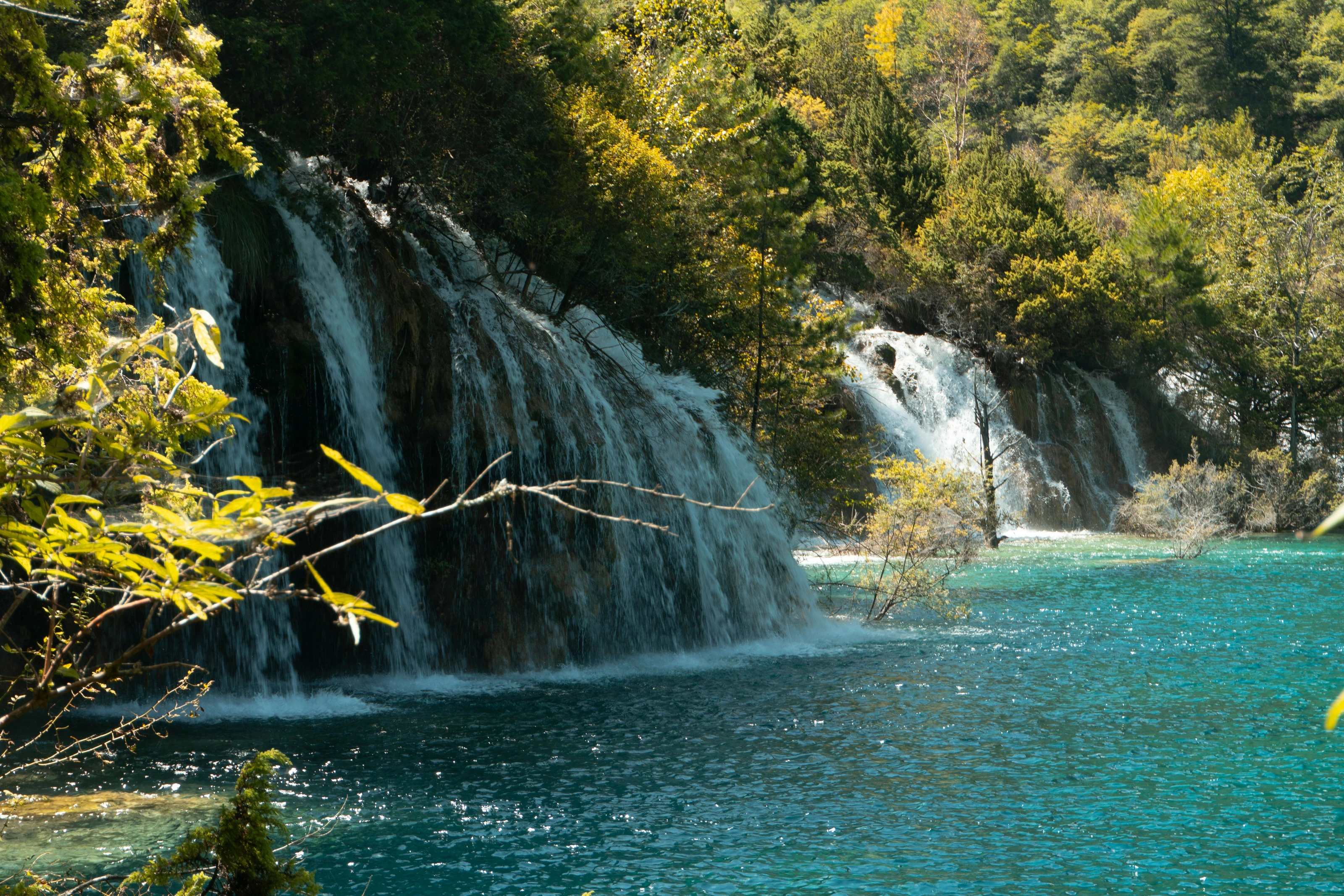
Limestone and dolomite under the Minshan load the groundwater with calcium. When a spring reaches the surface, pressure drops and the water warms a little, so carbon dioxide leaves and calcium carbonate comes out of solution where it stands. Algae and moss give it the easiest surface to crystallise on, so tufa grows along living things, layer by layer, until the ledge is high enough to hold back the valley.
Tufa ledges
The pale steps across the valley were grown by algae and calcium carbonate, not stacked from stone.
Five Flower Lake
Drowned trunks and tufa terraces on the floor: yellow-green where it is shallow, blue where it deepens.
Nuorilang Falls
More than 300 metres wide, dropping in one line off a tufa ledge.
Get down to the water and the fallen trunks lie across the floor, each one wrapped in a white skin of calcite.
The dam is alive
What holds the water back is not rock. It is tufa. Spring water carries calcium carbonate in solution; once it surfaces the pressure drops, carbon dioxide escapes and the calcium comes out. It needs something to settle on, and algae, moss and dead branches are the easiest surfaces. So the tufa grows along living things, lifts the water level, gets overrun, and starts again on the new edge. The face of a ledge is always wet, one band dark green and the next white: algae, and the calcite that has just come down.
The colour follows the light
The same lake is blue in sun and turns grey-green the moment cloud comes over. The water itself is clear: from the bank you can see trunks lying several metres down, so the colour is not in the water. Shallow, the light reaches bottom and returns the white of the tufa and the yellow-green of algae; past three or four metres the bottom is gone and what comes back is blue-green. The bands in Five Flower Lake are one lake at different depths; the water is the same throughout, and so is the hour.
The trees do not rot
The firs and spruces that fall into these lakes neither float nor decay. Calcite coats them, sealing the wood off from air and fungi, and they stay for decades. The trunks under the water are still upright, branches intact, wrapped in a pale grey skin that keeps the shape of the wood. A forestry crew worked this valley in the 1970s and the logging road reached the mouth of the gorge; that stopped in 1978, when the area became a reserve. Most of the forest around the lakes grew back after that.
An M7.0 earthquake in August 2017 broke the dam at Sparkling Lake and drained it. The water has since re-mineralised the dam, and the park reopened in stages from March 2018.