Terroir in a Steeping Cup
Fresh leaves from misty hillsides undergo withering, rolling, charcoal firing, or brick pressing. From rocky cliffs to clay charcoal stoves, every steeping cup speaks of mountain air.
Why does the same camellia sinensis leaf produce such profoundly different infusions and rituals across regions?
A tea's character reflects mountain soil and firing techniques, but also local domestic habits. Minnan and Chaoshan sip concentrated oolong from tiny porcelain cups, while Jiangnan admires fragile green leaves unfurling in clear glass.
Read the leaf and the table
Processing changes a tea’s colour, aroma and form. A single scale of oxidation is not enough to describe all six categories, and a tea’s useful storage life depends on the product and how it is kept.
At the table, notice the vessel, the amount of leaf and the way water is added. These are useful questions to ask when you order, even if the menu is unfamiliar.
Make one comparison
Choose two teas rather than trying to learn a whole catalogue. Look at the dry leaves first, then taste them without additions. Note what changes between the first cup and the next.
Tea is also a way of welcoming people and spending time together. Leave room for the setting: a table in a park tells you something a packet of leaves cannot.
Local variations
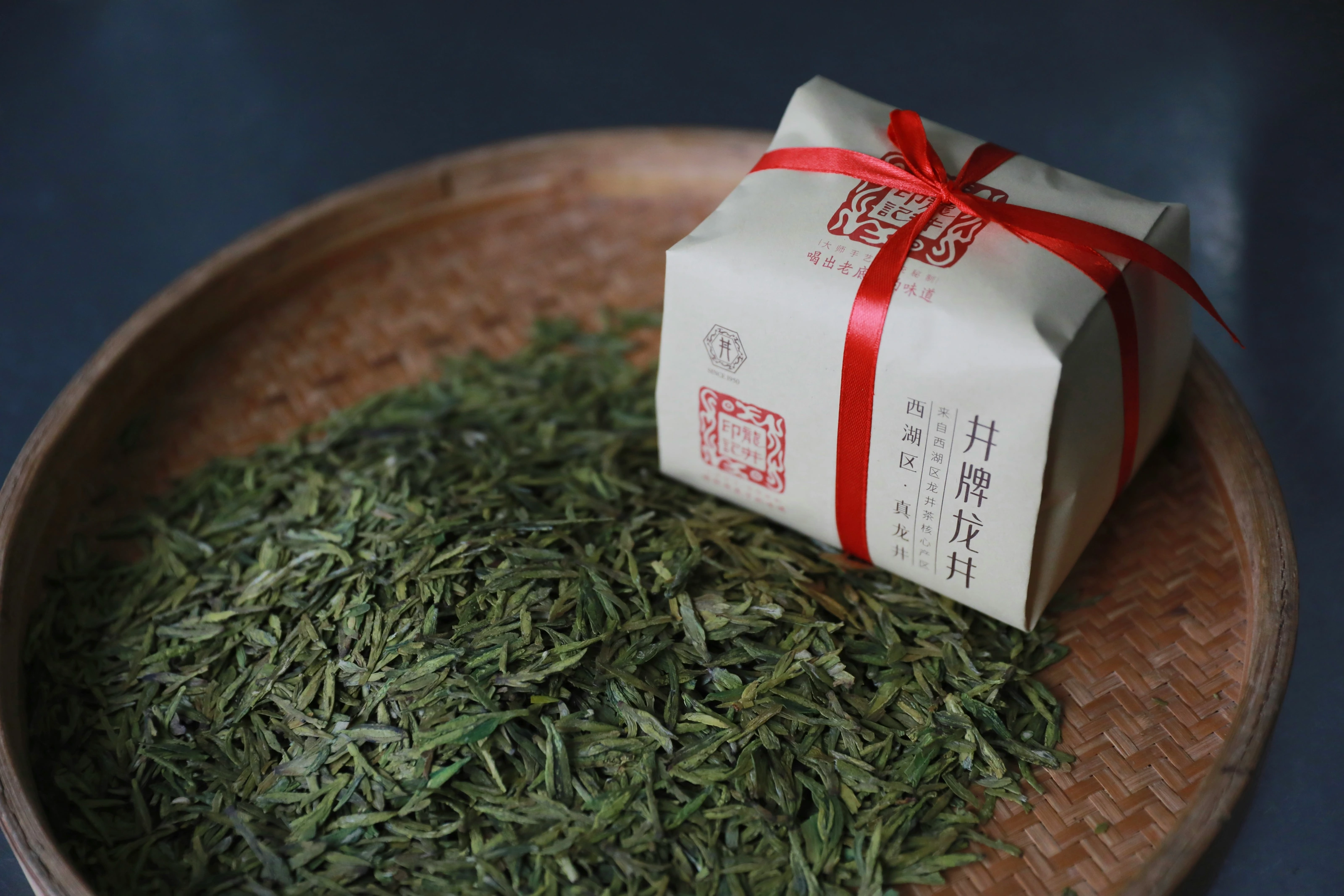
Start with Longjing. The flattened green leaves in the opening photograph give you something to recognise before you order.
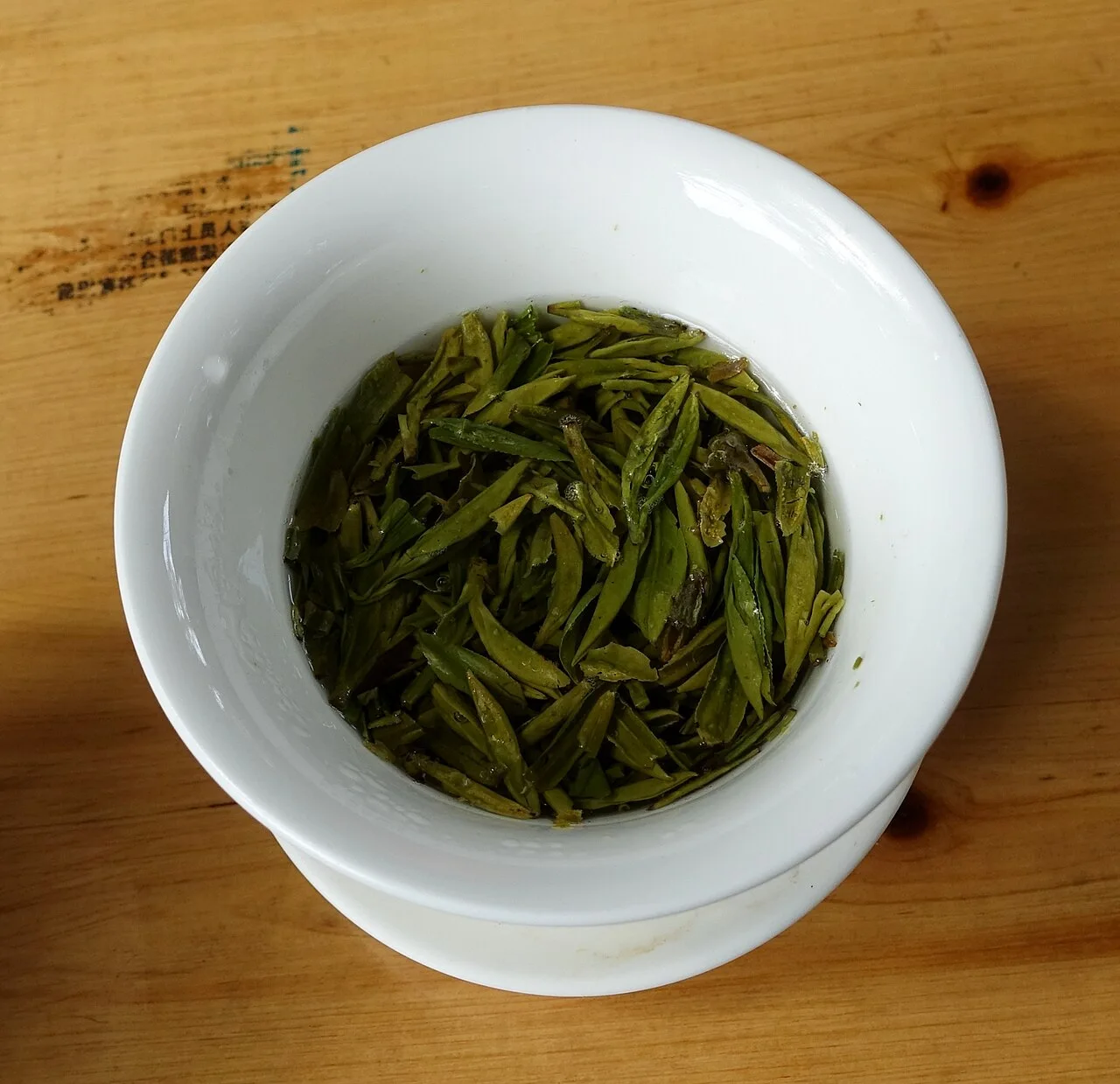
Compare the dry leaves with the brewed ones, and ask how the tea was made. UNESCO’s photo record includes the heat treatment used for West Lake Longjing.
Wuyi rock tea offers another starting point. UNESCO’s photo record shows its processing knowledge being taught to pupils.
Look beyond a tea’s price or name: ask about the making, the brewing and the people who pass that knowledge on.
In People’s Park, turn your attention to the tea table. The photographs show a waterside teahouse and leaves opening in a white bowl.
Read the Chengdu chapter for a closer look at a gaiwan and the place it occupies in a park visit.
Dark tea is pressed into a column here and wrapped in bamboo — not for looks, but so a mule train can lash it to a pack saddle.
Press the same leaf tight, let it ferment, keep it a few years, and colour and taste travel in another direction. Hold that thought; the city page is still to be written.
The tea here grows into trees, and picking takes a ladder. The leaf is fixed, rolled and sun-dried into maocha.
Pressed into a cake or kept loose, drunk young or laid down for years — one batch of maocha becomes several different teas.
It rains more than two hundred days a year. Tea is pressed into bricks here and carried west; past the mountains, the way of drinking it changes.
Brick tea is boiled, often with butter or milk. Freight and distance change what a tea finally becomes.
Sweet tea is black tea boiled with milk and sugar, served by the pot. The teahouses fill with people back from the circuit and people on their way to work.
The same leaf goes west and picks up milk and sugar, goes east and is drunk clear. The line between the two roughly follows the old tea-and-horse road.
Gongfu tea tables under covered verandas: scalding water poured high over Anxi Tieguanyin leaves, with three porcelain cups refilled for hours.
Tea is the bedrock of coastal community conversation; low wooden tables invite travellers to match the unhurried tempo of island living.
Baotu Spring teahouses: boiling soft artesian spring water to brew double-scented jasmine blossoms in porcelain gaiwans.
Low mineral cloudiness in deep karst groundwater releases pure floral aromatics, defining Jinan's waterside rhythm.
Regardless of party size, only three cups stand upon the tray; tea pours low in circular rotation to balance every drop of mountain single-bush oolong.
Rhythmic plunging inside a narrow cylinder turns bitter brick tea into velvety golden warmth.
Ocean oyster broth melds with thread-thin noodles; as dusk falls, clay braziers heat mountain oolong that perfumes the stone streets.
Tea bushes share their soil with loquat and plum, absorbing wild fruit notes before the spring harvest.
Low spring temperatures trigger a chlorophyll retreat; ultra-high amino acids yield tea as savory as clear broth.
Glacial waters thunder beneath the floorboards while bamboo armchairs offer an unhurried jasmine brew.
Lauded by Emperor Huizong, thick dark stoneware showcases pure white whisked tea foam.
Woollen carpets line upper verandas where white-bearded elders hold porcelain bowls, plucking silk strings in unhurried Silk Road rhythm.
Rocky hillside terraces at eight hundred meters nurture thick tea leaves that hold fragrance through repeated hot infusions.
Sintered at eleven hundred degrees without turning to glass, microscopic pores breathe tea oil for decades.